Answer: Peel-and-stick kitchen tile offers a fast, mess-free way to refresh backsplashes and walls. It’s ideal for DIYers, renters, and homeowners seeking a durable, affordable upgrade with minimal tools. The top picks below are selected for ease of installation, water resistance, and real-world kitchen suitability. Each product is best for specific needs, from commercial-grade thickness to decorative decor. Use the quick comparison table to choose with confidence.
| Product | Best For | Why It Stands Out |
|---|---|---|
| Art3d 102-Piece Peel and Stick Wall Tile | Large backsplash projects | 3×6 inch subway tiles, easy layout planning, durable and waterproof |
| Art3d Peel and Stick Backsplash (White Subway, Thicker) | Retrofitting or replacing existing tiles | 2-3x thicker, strong adhesive, PU top surface, VOC-friendly |
| STICKGOO Thicker Design Peel and Stick | Budget-friendly, textured walls | 2mm–2.5mm thick, 3x stronger backing adhesive, 12×12 sheets |
| Vamos Tile 100-Piece Glossy Wooden Marble Peel and Stick | Decorative accents and focal walls | Realistic ceramic look, high water resistance, 12×12 inch tiles |
| Art3d 10-Sheet Heavy-Duty Peel and Stick | Heavy-duty durability for busy kitchens | 0.08 inch thick, sturdy, seamless application with strong adhesion |
Art3d 102-Piece Peel and Stick Wall Tile

Best for large kitchen backsplashes and open-plan spaces. Each 3″x6″ tile provides a classic subway look with a glossy white finish. It is waterproof, heat resistant, and easy to clean. The tile is designed for DIY installation with simple cutting options, making it ideal for homeowners who want a fast remodel without professional help. Best for: busy cooks who want a durable, wipe-clean surface that mimics real tile.
Caution: While highly durable, ensure a clean, dry surface and proper layout prior to sticking, as re-positioning after adhesion may reduce hold on textured walls.
Art3d Peel and Stick Backsplash White Subway (Thicker)
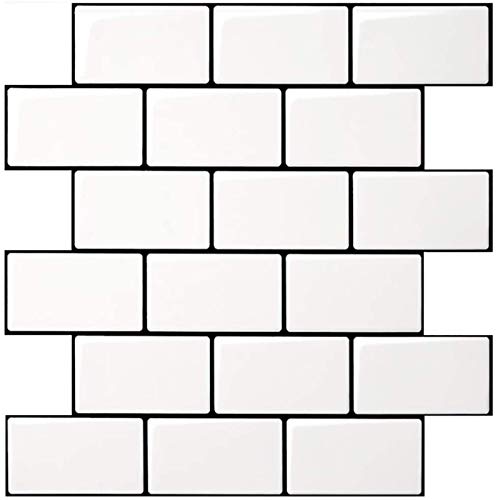
Choose this if you want a thicker, more robust peel-and-stick option with a stronger adhesive and a PU top surface that resists yellowing. It sticks firmly to smooth and lightly textured walls, and uses a material combination designed to be safer than epoxy-based tiles. Best for: kitchens with frequent splashes where a durable, long-lasting finish matters more than ultra-thin profiles.
Caution: Avoid using on very rough or highly textured surfaces without proper surface preparation; check for surface compatibility before installation.
STICKGOO Thicker Design Peel and Stick

Best for projects where you want more body and easier coverage per sheet. These 12″ x 12″ tiles are 2–2.5 mm thick with a stronger backing glue, making them suitable for slightly textured walls and covering more area efficiently. Best for: budget-conscious renovators who still want a solid, durable feel underfoot or on walls. Avoid if you need ultra-thin, ultra-flexible tiles for intricate corners.
Vamos Tile 100-Piece Glossy Wooden Marble

Best for decorative accents where a marble-wood look adds character to a kitchen or bath. The PVC-based tiles offer a glossy finish with a realistic pattern and strong water resistance. Best for: designers seeking a premium-looking, easy-to-clean surface that still installs quickly. Limitation: layout accuracy matters for pattern matching; plan before sticking to avoid misalignment.
Art3d 10-Sheet Heavy-Duty Peel and Stick

Best for high-traffic kitchens requiring extra durability. With a thickness around 0.08 inches, these tiles resist warping and offer a robust backing for a stable, long-lasting backsplash. Best for: households with frequent cooking splashes and a need for dependable performance. Limitation: bulkier tiles may be less flexible in tight corners or around curved surfaces.
Buying Guide
What should you consider before buying peel-and-stick kitchen tiles?
- Surface compatibility: Ensure the backing adheres well to smooth, clean surfaces. Lightly textured walls may require more aggressive adhesives or a primer.
- Thickness and durability: Thicker tiles tend to be sturdier and warp-resistant, but may be less flexible for tight curves.
- Adhesion strength: Look for stronger backing glue if you’re mounting on less-than-perfect walls or over existing tiles.
- Finish and safety: PU or PET surfaces reduce odor and yellowing; avoid epoxy-based materials for odor and VOC concerns.
- Maintenance: Choose water- and stain-resistant finishes for kitchens; glossy surfaces are easier to wipe clean.
- Pattern and layout: For subway patterns, plan layout in advance to minimize cuts and ensure alignment across panels.
- Installation skill level: Most options are DIY-friendly, but ensure you have basic tools like a utility knife, squeegee, and tape measure.
FAQ
- Q: Can peel-and-stick tiles be used behind stoves and sinks? A: Yes, but choose waterproof and heat-resistant options to resist splashes and heat exposure.
- Q: Do these tiles require grout? A: No. They are self-adhesive, but some kits include spacers or edge trims for clean lines.
- Q: Will these tiles peel off easily later? A: They can be removed with some effort, especially if installed on clean, smooth surfaces; prep properly to minimize residue.
- Q: Are these tiles suitable for textured walls? A: Some are; check the product’s adhesive strength and surface compatibility for lightly textured surfaces.
- Q: How long does installation take for a typical backsplash? A: A small to medium backsplash can be completed in a few hours by a DIYer with basic tools.
- Q: Can I cut these tiles with household tools? A: Yes, most can be cut with tin snips, a utility knife, or a hand saw for accurate sizing.