The best interior wood stain remover depends on what you mean by “stain”: dark water marks, discoloration in a finish, or a scratch that exposes lighter wood need different treatments. WOCA Tannin Spot Remover is the most targeted choice for dark tannin-and-moisture marks on suitable unfinished or treated wood. Minwax Antique Furniture Refinisher is intended to dissolve certain old finishes, while Trade Secret conceals discoloration on dark finished wood. The two remaining options are better treated as maintenance products than dedicated stain removers.
| Product | Best suited for | Important limitation |
|---|---|---|
| WOCA Tannin Spot Remover | Dark water rings and tannin marks | Not for lacquered or varnished surfaces |
| Minwax Antique Furniture Refinisher | Removing varnish, shellac, or lacquer during restoration | Not a spot cleaner for ordinary stains |
| Trade Secret Dark Wood Scratch Remover | Concealing exposed, discolored scratches on dark wood | Dark shade; test for color match |
| Chemical Guys Lightning Fast | Stains on upholstery and carpet near wood | Not formulated for wood |
| Weiman Hardwood Cleaner and Polish Bundle | Routine hardwood cleaning and polishing | Listed details do not establish stain-removal performance |
WOCA Tannin Spot Remover Spray

Best for: Dark water marks, black rings, and other spots associated with tannin and moisture reactions on appropriate wood surfaces. This is the most directly targeted product in this group for a recognizable wood-stain problem.
WOCA describes its spray as a ready-to-use, water-based, odorless treatment for hardwood floors, furniture, and countertops. It is intended for unfinished, oiled, waxed, or soaped wood, including surfaces with an existing finish of those types. The product is applied to the stained area, where it neutralizes the tannin reaction associated with dark marks.
For a small spot, the listed directions allow application with a cloth or cotton pad. Limiting application to the mark matters: the product information warns that contact with surrounding unstained wood can lighten those areas and create a visible difference.
Choose this if the mark is a dark moisture or tannin stain and the wood is not lacquered or varnished. Avoid it if the surface has a lacquered or varnished coating, or if the stain type is unknown and the surrounding wood cannot be protected.
Minwax Antique Furniture Refinisher
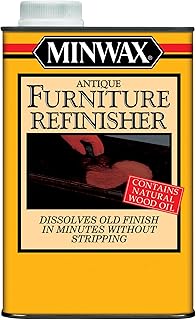
Best for: Antique-furniture restoration where the goal is to dissolve an existing varnish, shellac, or lacquer finish rather than remove a small surface stain.
Minwax describes this product as a low-viscosity, amber-colored blend of solvents and wood conditioners with natural wood oils. The listed use is to dissolve certain old finishes on wood without harming the wood itself. The application description says it can be used without scraping or sanding, making it a different kind of restoration option from a spot-treatment spray.
This distinction is important. A product that dissolves a finish can change the appearance of a whole treated area; it is not the most precise choice for a single dark ring, food mark, or scratch. It is also not the same as a product that simply conceals discoloration.
Choose this if you are restoring furniture and need to address an existing varnish, shellac, or lacquer layer. Avoid it if you only need to treat a small stain while preserving the current finish. Follow the product label and test an inconspicuous area before proceeding.
Trade Secret Dark Wood Scratch Remover

Best for: Dark finished wood with scratches, nicks, scuffs, or pet marks that expose lighter, discolored material. This product is a concealer, not a wood filler or a remover of stains embedded beneath the finish.
The listed formula is coconut-oil-based and described as a wipe-on, wipe-off treatment with no sanding required. It is intended for dark hardwood, engineered surfaces, veneers, furniture, floors, cabinets, trim, and panels. Its stated purpose is to make exposed discoloration look more uniform by covering it with a dark-brown tint.
It may be less effective on shallow marks that do not expose discolored wood, or on scratches located only in the finish layer. The dark shade also makes a hidden-area color test important, particularly when the wood tone is not a close match.
Choose this if a dark finished surface has a visible, discolored scratch and you want to camouflage it without sanding. Avoid it if you need to remove a water ring, lift a stain, fill a gouge, or treat a light-colored surface.
Chemical Guys Lightning Fast Stain Extractor
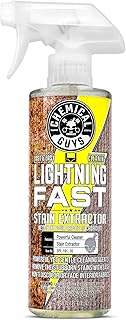
Best for: Carpet, upholstery, rugs, mats, and fabric furniture near wood surfaces—not for removing stains from wood itself. It is included as a useful distinction for rooms where a spill may affect both a wooden floor or table and nearby soft furnishings.
The product information describes a professional-strength extractor for natural and synthetic fibers. It targets common fabric spills such as coffee, soda, wine, food, and pet messes, and is also described as addressing odors. The listed settings include home furniture, office chairs, and automotive interiors.
Those claims apply to fibers and fabric materials, not wood. Do not select this as a wood stain treatment based on the word “stain” in the name. For a spill that reaches both a rug and a wooden floor, use a product specifically intended for each material and keep the treatments separate.
Choose this if the stain is on fabric or carpet around your wood furniture. Avoid it if the mark is on a wood floor, cabinet, tabletop, or veneer; the supplied product details do not identify wood as an intended surface.
Weiman Hardwood Cleaner and Polish Bundle

Best for: Buyers seeking a hardwood cleaner-and-polish bundle for maintenance, rather than a product with documented stain-removal directions in the supplied details.
The product name identifies it as a hardwood floor cleaner and polish restorer bundle with a citrus scent. However, no feature list was provided to establish which marks it removes, what floor finishes it is suitable for, or how it should be applied. It is therefore not possible to recommend it as a targeted treatment for water rings, tannin stains, or scratches based on the available product information.
Choose this if your goal is general hardwood cleaning and polishing and the product label confirms it is suitable for your floor. Avoid it as a stain-removal solution until you verify the label’s surface and stain guidance. A cleaner or polish may maintain a floor without correcting a stain that has penetrated or altered the finish.
Buying Guide: How to Choose an Interior Wood Stain Remover
What kind of mark are you trying to fix?
Identify the mark before choosing a product. Dark rings and black spots associated with moisture and tannin call for a targeted treatment such as WOCA, if the finish type is suitable. A scratch that exposes lighter wood may need a color-matching concealer. A worn or unwanted coating is a refinishing problem, which is the category Minwax Antique Furniture Refinisher addresses. Routine cleaner and polish products are not automatically stain removers.
Look closely at the surface and stain. Is the discoloration on top of the finish, inside the finish, or in the wood beneath it? A surface spill may be removable with an appropriate cleaner, while a mark that has penetrated wood may require a different treatment or professional refinishing. Product names alone do not establish what a formula can safely remove.
Does the wood finish change which product is safe?
Yes. The same treatment can behave differently on unfinished wood, oil-treated wood, waxed wood, and a sealed surface. WOCA specifically excludes lacquered and varnished surfaces, while its listed uses include unfinished, oiled, waxed, and soaped wood. Minwax is intended to dissolve certain finish types, so it should not be treated as a routine spot cleaner when preserving the existing coating is the goal.
Check the product label and identify the finish when possible. If you cannot identify it, test the treatment in an inconspicuous location before applying it to a visible area. A test can reveal unexpected lightening or a poor color match, although it does not replace following the label directions.
Do you need to remove, conceal, or refinish?
These are different outcomes. A stain remover aims to treat a mark. A concealer changes how visible a mark looks without necessarily removing it; Trade Secret is described as covering exposed discoloration on dark wood. A refinisher dissolves an existing coating, which may be appropriate for restoration but is not a precise way to treat one small spot. Choose based on the result you need rather than the broad word “remover.”
- For dark water or tannin marks: Consider a wood-specific spot treatment, after checking the finish restrictions.
- For discolored scratches on dark wood: Consider a concealer only if its shade and intended surface match.
- For old finish removal: Use a refinishing product only when removing the coating is part of the project.
- For fabric spills near wood: Choose a fabric product for the fabric, not the wood surface.
How can you reduce the risk of making a spot worse?
Read the label first, work only on the intended material, and use the smallest treatment area practical. WOCA warns that overspray or contact with nearby unstained wood can lighten adjacent areas. For a dark-tinted scratch concealer, test the color in a hidden spot. Do not combine products unless their labels explicitly allow it, and do not assume that a cleaner, polish, stain remover, and refinisher are interchangeable.
For a valuable antique, a large stain, or a finish you cannot identify, consider consulting a furniture-restoration professional before applying a solvent or removing the coating. Aggressive treatment can affect the surrounding finish as well as the stain.
When is a general hardwood cleaner enough?
A general hardwood cleaner is a reasonable maintenance choice when the goal is routine cleaning and the label confirms that the product is suited to the floor finish. It may not correct a deep water mark, tannin reaction, or exposed-wood scratch. The supplied details for the Weiman bundle identify it as a cleaner and polish restorer but do not specify stain-removal performance, so verify the product label before relying on it for a particular mark.
Frequently Asked Questions
What is the best product here for black water rings on wood?
WOCA Tannin Spot Remover is the most directly targeted option listed for black water marks and dark rings caused by tannin and moisture reactions. Its product information excludes lacquered and varnished surfaces, so confirm the finish before using it.
Can I use wood stain remover on a varnished table?
It depends on the product. WOCA’s listed guidance says not to use it on lacquered or varnished surfaces. Minwax Antique Furniture Refinisher is designed to dissolve certain finishes, including varnish, so it may remove the coating rather than simply lift a stain.
Does Trade Secret remove a scratch from dark wood?
It is described as a concealer for discoloration where wood or substrate is exposed. It does not fill the scratch, and the listed information says it may be less effective on shallow scratches that do not expose discoloration.
Can I use carpet stain remover on a wood floor?
No product details supplied for Chemical Guys Lightning Fast identify wood as an intended surface. Its listed uses are carpet, upholstery, fabric, rugs, and mats. Use a wood-specific product for the floor and follow that product’s surface restrictions.
Should I remove the finish to get rid of a stain?
Not automatically. Removing a finish is a restoration decision, not a default stain-removal step. First identify the stain and finish, then select a compatible spot treatment. Use a refinisher only when dissolving the existing coating is part of the intended work.


