Find the right inside corner taping tool for clean, professional drywall corners. This guide targets DIY remodelers and pros seeking precise, efficient finishes on indoor corners. The top picks cover inside corners, from traditional trowels to flexible and plastic options, highlighting best uses, limitations, and who each tool suits best.
| Product | Best For | Key Benefit | Limitation |
|---|---|---|---|
| Goldblatt 2 Piece Drywall Corner Tool Set | Professional finish on masonry and concrete work | Two-piece set for inside and outside corners | Stainless steel requires care to prevent rust on storage |
| LEVEL5 Inside Corner Knife | Smooth inside corners with flexible steel | Flexible blade for 90-degree corners | Premium materials; payoff comes with proper technique |
| Delko Taper with Internal Corner Attachment | Efficient, fast taping of joints and corners | Simultaneous compound and tape application | Attachment accessory needed for full impact |
| Quixleen Drywall Corner Tool | Durable stainless steel with comfortable grip | Sturdy, balanced design | Plastic versions may offer less rigidity |
| Joyangy 2-Pack Plastic Inside Corner Trowel | Lightweight, budget-friendly corners | 90-degree plastic trowel for quick jobs | Plastic may wear with heavy use |
Below are five carefully chosen tools. Each entry explains who benefits most, why it was selected, and a potential caveat. Use this to compare tools at a glance and pick the one that fits your project scope.
Goldblatt 2 Piece Drywall Corner Tool Set

The set includes a 5″ x 3-7/8″ outside corner trowel and a 3-1/2″ x 2-3/8″ inside corner trowel. Features include professional blade angle design with an external blade angle under 90° and internal over 90°, plus high-strength stainless steel blades that resist rust and bending. Best for professionals finishing corners in masonry or concrete work and for users needing precise corner fits. Ideal when you want smoother finishes with less sanding. Caution: storage means hanging holes on handles aid organization but blades should be kept dry to prevent corrosion over time.
Who it’s best for: Tradespeople and serious DIYers working on interior corners of walls and edges, especially where rust resistance matters.
Inside Corner Knife, LEVEL5 Pro-Grade
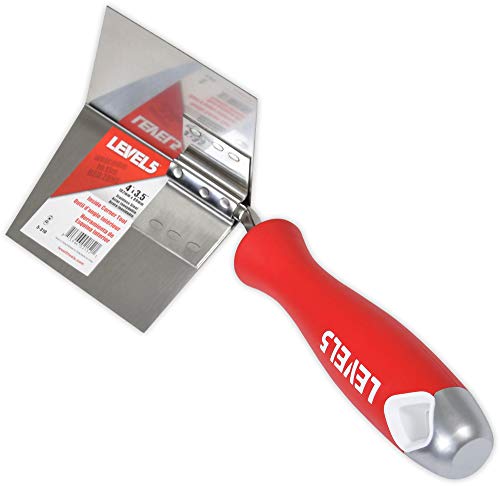
Designed to flex to 90 degrees with smooth, consistent pressure for perfect inside corners. Made with flexible stainless steel that adapts to provide smooth finishes, and a heavy-duty ergonomic rubber handle to reduce fatigue during extended use. Best for finish work where a consistent corner is critical and minor tolerance gaps must be minimized. Limitation: flexible steel requires careful control to maintain shape over time.
DELKOtaper Drywall Taping Tool

The Delko Taper with Internal Corner Attachment enables contractors to finish flat joints and internal corners with one tool. It supports fast, easy, economical drywall taping by applying compound and tape simultaneously. Best for pros seeking efficiency and a one-tool solution for internal corners. Caution: depends on the proprietary attachment for internal corners, which may limit compatibility with other brands.
Quixleen Drywall Corner Tool
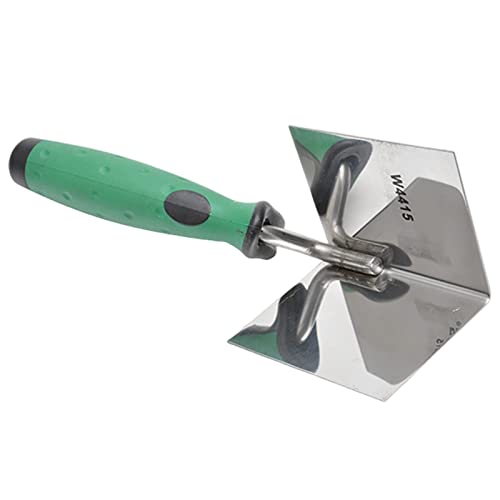
Stainless steel corner trowels with a comfortable non-slip rubber handle. The internal and external blades are forged for durability, and the material promises high durability with a well-balanced center. Best for users desiring a sturdy tool for repeated use on inside corners. Limitation: stainless steel requires initial conditioning to prevent rust if stored damp.
Joyangy 2-Pack Plastic Inside Corner Trowel
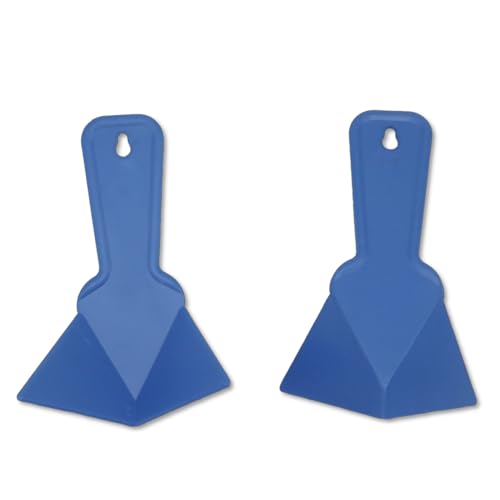
This two-pack of lightweight plastic inside corner trowels is designed for 90-degree corners. Features a versatile tool capable of mud application, taping, and scraping for professional-looking results. Best for entry-level projects or quick touch-ups, where cost and ease of use are priorities. Caution: plastic construction may wear faster under heavy use and with hard edges.
Buying Guide: Inside Corner Taping Tools
Key considerations help match tools to project needs.
- Material and durability: Stainless steel offers longevity and rigidity, while plastic is light and affordable but may wear with heavy use.
- Blade flexibility: Flexible blades help achieve perfect 90-degree corners but may require technique to keep form over time.
- Handle comfort: Ergonomic grips reduce fatigue on long jobs; consider weight and balance for precision.
- Attachment versatility: Internal corner attachments or multiple-piece sets can boost efficiency on complex jobs.
- Size and edge design: Inside corners require compact profiles; outside corner tools are needed only for adjacent edges.
- Storage and maintenance: Tools with hanging holes or rust-resistant materials simplify upkeep on job sites.
How to choose between metal and plastic tools
Metal tools typically provide better rigidity and durability for repeated use, making them suitable for professional settings. Plastic tools are lighter, more affordable, and suitable for occasional or smaller-scale projects. Consider your workload, storage conditions, and whether you need extra features like double-ended sets or integrated corner attachments.
What to expect from a corner taping tool
Most tools aim to minimize sanding and produce uniform corners. The best options allow even compound distribution, stable corner pressure, and straightforward cleanup. If you frequently work with damp conditions or metal-to-board transitions, rust resistance and edge quality become critical factors.
Frequently asked questions
- What is the key difference between inside and outside corner tools? Inside corner tools are designed to mold and finish the inner angle, while outside corner tools shape the outer edge of the joint for a clean corner exterior.
- Do I need a dedicated internal corner attachment? An attachment can speed up internal corner work, but many multi-trowel sets cover both inside and outside needs without extra pieces.
- Is a flexible blade necessary for perfect corners? Flexibility helps adapt to 90-degree angles, reducing gaps, though it requires careful control to maintain consistent pressure.
- Can I use a plastic inner corner trowel on heavy mud jobs? Plastic tools are best for lighter applications; for heavy mud, a metal blade offers more durability and control.
- How important is ergonomics in a corner trowel? Ergonomic grips reduce hand fatigue, improving accuracy on long projects and preventing fatigue-related mistakes.
- Should I choose a two-piece set or single-tool options? A two-piece set provides dedicated tools for inside and outside corners, increasing efficiency on standard drywall projects.