Answering the need for durable, heat-resistant coatings, these high-temperature paints are suitable for automotive exhaust parts, grills, engines, and other metal surfaces exposed to intense heat. This guide highlights five top options, noting who each product is best for and where to choose one over another. Ideal buyers include automotive hobbyists, DIY enthusiasts restoring grills and exhausts, professional blacksmiths, and anyone protecting metal components from high-heat exposure.
Summary table of selected products:
| Product | Best For | Max Temperature | Key Benefit |
|---|---|---|---|
| Eastwood 2K Aerospray High Temperature Ceramic Engine Gloss Black | Extreme heat environments; engines | 650°F | Ceramic-based durability with urethane technology |
| Rust-Oleum Automotive High Heat Flat Black (12 oz) | Automotive parts facing intermittent heat | 2000°F | Stops Rust formula for corrosion resistance |
| Rust-Oleum Automotive High Heat Flat Aluminum | Metal surfaces needing light-colored finish | 2000°F | Same high-heat protection with aluminum look |
| VHT Flameproof Spray Paint | Exhaust systems and headers | 1300–2000°F | Specially formulated for extreme heat in automotive and aerospace |
| Rust-Oleum 249340 High Heat Primer Spray | Rust-prone metal surfaces; base coat needs | Up to 1200°F (topcoat varies) | Rust-resistant primer for high-heat applications |
Rust-Oleum 248903 Automotive High Heat Flat Black
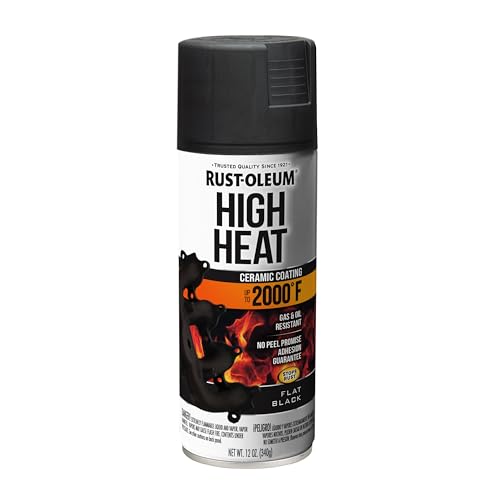
Features: Ideal for automotive parts exposed to intermittent high heat up to 2000°F. Tough enamel with Stops Rust formula provides corrosion resistance and long-lasting protection. Dries to touch in 30 minutes and covers up to 10 sq. ft. per can.
Best for: Home mechanics and DIY enthusiasts renovating exhaust components, engine covers, and other metal parts that heat up in automotive settings. This option is a solid all-around choice when heat exposure is frequent but not continuous. Caution: final color can be affected by underlying surface prep; ensure proper surface cleaning for best adhesion.
Rust-Oleum 248904 Automotive High Heat Flat Aluminum

Features: Similar to the flat black variant, this aluminum finish version withstands intermittent heat up to 2000°F with a Stops Rust formula for corrosion protection. Dries to touch in 30 minutes and covers up to 10 sq. ft. per can.
Best for: Projects where a flat aluminum tone is preferred, such as engine bay components or exhaust shields. Choose this if you want a lighter metallic look. Limitation: color finish is aluminum, not black, which may affect color-matching with existing parts.
Eastwood 2K Aerospray High Temperature Ceramic Engine Gloss Black

Features: Uses a two-component urethane catalyzed system for enhanced durability and extreme condition resistance. Temperature resistance up to 650°F, offering a ceramic-based finish that withstands high heat and reduces wear on engine surfaces.
Best for: Professionals and serious hobbyists seeking a ceramic-enhanced coating with enhanced durability under higher vibration and thermal cycling. Caution: requires proper mixing and curing steps per product instructions to achieve optimal performance.
VHT Flameproof Spray Paint (Blk)
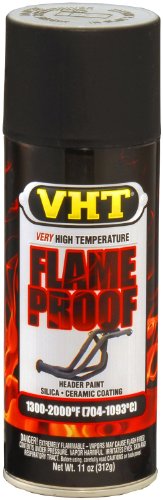
Features: High heat coating resistant to 1300°F-2000°F (704°C-1093°C). Widely used on automotive exhaust systems and jet engine-related applications. Requires curing time and can be applied on or off the vehicle.
Best for: Users needing a robust, aerospace-grade high-heat finish and a proven track record on exhaust components. Limitation: high-temperature performance depends on proper curing; off-vehicle curing may be necessary for best results.
Rust-Oleum 249340 High Heat Primer Spray
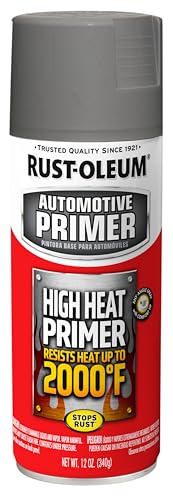
Features: Oil-based primer designed for metal surfaces like engines and mufflers, using Stops Rust to provide a rust-resistant base coat. Covers up to 12 sq ft, dries to touch in 30 minutes, top coating possible after 1 hour.
Best for: Priming metal surfaces that will experience high heat and potential corrosion, creating a more durable foundation. Caution: primer alone does not provide high-heat color; requires topcoat for appearance and protection.
Buying Guide: High-Temperature Paint Considerations
What temperature range do I need to cover? Choose products rated for the highest heat your item will encounter. Some coatings tolerate up to 2000°F intermittently, others up to 650°F continuous. Match the application to the expected heat.
Is color important, or is a functional finish enough? For visible exterior surfaces, select a color that blends or complements your project. For hidden components, a durable black or metallic finish may suffice. Consider a ceramic or urethane-ceramic blend for enhanced wear resistance.
Do I need a primer? High-heat primers improve rust protection and paint adhesion on metal that’s prone to corrosion. In many cases, using a primer with a topcoat yields longer-lasting results, especially on engines and exhaust parts.
What surface preparation is required? Clean the surface thoroughly, remove oils, rust, and old paint flaking. Some products require curing times or heat activation, so follow manufacturer instructions to maximize durability.
What about application method? Aerosol sprays are convenient for even coverage, while brush-on or two-part systems can offer deeper protection on larger or specialized parts. Consider the environment and ventilation when spraying.
Performance considerations: ceramic-based formulas often provide better heat resistance and longevity under thermal cycling. If exposure is extreme or involves continuous heat, prioritize products with proven high-temperature performance and proper curing guidelines.
FAQs
- What is the highest temperature a high-heat paint can withstand? Most automotive high-heat paints are rated for up to 1300–2000°F depending on the product and heat exposure pattern.
- Do I need to remove all rust before applying high-heat paint? It depends on the product; most primers and coatings perform best on rust-free metal. Use rust-inhibiting primers when rust is present.
- Can I apply these paints on off-vehicle components? Yes, many high-heat coatings are suitable for off-vehicle application and curing in a controlled environment.
- Is ceramic coating always better for high heat? Ceramic-based formulations can offer improved durability and heat resistance, but choose based on surface needs and cure requirements.
- How long should I cure before exposure to heat? Follow the product’s curing instructions; some require heat curing for optimal adhesion and durability.
- Are these paints safe for automotive exhaust systems? Yes, several products are specifically designed for exhaust systems and other high-heat automotive parts when used per directions.