For holes in wood that need a smooth, sandable repair, choose a wood filler; expanding spray foam is better for sealing large, hidden gaps than for creating a finished wood surface. The aididan wood filler is the most directly suited option here for visible repairs. Loctite and Great Stuff foams are alternatives for deep cavities, drafts, or gaps where insulation and air sealing matter more than a wood-like finish.
| Product | Best suited for | Repair type |
|---|---|---|
| aididan Wood Filler | Visible holes, cracks, and furniture repairs | Surface repair |
| Loctite Tite Foam Big Gaps | Large concealed openings | Gap filling and insulation |
| Loctite Tite Foam Gaps & Cracks | Narrow gaps and cracks | Gap filling and insulation |
| Great Stuff Insulating Foam Sealant | General insulation and air sealing | Expanding foam |
| Great Stuff Smart Dispenser | Controlled application to gaps | Expanding foam |
aididan Paintable And Stainable Wood Filler

Best for: Visible holes, cracks, scratches, and other surface damage in wood furniture or other wood items. This is the most directly relevant product in this selection because it is described as wood filler rather than insulation foam.
The 16-ounce white putty is listed as paintable and stainable. Its water-based formula is described as odor-free and non-toxic, while the product features also claim adhesion to various wood types and resistance to cracking, shrinking, and sinking. These properties make it a better match than expanding foam when the repair needs to blend into a finished surface.
Choose this if you want a putty-style repair that can be painted or stained after drying. The listing says excess material is easy to wipe away. Limitation: the product is white, so a color match may still require finishing; the listed features do not specify drying time or a recommended maximum hole size.
Loctite Tite Foam Big Gaps
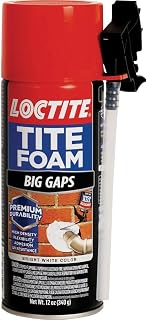
Best for: Large, concealed openings in or around wood where the goal is to fill, seal, and insulate rather than create a smooth, finished wood patch. The product is a 12-fluid-ounce can of polyurethane expanding foam and is listed for gaps and cracks up to 3 inches in size.
Its high-density foam has a uniform cell structure, according to the product features, and is described as flexible enough to withstand building and material movement without compromising its seal. That makes it better suited than wood putty for a deep gap that needs an insulating seal.
Choose this if the opening is too deep or irregular for a surface filler and appearance is secondary. Limitation: expanding sealant is not described as paintable, stainable, or sandable wood filler. It may not produce a neat, wood-like surface, so avoid it for a visible repair that must blend with surrounding wood.
Loctite Tite Foam Gaps And Cracks

Best for: Smaller openings around wood framing or trim where air sealing and insulation are priorities. This 12-fluid-ounce polyurethane foam is listed for gaps and cracks up to 1 inch, making it a better fit for narrow spaces than the Loctite Big Gaps option.
The listed features describe a high-density foam with a uniform cell structure. They also state that the foam is made from purified and concentrated ingredients and withstands harsh UV rays. Those characteristics support choosing it for a gap-sealing task rather than a cosmetic wood repair.
Choose this if you need to seal a relatively narrow gap and want an expanding foam product. Limitation: the listed maximum gap size is 1 inch, and this is not presented as paintable or stainable wood putty. For a hole on a visible wood face, a dedicated filler is a more suitable choice.
Great Stuff Insulating Foam Sealant

Best for: Insulation and air sealing in areas where expanding foam is appropriate and the opening does not need a wood-filler finish. The listing describes a 20-ounce can of expanding foam sealant for insulation and air sealing, so it is a general-purpose option in this group.
The product features mention application in various areas and a smooth finish. For a hole in wood, the key question is whether the goal is to stop drafts or fill a cavity—not whether the patch should look like the original wood. If a repair will remain visible, a putty designed for wood offers a more relevant finish-oriented approach.
Choose this if the repair is part of a broader insulation or air-sealing job. Limitation: the supplied features do not state a maximum gap size or say that the foam is stainable or paintable. Do not assume it will produce a seamless surface repair.
Great Stuff Smart Dispenser Gaps And Cracks

Best for: Gap-sealing projects where controlled dispensing and reduced mess are priorities. This 12-ounce Great Stuff product is described as a gaps-and-cracks foam, and its smart dispenser is advertised as stopping foam flow when the user stops dispensing.
The listing says the foam can reduce drafts and help save energy. That makes it a better match for openings around wood that connect to air leaks than for small, visible nail holes or furniture blemishes. Compared with a wood putty, its main role is sealing rather than surface finishing.
Choose this if you want the listed no-drip, less-mess dispenser feature for a foam-sealing task. Limitation: no maximum gap size or wood-finishing capability is included in the supplied features. It should not be selected on the assumption that it can be sanded, stained, or made to match wood.
Buying Guide: How To Choose A Wood Hole Filler
Do you need a finished surface or an insulated cavity?
Start by deciding what the repair must accomplish. A visible hole in a tabletop, cabinet, door, or trim usually calls for a wood filler that can be shaped and finished. The aididan product is the clear match among these choices because its listed purpose includes repairing wood holes, cracks, and furniture scratches, and it is described as paintable and stainable.
An opening hidden behind trim or located in a cavity may instead need air sealing or insulation. Expanding polyurethane foam is designed for filling and sealing gaps, not for replicating the appearance of wood. Use foam when the purpose is to close an opening; use putty when the purpose is to repair the wood surface.
How large is the opening?
Size helps distinguish the listed foam options. Loctite Tite Foam Gaps & Cracks is specified for gaps up to 1 inch. Loctite Tite Foam Big Gaps is specified for gaps up to 3 inches. These are the only supplied products with stated size limits, so do not assume the Great Stuff products have the same capacity.
For a shallow, visible hole, a wood putty may be easier to finish than foam. For a deep void, a foam can fill space, but it may not deliver a smooth, stain-matched surface. Consider whether a cavity needs a backing material or a separate finish layer before choosing a filler.
Will the repair be painted or stained?
Match the repair material to the planned finish. The aididan filler is explicitly described as paintable and stainable. The listed foam features do not make the same claim, so do not rely on spray foam for a stain-ready wood appearance. Even with a paintable or stainable filler, test the finish in an inconspicuous area when color matching matters.
Do you need flexibility or a tidy application?
Loctite Big Gaps is described as flexible and able to withstand building and material movement while maintaining its seal. That feature is relevant to a moving gap, not necessarily to a cosmetic patch. Great Stuff Smart Dispenser is specifically described as reducing drips and mess and stopping foam where dispensing stops. These features may help with application control, but the supplied details do not establish an exact amount of foam to use for a particular hole.
What precautions should guide application?
Follow the product label for surface preparation, application, expansion, curing, and cleanup. Do not fill a visible wood hole with expanding foam unless the product instructions and repair plan support that use. Foam expands, so applying it to a small opening can make a neat surface repair more difficult. For any filler, keep the intended finish and the surrounding material in mind before beginning.
Frequently Asked Questions
Can expanding foam be used to fill holes in wood?
It can fill some cavities and gaps, especially when the goal is insulation or air sealing. It is generally a poor choice for a visible hole that needs a smooth, stainable wood finish. Choose a wood filler for surface repairs.
What is the best product here for a visible wood repair?
The aididan Wood Filler is the most directly suited option in this selection. Its listed uses include wood holes, cracks, scratches, and furniture repair, and it is described as paintable and stainable.
Which listed foam is intended for the largest gaps?
Loctite Tite Foam Big Gaps is listed for gaps and cracks up to 3 inches. Loctite Tite Foam Gaps & Cracks is listed for openings up to 1 inch.
Can spray foam be stained to match wood?
The supplied features for the spray foam products do not say they are stainable. For a stain-matched repair, select a product explicitly described as stainable, such as the listed aididan wood filler, and verify the result with a test application.
Should I use wood filler or foam for a draft around wood trim?
If the problem is an air leak in a hidden gap, a foam sealant may be more appropriate than surface putty. If the problem is a visible hole in the trim itself, use wood filler. Choose based on whether the repair needs sealing or a finished surface.


