When protecting wooden surfaces from fire, the right fire-rated coating can slow flame spread, reduce smoke, and buy valuable escape time. This guide highlights five effective options, ideal for homes, workshops, and commercial spaces seeking compliant, non-toxic protection. Choose based on project size, surface type, and ease of application. The listed products are aimed at wood and related substrates, with clear guidance on best use cases and limitations.
Summary at a glance:
| Product | Best For | Key Benefit | Limitation |
|---|---|---|---|
| Contego Original Formula | Homes and interiors | Zero flame spread, zero smoke production | Water-based, needs proper surface prep |
| Master Flame Class A Fire Retardant Spray (1 gal) | Wood and fabrics in occupied spaces | Non-toxic, dries clear | Repeated coats may be needed for thick wood |
| INSL-X FR110099-01 | Interior wood projects | Low VOC, slows fire and smoke | Products labeled for interior use only |
| DRI-ONE Flame Retardant (5 gal) | Large projects and renovations | Ready-to-use, bonds with materials | May require multiple coats on porous wood |
| Master Flame Spray Quart | Small to mid-size touch-ups | Non-toxic, dries clear | Smaller coverage per quart |
Contego Original Formula Intumescent Coating (1 gal)

Contego Original Formula is a latex, water-based intumescent coating designed to protect wooden and other building materials without VOCs. It swells when exposed to heat to block oxygen and slow flame spread, providing zero flame spread and reduced smoke production. Best for interior walls, frames, and common living spaces where low emissions are essential. This product offers excellent adhesion and can be applied with brushes, rollers, or airless sprayers, making it versatile for renovation projects and new construction alike.
Who it’s best for: homeowners seeking a low-VOC, water-based fire barrier for living areas, nurseries, kitchens, or bedrooms. It’s also suitable for garages and utility rooms where ongoing occupancy requires safer materials. This is a strong pick when zero flame spread is the priority and you want simple, brush-on application.
One limitation: even with strong adhesion, surface prep and multiple lightweight coats may improve performance on very porous woods. Avoid heavy coats that can trap moisture or peel over time.
Master Flame Class A Fire Retardant Spray (1 Gallon)

This spray-on fire retardant is designed to form a non-toxic, fire-resistant barrier on wood, fabrics, and other materials. It has been tested to NFPA 701 and ASTM E84 standards and dries clear with no odor. The product is easy to apply via spraying, rolling, or soaking, and it can be used on absorbent surfaces prior to painting. Because it is water-based, it pairs well with additional finishing coats after the fire protection layer has cured.
Who it’s best for: spaces that require rapid, hands-off application with flexibility for subsequent finishes, such as classrooms, offices, or living spaces where occupants remain during treatment. It suits projects where clear drying is important to preserve the look of the wood beneath.
One limitation: while it dries clear, very thick applications may hinder appearance or uniformity. Plan for multiple lighter coats to ensure even coverage on wood grain.
Master Flame Class A Fire Retardant Spray (5 Gallon)
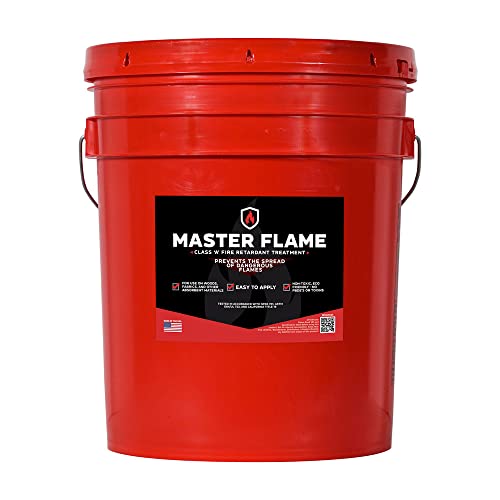
The 5-gallon formulation is designed for larger projects, providing a robust fire retardant barrier for wood, fabrics, and other porous materials. It meets NFPA 701, ASTM E84, and California Title 19 standards, with a non-toxic composition that dries clear and odor-free. The product is suitable for pre-application on wood before painting or finishing, and dries within 24 hours to allow subsequent coatings.
Who it’s best for: contractors, builders, or homeowners tackling sizable renovations where a uniform fire barrier over large wooden areas is needed. It’s especially useful for schools, small businesses, or multi-room projects where rapid, scalable treatment matters.
One limitation: the larger volume requires planning for storage and handling, and you may need to coordinate with painters to apply top coats after the retardant has cured.
INSL-X FR110099-01 INS-LX Fire Retardant Paint

FR110099-01 INS-LX is a high-performance, low-VOC fire retardant paint designed to slow fire and smoke spread on interior wood surfaces. It provides an additional layer of protection that complements other coatings and helps meet strict indoor air quality goals. The formulation is intended to slow ignition and limit smoke development, supporting safer egress during a fire scenario.
Who it’s best for: projects prioritizing low VOC content and a clear path to compliant interior fire protection. It’s suitable for wood walls, trim, cabinetry, and other interior wood features where a long-lasting finish is desired after retardant application.
One limitation: as an interior-focused product, outdoor exposure or direct weathering is not its intended use. Plan for proper substrate preparation and compatible topcoats for exterior environments.
DRI-ONE Flame Retardant (5 Gallon Pail)

DRI-ONE Flame Retardant is a long-standing, American-made solution designed for natural textiles, raw wood, absorbent materials, and more. It bonds with materials to provide a protective shield before painting or staining and is available in various sizes. The formula is marketed as environmentally safe and non-toxic, designed to limit flame spread and reduce toxic smoke. It is widely recognized by fire officials and offers immediate readiness with no dilution required.
Who it’s best for: larger renovation projects or buildings with multiple wood surfaces needing fire protection prior to finishing. Suitable for professionals and DIYers who value a trusted, widely used retardant that remains compatible with subsequent coatings.
One limitation: the product’s emphasis on a broad range of materials means wood applications may require careful surface preparation to optimize adhesion and finish compatibility.
Buying Guide: Key Considerations For Fire Rated Wood Coatings
- Surface type and porosity: Porous woods absorb more coating, requiring more coats. For smooth woods, you may achieve a uniform film with fewer passes.
- VOC content and indoor air quality: Low-VOC options reduce emissions during and after application, beneficial for living spaces and schools.
- Fire rating standards: Verify NFPA 701, ASTM E84, or California Title 19 compatibility, depending on jurisdiction and project type.
- Finish and compatibility: If you plan to paint or stain after retardant, ensure the product is designed to bond with typical topcoats and that curing times align with your workflow.
- Application method: Sprays can cover large areas quickly but may require masking; brush and roller work well for precision on trim and corners.
- Color and appearance: Some fire retardants dry clear or with minimal residue, while others may alter the surface look. Test on a sample area first.
- Safety and occupancy: For occupied spaces, prioritize non-toxic, low-odor formulas and consider the need for temporary relocation during treatment.
FAQ: Quick Answers For Buyers
- What is fire retardant coating for wood?
An intumescent or chemical coating that forms a protective barrier when exposed to heat, slowing flame spread and smoke. - Can these products be painted over?
Many retardants are designed to accept topcoats; check product guidelines and allow proper curing times before painting. - Are these coatings safe for homes with children?
Low-VOC, water-based formulations are typically safer for occupied spaces, but always follow manufacturer directions and ventilation guidelines. - Which coating is best for large wood projects?
High-volume retardants like 5-gallon pails are efficient for large areas, while sprays and quarts suit smaller jobs or touch-ups. - Do these coatings prevent all fire damage?
They slow flame spread and reduce smoke, but no coating makes wood fireproof. Create layered protection with proper materials and safety plans. - How should I prepare wood before application?
Clean, dry, and lightly sand surfaces as recommended; ensure any finish or sealant is compatible with the retardant and topcoats you plan to use.