Answering your search for fine grit sandpaper for wood, this guide highlights options that deliver smooth, paint-ready surfaces. The best picks are suited for woodworkers aiming for a flawless finish, furniture refinishing, or trim work. Each product is evaluated for ease of use, grit range, and how it fits common wood projects—from priming to finishing. The top five selections balance affordability, versatility, and durability for American hobbyists and professionals alike.
| Product | Best For | Key Feature |
|---|---|---|
| 3M Sandpaper 9000NA-20 (220 Grit) | General wood finishing | Aluminum oxide, versatile for paint, wood, metal |
| Romeda 8-Pack Sanding Sponge (60/80/120/220) | Budget sets with multiple grits | Durable high-density sponges, washable |
| Shineboc Sandpaper Assortment (120/220/400/600/800/1000/2000) | Multi-stage sanding from rough to fine | Premium silicon carbide, wet/dry use |
| S&F STEAD & FAST Sanding Blocks (60/80/120/220) | Hand sanding with foam blocks | European high-density foam, durable abrasive |
| XIWEYLA 72PCS Premium Set (80–3000) | Detail sanding and micro finishing | 3-color zones for grit recognition |
3M Sandpaper, 220 Grit, 5 Sheets

Best for: Home workshops that need a general-purpose sandpaper for wood, paint, and metal. This 220 grit option is a versatile choice for final smoothing before finish coats. It is suitable for beginners and intermediate woodworkers who want reliable, consistent results without switching grits often.
Why it’s selected: The 3M sheet uses aluminum oxide and is designed for general sanding tasks across wood, paint jobs, and light metal work. It’s a straightforward, go-to option when completing a project that requires a clean, smooth surface.
Limitations: It’s a basic set without a broad grit range, so you may need additional grits for more aggressive shaping or ultra-fine finishes.
Romeda 8-Pack Sanding Sponge

Best for: Woodworking projects that require different grit levels across one project, such as furniture refinishing or cabinet touches. The 8-pack covers 60/80/120/220 grits, giving a quick pathway from rough shaping to fine finishing.
Why it’s selected: Each sponge is high-density and tear-resistant, with a durable finish that stays intact while sanding. The color-coding helps users quickly identify grits, and the sponges are washable for reuse.
Caution: Sponges are designed for dry sanding and may wear more quickly on very hard woods or painted surfaces with heavy buildup.
Shineboc Sandpaper Assortment

Best for: Projects requiring a wide grit spectrum from rough to ultra-fine, including furniture finishing and detailed surface prep. This 21-sheet kit spans from 120 to 2000 grit, enabling a complete sanding workflow.
Why it’s selected: Engineered with premium silicon carbide and electrostatic coating for even grit distribution and longer life. It supports both wet and dry sanding, reducing scratches and dust in dry work and enabling smoother finishes when wet.
Limitation: Higher grit levels are best for final finishing rather than heavy material removal; pairing with coarser grits is often necessary for faster prep on dense woods.
S&F STEAD & FAST Sanding Sponge Blocks

Best for: Gentle hand-sanding tasks on wood furniture, doors, and cabinetry where control and comfort matter. The set includes 60/80/120/220 grits to cover a full sanding progression.
Why it’s selected: The blocks use premium European high-density foam that reduces hand fatigue and resists compression under pressure. The aluminum oxide abrasive provides durable wear, making it suitable for longer sessions on wood prep.
Note: This option emphasizes hand-sanding ergonomics; for power tools, you might need different backing or sheet sizes to fit your sander.
XIWEYLA 72PCS Premium Set
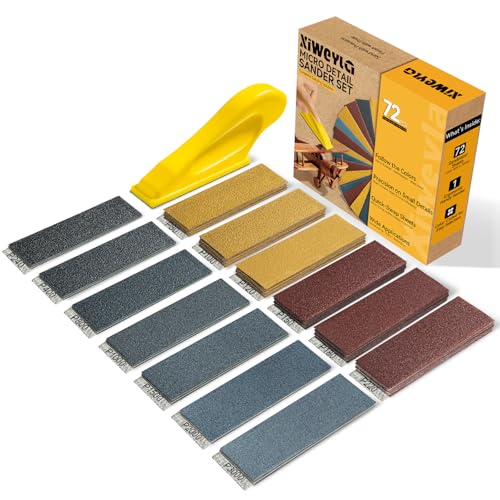
Best for: Detail sanding and hard-to-reach areas where precise control matters, such as small wood trims and crafts. The kit spans 80–3000 grit with 13 levels, ideal for a progressive finishing workflow.
Why it’s selected: A three-color grit zone system helps users immediately identify coarse, medium, and fine grits. The quick-swap hook-and-loop backing enables fast sheet changes, keeping projects moving.
Limitation: The broad grit range may be more than some projects need; beginners may benefit from starting with a narrower selection of grits to avoid confusion.
Buying Guide: How To Choose Fine Grit Sandpaper For Wood
What grit range best fits your project?
- Fine to very fine grits (120–600) are ideal for smoothing surfaces pre-finishing and removing minor imperfections.
- Ultrafine grits (800–3000) are best for polishing, achieving near-gloss finishes with minimal texture.
What material matters most?
- Aluminum oxide is common, durable, and suitable for wood, paint, and metal. It’s a good all-around choice for most DIY tasks.
- Silicon carbide performs well for hard woods and resin-rich surfaces; it can cut aggressively yet leaves a smooth finish with care.
Wet vs dry use: Do you prefer dust control?
- Wet sanding reduces dust and can improve finish quality on delicate surfaces, but requires careful cleanup and water management.
- Dry sanding is faster for material removal and is compatible with most standard sanding blocks and power tools.
Backing type and ergonomics matter for comfort and control.
- Sheets are versatile for cutting to size and using with a board or block. Hook-and-loop backs enable quick changes and compatibility with orbital sanders.
- Sanding sponges and blocks provide better grip and control when working on curves, corners, or upright surfaces.
Project scope and budget guide:
- For occasional projects, select a small, versatile set with several grits (e.g., 120–800) to cover most steps from prep to finish.
- For upholstery or furniture refinishing, a broad kit with up to 2000 grit supports both shaping and final smoothing without changing tools.
FAQ
- What is the best grit for smoothing wood before finishing? Answer: A typical progression starts with 120–180 grit to shape, followed by 220–320 for smoothing, and 400–600 for final prep, then up to 800–2000 for polishing depending on the finish.
- Can I use wet sanding on all wood projects? Answer: Wet sanding is beneficial for reducing dust and refining finishes on many woods, particularly soft woods and finishes; avoid soaking bare, raw wood with water if it may swell or warp.
- Should I choose a set with many grits or a few versatile grits? Answer: For beginners, a kit with a broad yet organized range (e.g., 120–2000) helps cover most steps; advanced users may prefer specialized sheets for specific tasks.
- Is aluminum oxide or silicon carbide better for woodworking? Answer: Aluminum oxide is a durable, general-purpose option suitable for wood and paint; silicon carbide can be better for hard surfaces and finer finishing when used correctly.
- How do I know when to replace sanding sheets? Answer: Replace when you notice clogged grit, worn-down abrasive, or a rough surface that no longer removes material effectively, even with more pressure.
- Can I cut sandpaper to fit a specific sander? Answer: Yes, many sheets are designed to be cut to fit hand blocks or specialty power tools; ensure the backing and size match your tool’s pad.