Etching primer is generally intended for bare metal, not wood. For wood, choose a primer whose listed surfaces include wood, such as Rust-Oleum Painter’s Touch 2X or NADAMOO All Surface Primer Spray; Zinsser Bulls Eye 1-2-3 is a brush-on primer and sealer. The two etching primers below are included for comparison, but their supplied product details specify metal and related surfaces rather than wood. Check the product label for surface preparation and topcoat directions before use.
| Product | Best suited for | Wood listed? |
|---|---|---|
| Rust-Oleum Painter’s Touch 2X | Wood projects needing a spray primer | Yes |
| NADAMOO All Surface Primer | Wood and mixed-surface projects | Yes |
| Zinsser Bulls Eye 1-2-3 | Interior or exterior priming and sealing | Not specified in supplied details |
| Rust-Oleum Self Etching Primer | Bare metal, aluminum, or fiberglass | No |
| U-POL Etching Primer | Bare metal preparation | No |
Rust-Oleum Painter’s Touch 2X

Best for: Wood projects where a spray-applied primer is preferred. The product details specifically list wood among its intended surfaces, alongside plastic, plaster, metal, masonry, and unglazed ceramic.
This oil-based, flat white primer is described as suitable for indoor and outdoor surfaces. Its listed features include a low-odor formula, chip resistance, and spraying from any angle with a comfort tip. The manufacturer states that it dries to the touch in 20 minutes and covers up to 12 square feet per can.
Why it was selected: Unlike the etching primers in this list, this product explicitly names wood as a suitable surface. It is a more relevant choice for a wood project when a spray format is useful.
Limitation: The listed coverage is limited to up to 12 square feet per can, and spray application calls for care to control overspray. Follow the label for preparation and recoat instructions.
NADAMOO All Surface Primer Spray

Best for: Buyers priming wood along with other materials, or those seeking a primer described as helping create a smoother, more even base. Wood is listed among the product’s intended surfaces, which also include porcelain, glass, metal, and plastic.
The product is a matte gray, one-part epoxy primer spray. Its listed features say it is designed to promote adhesion between a surface and topcoat, and that its modified epoxy resins help resist corrosion and chemical damage. The manufacturer also describes the formula as thicker, with coverage intended to help conceal imperfections and neutralize darker underlying colors when applying a lighter topcoat.
Why it was selected: Wood is explicitly included in the product information, and its stated adhesion and color-neutralizing functions may be useful in mixed-material or color-change projects.
Limitation: The supplied product details do not give a drying time or coverage amount. Check the label to confirm preparation, application, and topcoat directions for the specific wood surface.
Zinsser Bulls Eye 1-2-3 Primer
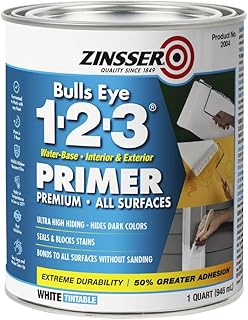
Best for: Buyers looking for a water-based primer and sealer for interior or exterior use, particularly when glossy surfaces are part of the project. The listed features say it bonds to glossy surfaces without scuff sanding.
This white, quart-size product is described as an all-surface stain-blocking primer. The product information also lists a low application temperature of 35°F. It is a brush-on format rather than an aerosol spray, so it suits projects where a container-applied primer is more practical than spray application.
Why it was selected: It offers a distinct alternative to spray primers and has stated interior and exterior use, stain-blocking, and glossy-surface bonding features. The supplied details do not specifically name wood, so verify the label for the intended wood type and project.
Limitation: Wood is not explicitly listed in the provided features, and the product is not described as an etching primer. Do not assume it has the same metal-preparation purpose as an etching product.
Rust-Oleum Self Etching Primer

Best for: Bare metal, aluminum, or fiberglass projects—not ordinary wood priming. The product is presented as an automotive self-etching primer, and its listed surfaces are bare metal, aluminum, and fiberglass.
Its oil-based formula is described as a rust-resistant base coat for cars, trucks, and other vehicles. The product features state that it covers up to 12 square feet, dries to the touch in 10 minutes, and can be topcoated in 30 minutes.
Why it was selected: It directly matches the “etching primer” part of the search phrase, making it useful for understanding what an etching primer is designed to do. Its listed function is metal adhesion and rust prevention, not wood priming.
Limitation: Wood is not among the surfaces named in the supplied features. Choose a primer that lists wood if the project surface is wood, and follow the product label for automotive surface preparation and topcoating.
U-POL Etching Primer

Best for: Preparing bare metal for overpainting. The product details specifically mention galvanized steel, aluminum, and fiberglass, and describe an anti-corrosive formula intended to help prevent rust and promote adhesion.
The supplied preparation guidance recommends cleaning and degreasing the area to remove dirt, oil, grease, and wax, then abrading with sandpaper suited to the substrate. It also advises masking surrounding areas to protect them from overspray. These instructions underscore that surface preparation is part of achieving the intended result.
Why it was selected: This product is a direct comparison for shoppers who searched for etching primer and need to distinguish metal etching products from primers intended for wood. Its stated use is bare-metal preparation.
Limitation: The supplied details do not list wood as a compatible surface or provide a drying time or coverage figure. Do not select it as a wood primer based on the word “primer” alone.
Buying Guide: Choosing Primer for Wood
Can you use etching primer on wood?
Do not assume an etching primer is suitable for wood. The etching products listed here identify bare metal, aluminum, fiberglass, or similar surfaces as their intended uses. Their stated goals include improving adhesion to metal and helping prevent corrosion. Wood is a different substrate, so choose a product whose label explicitly includes wood or confirms suitability for the specific project.
What should you use instead for a wood project?
Start with the surface list on the product label. Rust-Oleum Painter’s Touch 2X and NADAMOO All Surface Primer Spray both explicitly include wood in their supplied product details. Zinsser Bulls Eye 1-2-3 is described as an interior and exterior primer and sealer, but wood is not named in the supplied features; verify its label before choosing it for wood.
Should you choose spray or brush-on primer?
Spray primer can be useful when the surface shape or project setup suits aerosol application. Painter’s Touch 2X and NADAMOO are spray products. A quart container such as Bulls Eye 1-2-3 offers a non-aerosol format. Consider the size and shape of the work, ventilation and overspray control, and the application directions. Do not assume that one format is suitable for every project.
Does the primer color matter?
Primer color can affect how the topcoat appears and how many coats may be needed, though the supplied information does not establish a universal result. Painter’s Touch 2X is flat white, NADAMOO is matte gray, and the other listed products have their own stated colors. NADAMOO’s features specifically describe helping neutralize dark colors under light topcoats. Follow the label and consider the intended finish color.
How important is surface preparation?
Preparation affects how well a primer can contact the surface. Remove dirt and contaminants, and follow the product’s instructions for sanding, cleaning, and drying. U-POL specifically advises cleaning and degreasing bare metal, abrading it with suitable grit sandpaper, and masking nearby areas. Those directions are for its listed surfaces; use the wood primer’s own preparation instructions for wood.
What product details should you compare?
- Approved surfaces: Confirm that wood is named or that the label clearly permits the intended wood application.
- Interior or exterior use: Match the stated use to where the project will be located.
- Application format: Compare aerosol spray with a container-applied primer.
- Drying and coverage: Use the product’s stated times and coverage; several products here do not provide those details in the supplied information.
- Topcoat instructions: Check when and how the primer may be painted over.
Frequently Asked Questions
Is etching primer made for wood?
Etching primers are commonly labeled for metal preparation. The etching products in this comparison list bare metal, aluminum, or fiberglass rather than wood. Use a primer that specifically lists wood for a wood project.
Which product in this list explicitly says it is for wood?
Rust-Oleum Painter’s Touch 2X and NADAMOO All Surface Primer Spray both include wood in their supplied surface information. Confirm the product label for the exact application and preparation instructions.
Can an automotive primer be used on a wooden table?
The Rust-Oleum automotive etching primer listed here specifies bare metal, aluminum, and fiberglass, not wood. Its supplied features do not establish suitability for a wooden table.
Is water-based primer better than spray primer for wood?
Neither format is automatically better for every project. Compare the listed surfaces, application method, project shape, and label directions. The supplied details describe Bulls Eye 1-2-3 as water-based, while Painter’s Touch 2X and NADAMOO are sprays.
Do I need to sand wood before priming?
Follow the primer’s instructions and assess the wood’s condition. The supplied U-POL guidance recommends abrasion for its specified metal-related applications; it should not be treated as wood-specific advice. Check the selected wood primer label for sanding requirements.


