The best epoxy paint for a tub surround depends on the surface area, application method, and odor or coverage needs. The DWIL 80–90-square-foot kit is best for larger projects; the low-odor DWIL kit is suited to indoor DIY use; and Rust-Oleum is a clear choice when stated coverage and drying directions are priorities. The options below are refinishing coatings intended for tubs, tile, sinks, or related bathroom surfaces, but always confirm that the product label approves your specific surround material.
| Product | Best suited for | Notable listed detail |
|---|---|---|
| DWIL 80–90 sq. ft. 2K Kit | Larger surrounds and tile areas | Stated 80–90 sq. ft. coverage |
| DWIL Low-Odor Kit | Indoor DIY projects | Water-based, low-VOC formula |
| verny 2K Kit | DIY users seeking a self-leveling finish | Mixes at a stated 4:1 ratio |
| Bathworks ECO Essentials | Roll-on application and low-odor preference | Low-odor, low-VOC coating |
| Rust-Oleum 2-Part Kit | Buyers comparing coverage and cure instructions | Up to 110 sq. ft. per kit |
DWIL Low-Odor Tub Refinishing Kit

This DWIL kit is best for a smaller DIY bathroom project where limiting strong application odors is important. The listed formula is water-based and low-VOC, and the product is described as suitable for indoor use. It is a practical candidate for refreshing a bathtub or tile surround, provided the exact substrate is approved by the product instructions.
The kit includes epoxy resin, hardener, brushes, sandpaper, gloves, masking tape, and stirring sticks. Its listed waterproof, stain-resistant coating is intended to protect a refinished surface and make routine cleaning easier. The listing also describes strong adhesion and scratch resistance, though those claims do not replace careful preparation or following the manufacturer’s instructions.
Best for: DIYers who want a kit with basic application supplies and prefer a low-odor, water-based product. Why it was selected: It combines included tools with stated bathroom-surface use and low-VOC positioning.
Limitation: The provided details do not state a coverage figure or curing schedule. Check the package directions before estimating how much coating the surround will need or planning when it can be exposed to water.
DWIL 80–90 Sq. Ft. 2K Epoxy Kit
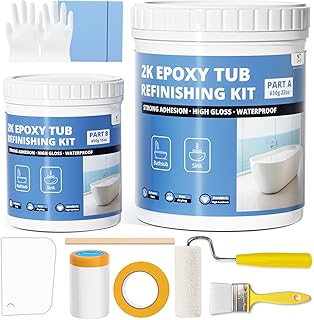
This two-part DWIL kit is best for a larger tub-and-tile project because its name lists coverage of 80–90 square feet. That stated area may help buyers compare kit size with a surround’s measured surface area. The product is described for bathtubs, tiles, and sinks, so confirm the label’s instructions for the particular material and application area.
The kit uses a two-part epoxy formula. Its listed mixing ratio is 4.1:1 for part A and part B, and the directions describe applying the mixed material with a scraper, roller, or brush. The listing says the mixture spreads evenly and identifies adhesion, hardness, and resistance to peeling and cracking as product features.
It is also described as waterproof, stain-resistant, corrosion-resistant, and resistant to yellowing. Those features may matter in a bathroom setting, where the finish will encounter moisture and routine cleaning. Follow the package instructions for mixing and application rather than assuming the coating can be adjusted or reused after mixing.
Best for: Buyers with a surround or combined tile project that may require more coverage than a single-tub kit. Why it was selected: The stated coverage and included tools make it straightforward to compare with other kits.
Limitation: Coverage is listed as 80–90 square feet, not as a guarantee for every surface or number of coats. Measure the area and verify the recommended coat count before purchase.
verny Self-Leveling 2K Epoxy Kit

The verny kit is best for DIY users who want a two-part coating with a self-leveling description. The listing says its formula is designed to fill small cracks and crevices and create a smooth finish. Self-leveling does not mean that a coating repairs structural damage, so assess the surround first and follow the manufacturer’s guidance for surface defects.
The product is described as a durable epoxy finish for bathtubs, sinks, and tiles, with resistance to chipping, peeling, and cracking. Its application directions call for mixing parts A and B at a 4:1 ratio, then spreading the mixture with a scraper, roller, or brush. Tools are included, according to the listing.
Best for: A buyer who values a self-leveling application description and wants a kit with application tools. Why it was selected: The listing specifies both the intended bathroom surfaces and the mixing ratio, useful details for planning a DIY job.
Limitation: The provided product information does not include a coverage amount or a time before the surface can be exposed to water. Confirm both details on the current product instructions before starting.
Bathworks ECO Essentials Roll-On Kit

Bathworks ECO Essentials is best for shoppers looking specifically for a roll-on epoxy coating described as low odor and low VOC. The product name lists a 26-fluid-ounce kit with a high-gloss white finish and non-slip application. Its stated surface uses include bathtubs, tile, sinks, showers, and countertops, which makes it relevant to a tub surround refresh.
The listing describes a DIY coating but does not provide additional application steps in the supplied product information. Buyers should therefore check the current package directions for required tools, preparation, coverage, mixing, and drying or curing time. Do not assume that a non-slip application description means the finished surround will have a particular texture or slip rating.
Best for: Buyers prioritizing roll-on application and low-odor, low-VOC positioning. Why it was selected: It explicitly lists tile and shower use in addition to tubs and sinks.
Limitation: The provided details do not state coverage or a cure schedule. The 26-fluid-ounce size alone is not enough to determine whether one kit will coat a full surround.
Rust-Oleum Tub and Tile 2-Part Kit

Rust-Oleum’s two-part kit is best for buyers who want clearly stated coverage and timing information when planning a bathroom refresh. The listing identifies ceramic, porcelain, and fiberglass surfaces and describes a gloss-white, porcelain-like finish. It states that one kit covers up to 110 square feet and recommends two coats.
The product is described as a two-part epoxy acrylic formula that withstands moisture and resists corrosion. The stated directions call for thoroughly mixing parts A and B separately before combining them, then using the mixture within six hours. The listing says to wait one to two hours before recoating and to allow the bathroom paint to dry for three days before water exposure.
Best for: Buyers whose surround material is among the listed surfaces and who want explicit coverage and water-exposure guidance. Why it was selected: Its stated area and application timeline make comparison and project scheduling easier.
Limitation: Coverage is listed as “up to” 110 square feet, and two coats are highly recommended. Actual coverage can depend on the surface and application, so verify the label and calculate the area before relying on the maximum figure.
Buying Guide: Choosing Epoxy Paint For A Tub Surround
Does the coating match your surround material?
Start with the surface, not the color. A tub surround may be ceramic tile, porcelain, fiberglass, or another material. Product listings do not establish compatibility with every surface, even when they name tile or bathroom use generally. Check the package label for the exact material, permitted location, and any exclusions. If the surround has a coating already, check whether the refinisher can be applied over it or whether removal is required.
How much coverage do you need?
Measure the walls and other surfaces you plan to coat, then compare the total area with the product’s stated coverage. Among these options, Rust-Oleum lists up to 110 square feet and recommends two coats; the larger DWIL kit lists 80–90 square feet. Those figures are not directly interchangeable because application instructions and coat recommendations may differ. Do not use the coverage figure as a substitute for checking the label’s application requirements.
Which application method fits your project?
Some kits describe application with a roller, brush, or scraper, while Bathworks identifies a roll-on approach. Choose a method you can apply evenly across corners, seams, and vertical surfaces. Included tools may reduce the need to source basic supplies, but inspect the kit contents and instructions to see whether any additional preparation materials are needed.
Are odor and indoor application important?
DWIL’s smaller kit is described as water-based and low-VOC, and Bathworks ECO Essentials is described as low odor and low VOC. These are product-listing claims, not a reason to skip ventilation or other precautions. Read the safety directions, ventilate as instructed, and consider household needs before beginning work in an occupied home.
How should you plan mixing, recoating, and cure time?
Two-part products require attention to the specified mix ratio and working period. The listed DWIL larger kit calls for a 4.1:1 ratio, while verny specifies 4:1. Rust-Oleum says to use the combined mixture within six hours, wait one to two hours before recoating, and keep water away for three days. Follow the current product label because directions can vary by formula and conditions.
What preparation should you expect?
Preparation is essential to getting a coating to adhere. The smaller DWIL kit lists sandpaper among its included tools, but the supplied details do not provide a complete preparation procedure for every product. Read the manufacturer’s directions for cleaning, sanding, drying, masking, and repairs. Do not apply epoxy over a surface that is dirty, damp, loose, or damaged unless the product instructions explicitly explain how to address it.
Frequently Asked Questions
Can epoxy paint be used on a tub surround?
Some listed kits are intended for tile or other bathroom surfaces, but compatibility depends on the surround material and product directions. Confirm the exact substrate is approved before applying a coating.
Which kit lists the greatest coverage?
Rust-Oleum lists coverage of up to 110 square feet per kit. It also recommends two coats, so check the label and calculate your project area before deciding how much product to buy.
Which option is described as low odor?
The DWIL kit is described as water-based and low-VOC, while Bathworks ECO Essentials is described as low odor and low VOC. Follow ventilation and safety instructions even when a product is marketed for lower odor.
How long should a refinished surround stay dry?
The supplied Rust-Oleum details say to let the paint dry for three days before exposing it to water. The other product details do not specify a water-ready time, so check each kit’s current instructions.
Does self-leveling epoxy repair cracks in a surround?
The verny listing says its self-leveling formula can fill small cracks and crevices. That description does not establish suitability for structural damage or larger repairs; consult the product directions and repair the surface as instructed before coating.


