If you’re looking for a reliable epoxy paint and primer kit, you want products that bond well, cure evenly, and resist wear. This guide highlights five top epoxy primers and undercoats designed for countertops, metal, plastic, and concrete substrates. It explains who each product is best for, highlights essential pros and limitations, and helps you choose the right primer to maximize durability and finish quality.
Buyer profile snapshot:
– DIY countertop projects: Stone Coat Countertops Epoxy Undercoat (White or Black) for a solid foundation.
– Automotive or metal parts: SprayMax 2K Epoxy Primer (Gray) for rust protection and adhesion.
– General multi-surface projects: NADAMOO All Surface Primer Spray (Gray) for versatile adhesion.
– Pool or concrete prep: Olympic Pool Paint Gunzite Primer for rough plaster, concrete, or gunite surfaces.
– Quick, single-can coverage on mixed substrates: NADAMOO All Surface Primer Spray (1 can).
This table helps you compare core uses and suitability at a glance.
| Product | Best For | Key Benefit |
|---|---|---|
| Stone Coat Countertops Epoxy Undercoat (White) | Countertop and porous surface prep | Firm, sealed foundation; enhances thickness |
| Stone Coat Countertops Epoxy Undercoat (Black) | Countertop and porous surface prep | Dense foundation; matched with Stone Coat kits |
| SprayMax 2K Epoxy Primer Gray | Metal surfaces; cars, motorcycles, restorations | 2K bonding; corrosion resistance |
| Olympic Pool Paint Gunzite Primer | Rough plaster, concrete, gunite, fiberglass | Two-part base and catalyst for strong adhesion |
| NADAMOO All Surface Primer Spray (Gray) | Multi-surface projects | Excellent adhesion; covers imperfections |
Stone Coat Countertops Epoxy Undercoat White — 1 Quart

Best for DIY countertop projects that require a dense, sealed base before epoxy resin pours. This undercoat is designed to work with Stone Coat Countertops epoxy kits, ensuring a refined, high-gloss finish when used as part of the system. It is applied in two coats to build a strong foundation that improves durability and appearance on MDF, plywood, and other porous surfaces. Choose this if you’re building or refinishing countertops and want predictable bonding with Stone Coat epoxy resins.
Who it’s best for: DIY enthusiasts seeking a compatible undercoat to maximize Stone Coat epoxy results. Why selected: specifically formulated for use with Stone Coat kits, helping achieve a deeper, thicker look and longer surface life. Caution: designed for Stone Coat surfaces; results may vary when used with other brands.
Stone Coat Countertops Epoxy Undercoat Black — 1 Quart

Best for projects where a dark undercoat is preferred to reduce show-through and create a uniform base for darker topcoats. The Black undercoat shares the same two-coat application method to deliver a solid, sealed foundation for MDF, plywood, and other porous surfaces. Opt for this if you plan a dark or rich final epoxy color and want consistent base depth. Caution: color depth can influence final appearance; test color compatibility with your topcoat.
SprayMax 2K Epoxy Primer Gray — 12.5 oz

Best for automotive and metal substrates requiring strong adhesion and rust protection. This is a two-component (2K) epoxy primer that yields high bonding strength, long pot life, and a smooth seal before topcoats. It’s easy to apply with a variable nozzle, making it suitable for DIY restorations and professional-like finishes. Caution: 2K formulations require proper ventilation and handling; follow all safety instructions during use.
Olympic Pool Paint Gunzite Primer — 1 Gallon

Best for rough plaster, concrete, new gunite, fiberglass, or sandblasted surfaces. This two-part primer includes a base and a catalyst, designed to yield solid adhesion across pool surfaces and similar rough substrates. Use this when prepping challenging pool-type substrates or concrete for epoxy coatings. Caution: proper mixing is essential; follow instructions to ensure a uniform finish and coverage.
NADAMOO All Surface Primer Spray — 1 Can

Best for multi-surface projects where you need reliable adhesion over porcelain, glass, metal, plastic, and wood. NADAMOO’s epoxy-based primer aims to seal the surface, fill imperfections, and improve top-coat durability. It’s particularly useful when crossing hard-to-coat materials or when changing colors over dark substrates. Caution: the product is etched to emphasize adhesion; ensure compatibility with your chosen topcoat before application.
NADAMOO All Surface Primer Spray — 2 Cans

Best for larger or more demanding multi-surface projects requiring additional coverage and uniform adhesion. This listing offers two cans for extended projects or multiple substrates. Caution: ensure adequate ventilation and follow safety guidelines for spray applications to minimize exposure to fumes.
SprayMax 2K Epoxy Primer Black — 12.5 oz
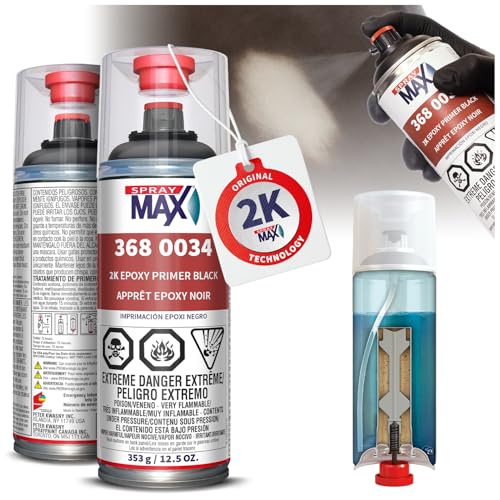
Best for metal and automotive surfaces that require corrosion resistance and a strong base for topcoats. The 2K epoxy technology provides robust bonding and a smooth foundation. Caution: black primer can affect final color tones; test color compatibility with the topcoat for a consistent appearance.
Buying Guide: Key Considerations For Epoxy Primers And Undercoats
Choosing the right epoxy primer or undercoat involves matching the substrate, expected wear, and the final epoxy system. Consider these factors before buying:
- Substrate compatibility: Some primers are optimized for stone, MDF, metal, concrete, or plastics. Always confirm compatibility with your target epoxy system.
- Two-part vs. one-part formulations: 2K systems often offer stronger adhesion and faster cure but require paired components and safer mixing practices. One-part primers are easier for beginners but may need longer cure times.
- Surface condition: Rough, porous, or multi-material surfaces benefit from high-build undercoats and fillers that level irregularities.
- Aesthetic goals: Light undercoats can influence final color depth; darker coats may reduce show-through on lighter topcoats.
- Ventilation and safety: Many epoxy primers emit fumes. Use in well-ventilated areas and follow all safety instructions, including PPE requirements.
- Application tools: Some products are optimized for spray, while others work best with rollers or brushes. Choose according to project scale and your tools.
- Cure time and handling: Check curing schedules to plan recoats and final epoxy application without delays.
Frequently Asked Questions
- What is the difference between epoxy primer and epoxy undercoat?
– Epoxy primers seal and promote adhesion on challenging substrates, while undercoats build a strong base to improve surface density and final appearance, particularly with specific epoxy kits. - Can I use any epoxy primer with any epoxy resin?
– Not always. Check compatibility with your epoxy resin or kit and follow the manufacturer’s recommendations for best results. - Is a 2K epoxy primer required for metal surfaces?
– 2K systems are common for metal due to superior adhesion and corrosion resistance, but a compatible single-part primer may suffice for simpler projects. - Do primers affect final color of the epoxy topcoat?
– Yes. Undercoats can influence depth and tone; consider color tolerance and test a small area if color matching is critical. - How should I store epoxy primers?
– Store in a cool, dry place away from heat sources; follow label guidance for shelf life and container sealing requirements. - Are these products safe for indoor use?
– Most primers are designed for indoor use with proper ventilation; always follow safety instructions and use PPE as needed.