The top choice for plywood decks and similar surfaces is an elastomeric deck coating that forms a flexible, waterproof membrane. This guide highlights five proven products to help homeowners and DIY renovators choose the right coating for patios, docks, and outdoor wood projects. Each option is selected for long-lasting protection, ease of application, and compatibility with plywood substrates. This overview also explains when to choose smooth finishes for barefoot traffic versus textured finishes for better grip.
| Product | Best For |
|---|---|
| Liquid Rubber Polyurethane Deck Coating – Smooth, Saddle Brown | Barefoot-friendly decks and docks; long-lasting waterproofing on wood and concrete |
| Liquid Rubber Color Roof Sealant | Flat or low-slope roofs and metal roofs; broad elastomeric membrane formation |
| Liquid Rubber Waterproof Sealant – Black | DIY leak repair on flat and low-slope roofs, gutters, plywood and concrete |
| DECK GUARDIAN Elastomeric Deck Paint Coating – Battleship Gray | Wood, concrete, and composite decks; hides minor imperfections |
| Liquid Rubber Polyurethane Deck Coating – Smooth, Misty Grey | Barefoot-friendly decks; similar performance to saddle brown variant |
Liquid Rubber Polyurethane Deck Coating – Smooth, Saddle Brown

Best for barefoot traffic: This coating forms a hard, flexible polyurethane membrane that bonds to properly prepared wood, concrete, and metal surfaces. It resists peeling, cracking, moisture, and UV exposure, delivering long-lasting protection for decks, docks, patios, and walkways. Choose Smooth for patios and areas with foot traffic. A limitation is final color variation based on substrate and lighting, so test a small area first.
Key reasons to choose this product:
- 10X stronger than traditional deck paint and stain
- Waterproof, durable membrane designed for wood and concrete
- Available in Smooth finish for comfortable barefoot use
Liquid Rubber Color Roof Sealant – Flat & Metal Roofs, Medium Brown
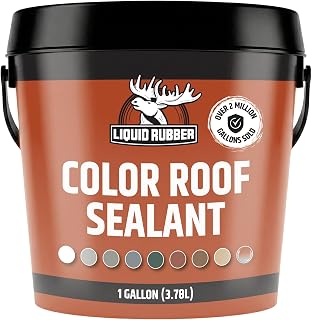
Best for roofs and metal surfaces: This professional-grade elastomeric roof coating cures into a durable, flexible membrane with high elongation. It’s applied like paint and builds a waterproof layer that tolerates roof movement without cracking. Apply multiple coats for full protection. Suitable for flat or metal roofs; avoid using on non-roof substrates not specified by the manufacturer.
Why it’s selected:
- Up to 900% elongation for movement tolerance
- Membrane-forming sealant ideal for roofs and metal surfaces
Liquid Rubber Waterproof Sealant – Black

Best for DIY leak repairs on flat and low-slope roofs and gutters; it forms a flexible elastomeric membrane that adheres to plywood and concrete. This option is well-suited for repairs and preventative coating projects but may require multiple coats and proper substrate prep for best results.
Why pick this:
- Flexible waterproofing membrane
- Appropriate for plywood surfaces and gutters
DECK GUARDIAN Elastomeric Deck Paint Coating – Battleship Gray

Best for hiding minor surface flaws: Deck Guardian provides a high-build elastomeric waterproof coating suitable for wood and concrete patios, Lanais, and pool decks. It expands and contracts with the substrate to prevent cracking and peeling, offering a smoother finish by concealing cracks and chips. It’s a strong choice when surface imperfections are a concern.
Best-use notes:
- Protects against cracking, splitting, and warping
- Great for camouflage of small imperfections
Liquid Rubber Polyurethane Deck Coating – Smooth, Misty Grey
Best for versatile applications: This variant of Liquid Rubber’s polyurethane deck coating mirrors the Saddle Brown option but in Misty Grey. It delivers the same 10X strength over traditional deck paints and forms a waterproof, flexible membrane ideal for wood, concrete, and plywood surfaces. Choose this if you prefer a cooler neutral tone for outdoor spaces.
Key considerations:
- Suitable for decks, docks, patios, and stairs
- Finish color may vary slightly based on substrate and lighting
Buying Guide
What substrate preparation is required for plywood?
Proper surface preparation ensures optimal adhesion. Clean the plywood, remove loose fibers, and repair significant cracks. Light sanding may help the coating bond better, and priming could be recommended depending on the product instructions.
Which finish should I choose: smooth or textured?
Choose Smooth for barefoot traffic and comfortable walking surfaces. Choose Textured for better grip in wet or high-traffic areas, especially on decks near pools or docks.
What are common application tips for elastomeric deck coatings?
Apply in dry conditions within the manufacturer’s recommended temperature range. Apply multiple coats if required to build a uniform, waterproof membrane. Allow adequate cure time between coats, and protect fresh coatings from rain and debris during curing.
How long should coating last on plywood?
Elastomeric deck coatings are designed for long-term waterproof protection and movement tolerance. Longevity depends on exposure, maintenance, and proper substrate preparation, but these formulations aim to extend the life of exterior wooden substrates well beyond typical deck paints.
Are there safety and maintenance considerations?
Wear appropriate PPE during application. Ventilation is important for solvent- or chemical-based coatings. Routine cleaning with non-abrasive methods can help preserve the membrane, and reapplication may be needed as the coating ages or shows signs of wear.
How do I choose among the five products?
Consider the primary use (roofing, decking, or general waterproofing), substrate (wood, concrete, metal), desired finish (smooth vs. textured), and the environment (barefoot traffic, UV exposure, and weather). The Saddle Brown and Misty Grey deck coatings are tailored for outdoor wooden surfaces, while the Roof Sealant options are better suited for roof membranes or gutters. Deck Guardian provides a camouflaging option for minor surface flaws, and the Black Sealant targets leak repairs on flat and low-slope surfaces.
Quick product comparison by use-case
- Barefoot-friendly deck surfaces: Liquid Rubber Deck Coatings (Saddle Brown or Misty Grey)
- Roof and metal surfaces: Liquid Rubber Color Roof Sealant
- Leak repair on plywood and gutters: Liquid Rubber Waterproof Sealant (Black)
- Hiding surface imperfections: DECK GUARDIAN Elastomeric Deck Paint
FAQ
- Can these coatings be used on plywood indoors? Yes, where outdoor exposure is not a factor, but verify product suitability for indoor use with the manufacturer.
- Do these coatings require primers? Some products may require priming on certain substrates; follow the manufacturer’s instructions.
- Is a textured finish necessary for wet areas? Textured finishes offer better grip in wet conditions and are recommended for pool decks or docks.
- Do these coatings resist UV damage? Yes, many elastomeric deck coatings resist UV exposure, helping prevent premature degradation.
- How many coats are typically needed? Most products require multiple coats to build a full waterproof membrane; refer to the product’s directions for exact counts.
- Are these coatings flexible enough to handle deck movement? Elastomeric formulations are designed to expand and contract with substrate movement to prevent cracking.