If you’re sanding drywall and want a cleaner job site, a dustless drywall sander is the right tool. This guide highlights top options that minimize dust, protect living spaces, and improve efficiency. It’s best for contractors, DIYers tackling unfinished walls, and homeowners upgrading to a cleaner sanding process. Each choice is evaluated for dust control, ease of use, and compatibility with standard vacuums. Below is a quick summary table of five standout models to help you compare at a glance.
| Product | Best For | Why It Stands Out |
|---|---|---|
| Hyde Tools 09165 Dust-Free Drywall Vacuum Hand Sander | Portable, small jobs | Strong vacuum attachment, easy sand screen replacement |
| Goldblatt Dust Free Drywall Hand Sander | Mid-sized projects | Significant dust reduction with 6.5 ft hose |
| Drywall Sander With Vacuum & Digital Display | Complex spaces | Digital readout, powerful 1000W motor, adjustable speeds |
| toolant Mesh Abrasive 9″ Disc | Mesh, reusable sanding | Open mesh disc minimizes clogging, long life |
| HYDE 9160 Dust-Free Sponge Sander | Lightweight, handheld | Integrated vacuum hose and two sanding sponges |
Hyde Tools 09165 Dust-Free Drywall Vacuum Hand Sander

The Hyde Tools 09165 sander attaches to any wet/dry vacuum to dramatically reduce dust across the worksite. It protects furniture, floors, electronics, and lungs from drywall particles. Its EasyClamp system allows quick sand screen replacement, making it a practical choice for smaller projects or continuous sanding sessions. Best for contractors or DIYers who want a compact, portable dust control solution.
Best for: small to mid-size drywall tasks where a straightforward handheld sander is preferred. Caution: reliable vacuum compatibility is essential for optimal dust collection.
Goldblatt Dust Free Drywall Hand Sander
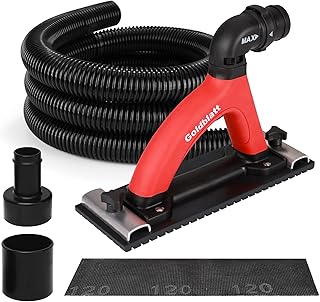
This sander reduces dust by up to 90% with a dedicated dust collection design. It uses a vacuum hose and a six-and-a-half-foot reach to tackle vertical surfaces with ease. The ergonomic design and soft rubber grip keep hands comfortable during longer sessions. It’s best for projects where minimizing mess and maintaining a clean workspace is a priority, such as homes with limited ventilation.
Best for: mid-sized rooms and ceilings where a long reach and strong dust control matter. Caution: requires a compatible vacuum system and sand screen use to maximize dust capture.
Drywall Sander With Vacuum, Digital Display

This 1000W drywall sander offers a digital display for precise speed control (800-2100 RPM) and up to 98.5% dust extraction efficiency. It features 9 adjustable speeds and a 360° LED light to illuminate dark corners. A removable edge helps reach tight areas, making it well-suited for textured ceilings, popcorn removal, and painted surfaces. Choose this for projects requiring precise control and visibility.
Best for: detailed sanding with variable speeds and built-in lighting. Caution: higher price and more setup compared to basic handheld sanders.
toolant Mesh Abrasive 9″ Disc

This 9″ mesh abrasive disc uses an open mesh construction to allow dust and debris to flow through, improving dust extraction in any application. It’s reusable and designed to resist clogging, which helps maintain consistent cutting. Best for users who prefer long-lasting discs and straightforward cleanup.
Best for: DIY enthusiasts and professionals who want a durable, reusable disc with efficient dust management. Caution: discs are designed for mesh sander systems and may not fit all sanders without adapters.
HYDE 9160 Dust-Free Sponge Sander

This compact, dust-free sponge sander includes two medium grit sponges and a vacuum hose with adapter. It’s ideal for quick touch-ups and light smoothing on smaller patches or tight spots. Best for users who want a lightweight option that still keeps dust under control. Limitation: not ideal for heavy-duty drywall finishing compared with full-sized power sanders.
Buying Guide
What to consider when choosing a dustless drywall sander
- Dust control level: Look for built-in vacuum compatibility and high dust extraction efficiency (90%+ is strong).
- Surface reach: A long hose or extendable handle helps with ceilings and tall walls; consider a 6.5 ft hose or longer for larger spaces.
- Power and speed: Higher wattage and adjustable RPMs enable handling different materials and textures; a digital display helps monitor settings.
- Ergonomics and comfort: Ergonomic grips, lightweight design, and well-balanced tools reduce fatigue during long jobs.
- Compatibility and accessories: Check for compatible sanding screens/discs, clamps, and adapters for common vacuums.
- Portability vs. coverage: Handheld models are portable for small jobs; full-size units provide faster coverage on ceilings and large walls.
FAQ
- What makes a drywall sander “dust-free”?
Answer: It uses a vacuum attachment or integrated dust collection system to extract most of the dust as you sand, reducing airborne particles. - Do I need a special vacuum to pair with these sanders?
Answer: Most models use standard wet/dry vacuums with compatible hoses or adapters; confirm hose diameter and inlet size. - Is a digital display necessary for drywall sanding?
Answer: Not strictly necessary, but it helps you maintain precise speeds, especially on varied textures. - What project size is best for a handheld sander versus a larger unit?
Answer: Handheld sanders suit small patches and edges; larger sanders cover ceilings and large walls quickly. - Can I reuse sanding discs or screens?
Answer: Some mesh discs are reusable after cleaning; always follow the manufacturer’s reuse guidelines. - What should I avoid when using a dustless sander?
Avoid using a non-compatible vacuum or running the tool without proper dust collection, which defeats the purpose of dust control.