Finding the right drywall mud texture roller can streamline texture application on walls and ceilings. This guide highlights five solid choices tailored for different working styles—from DIY home updates to professional finishing. Best for: beginners who want simple, repeatable textures; intermediate users seeking varied patterns; and experienced painters needing durable, long-lasting rollers. Below, you’ll find quick-read product overviews, a buyer-friendly comparison, and practical tips to help you pick the right tool for your project.
| Product | Best For | Why It Stands Out |
|---|---|---|
| PinStone Store 2pcs 9″ Drywall Compound Roller Covers | Even mud application on walls and ceilings | Shed-resistant nylon nap and 9″ compatibility with standard frames |
| Nichiyo 7” Textured Paint Roller Pattern | Decorative patterns and custom textures | Premium rubber pattern roller for embossed designs |
| 7” Texture Roller Patterned Set | Patterned textures and quick texture work | 3D-engraved patterns and reusable construction |
| BANCOO 7″ Texturing Roller | Multiple patterns and DIY wall art | Over 20 patterns with durable rubber roller |
| HUIROOWL 9 Inch Textured Paint Roller Covers | Large-area mud texture and ceilings | Two-pack for efficient coverage and texture creation |
PinStone Store: 9″ Drywall Compound Roller Covers

The 2-pack 9″ roller covers are designed to spread joint compound evenly with a 1/2″ nap that reduces drips. Best for DIYers who want reliable coverage on standard 9″ frames and ceilings. The nylon nap resists shedding for repeated use, supporting consistent texture application. Choose this if you value durability, predictable texture, and compatibility with common tools. A potential limitation is that dense mud mixtures may compress over time, requiring re-rolling for final finishes.
Nichiyo 7” Textured Paint Roller Pattern

Premium rubber patterned roller designed for embossed drywall textures. Best for customers aiming to conceal cracks, dents, or old paint with professional-looking textures. Not recommended for thin or runny paints, which can blur delicate patterns. Tests on a scrap surface are advised before working on the main wall to confirm texture clarity and paint compatibility.
7” Texture Roller Sleeve Set
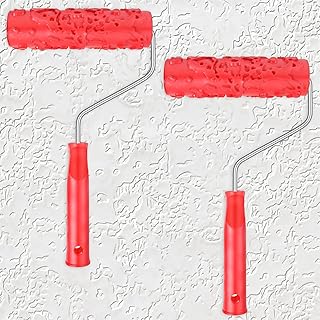
Three-dimensional embossed patterns help create distinctive textures on walls and ceilings. Best for users who want variety with a single tool, as the set provides multiple texture possibilities. Durable rubber construction supports repeated use. A caution is to ensure proper pattern transfer by applying an appropriate amount of material and avoiding overly thick coats that can blur patterns.
BANC0O 7″ Texturing Roller

This roller features over 20 patterns with durable rubber construction. Best for crafters and DIYers who want a broad range of decorative textures. Not ideal for very smooth finishes unless combined with a base texture. Cleaning between pattern changes helps maintain clarity of embossed designs.
HUIROOWL 9 Inch Textured Paint Roller Covers

A two-pack of large 9″ rollers designed to absorb compounds like paint, putty, and mud for irregular, textured finishes. Best for covering larger areas efficiently, such as walls and ceilings. A limitation is that texture consistency depends on mud viscosity; overly thick or thin mixtures may affect texture quality.
Buying Guide: Key Considerations For Drywall Mud Texture Rollers
- What texture are you aiming for? Choose a roller with the appropriate nap length or embossed pattern to achieve the desired look, from subtle stipple to bold patterns.
- What project size and frame compatibility do you have? If you work on large walls, opt for 9″ rollers that fit standard frames; for small patches, 7″ rollers may offer better maneuverability.
- Is durability or reusability a priority? Nylon naps are often shed-resistant, while durable rubber embossing plates endure repeated use for multiple textures.
- What materials will you apply? Ensure the roller is suited to mud, putty, or thick coatings and avoid very thin paints that can blur texture.
- How easy is cleaning and maintenance? Reusable rollers pay off when you clean promptly after use to preserve texture fidelity.
- Is pattern variety important? If yes, consider sets with multiple textures or roller sleeves to expand design options without buying multiple tools.
Practical Tips For Best Results
- Test textures on a scrap board before applying to walls.
- Maintain consistent pressure to avoid over- or under-application.
- Allow appropriate drying time between coats if layering textures.
- Keep tools clean to preserve texture integrity between uses.
Frequently Asked Questions
- What is the ideal nap length for drywall mud rollers? – A 1/2″ nap is common for even mud distribution with reduced drips on standard 9″ frames.
- Can I use these rollers with all types of drywall mud? – Most rollers work best with regular joint compound or thicker textures; thin paints may blur patterns.
- Should I buy a single roller or a set? – A set offers texture variety, while a single durable tool suits a focused, repetitive texture project.
- Are embossing pattern rollers reusable? – Yes, with proper cleaning and storage, embossing patterns can be reused for multiple projects.
- Is 9″ the best size for ceilings? – 9″ rollers cover larger areas quickly and are commonly compatible with standard frames for ceiling work.
- What’s a quick way to avoid roller drips? – Apply mud evenly and avoid overly thick coats; practice with a scrap area first.