Answering the search intent directly: these drywall mud mixing paddles are designed to speed up mud preparation, reduce clumping, and make back-friendly work easier. The best options below are suited for different projects—short, in-hand paddles for small batches, long, pro-grade paddles for large buckets, and rust-resistant builds for repeated use. Use these guides to pick paddles that fit your drill, bucket size, and workflow.
| Product | Best For | Shaft Length | Head Size |
|---|---|---|---|
| LEVEL5 13″ Profile Mud Mixer (5-293) | Small batches; in-hand mixing | 13″ | 2″ head |
| Edward Tools Paint and Mud Mixer (B01N6U1M8Y) | General use; one to three gallon batches | 15.75″ | 2.5″ x 2.5″ head |
| LEVEL5 Mud Mixer 32″ Shaft / 5″ Head (5-291) | Large batches; back-friendly mixing | 32″ | 5″ head |
| LEVEL5 Mud Mixer 32″ Shaft / 7″ Head (5-292) | Heavy-duty, wide compound mixing | 32″ | 7″ head |
| Sheetrock 30″ Mud Mixer | Professional drywall jobs; heavy-duty | 30″ | Tri-fold blade |
Edward Tools Paint and Mud Mixer for Drill

Best for: DIYers and professionals blending mud in small to mid-sized batches. This 15.75-inch mixer with a 5/16″ hex shaft is designed for standard drills and offers reinforced welds with rust-resistant zinc-plated steel. The compact 2.5″ x 2.5″ head is efficient for smooth mixes in 1–3 gallon containers, reducing clumps and splash.
Why selected: It balances durability, ease of cleaning, and compatibility with common drills. The non-slip hex head aids steady operation, and the zinc plating extends rust resistance for frequent use.
Caution: May be less effective for very large batches or heavy compound in high-viscosity products; consider longer paddles for bigger jobs.
LEVEL5 13″ Paint & Drywall Mud Mixer

Best for: In-hand mixing of mud in small containers and mud pans. The 13″ shaft with a 2″ head provides a compact, fast-spinning option ideal for quick touch-ups and small batches.
Why selected: It incorporates a patent-pending head that reduces drag and wear on drills, promoting smoother operation and less splatter. The compact size helps control consistency in tight spaces.
Caution: Not ideal for large volumes; the shorter shaft requires more reloading of material for big jobs.
LEVEL5 Drywall Mud Mixer 32″ Shaft / 5″ Head

Best for: Professional-grade mixing of drywall mud in large buckets. The 32″ shaft reduces back strain, and the 5″ head covers substantial area, enabling efficient, lump-free mixtures.
Why selected: LEVEL5 emphasizes professional-grade materials and patent-pending head design to minimize drag and improve longevity in daily use. It provides solid balance and easy cleanup.
Caution: Longer shaft may be awkward in smaller spaces without a sturdy bench or stand to hold the bucket steady.
LEVEL5 Drywall Mud Mixer 32″ Shaft / 7″ Head

Best for: Heavy-duty mixing of viscous drywall compounds in larger volumes. The 7″ head increases material capture and reduces mixing cycles for big jobs.
Why selected: It combines long reach with a wide mixing surface, delivering efficient, consistent results for professionals.
Caution: Heavier weight and larger head may require stronger drill motors and careful handling to prevent bucket splashing.
USG Sheetrock 30″ Drywall Mud Mixer
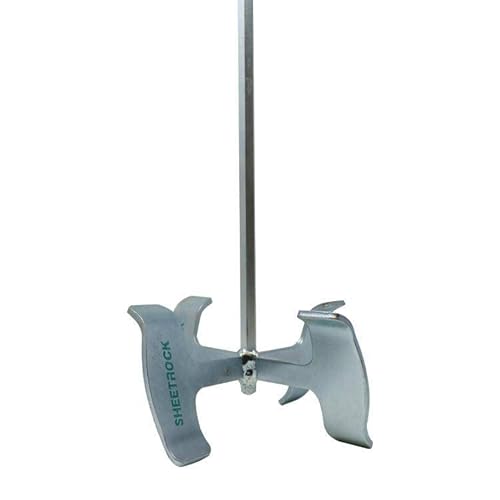
Best for: Pro-level, heavy-duty joint compound mixing with minimal lump formation. The tri-fold blade design draws material from multiple bucket areas for comprehensive blending.
Why selected: Self-centering shaft and heavy-gauge steel construction support long-term durability and cleaner mixing. The design helps reduce mixing time while keeping vibration manageable.
Caution: Higher price point and bulkier design; best used in larger projects or professional workflows with compatible drills.
Buying Guide
What to consider when choosing a drywall mud mixing paddle
- Bucket size and batch volume: Short paddles suit small batches; long shafts (30–32″) are better for big buckets and 5-gallon pails.
- Head size and design: A larger head covers more area but may require more power; tri-fold or patent-pending heads help reduce drag and splatter.
- Material and durability: Look for zinc-plated steel or rust-resistant coatings for longevity in damp environments.
- Drill compatibility: Ensure the hex head fits your drill’s chuck or drive size (most common is 1/2″ or 5/16″ hex).
- Ease of cleaning: Smooth paddle edges and corrosion-resistant surfaces simplify cleanup between batches.
Practical tips for best results
- Start at a low drill speed and gradually increase to minimize splatter and avoid bucket strain.
- Load the mixture evenly around the paddle to prevent binding and reduce wear on the drill.
- Rinse or wipe the paddle after use to prevent dried mud from sticking and hardening on the head.
Frequently Asked Questions
- What paddle length should I choose for a 5-gallon bucket? – A longer paddle (around 24–32 inches) helps reduce back strain and mixes more evenly in larger volumes.
- Can I use any drill with these paddles? – Most paddles are designed for standard 1/2″ or 5/16″ hex shafts; confirm your drill compatibility before use.
- Will a bigger head always mean better mixing? – Not always; bigger heads move more mud but require more torque. Choose a head size that matches your drill power and bucket size.
- Are professional-grade paddles worth the extra cost? – For frequent or large projects, professional paddles can save time and reduce effort, especially with drag-reducing heads.
- How do I clean mud from a paddle with a protective coating? – Rinse with clean water and wipe dry; avoid abrasive cleaners that could wear coatings.
- Are there paddles suitable for 1–5 gallon ranges? – Yes; several options listed here are designed for small to mid-sized batches and offer good versatility.