Direct-to-metal epoxy primers provide robust rust protection and a solid base for topcoats on bare metal surfaces. This guide highlights five top options, detailing who each product is best for, potential limitations, and why they stand out for automotive and metal projects. Ideal buyers include restorers, DIY painters, and body shop enthusiasts seeking durable adhesion and corrosion resistance without complex equipment. Below is a quick summary to help you compare options at a glance.
| Product | Best For | Key Benefit |
|---|---|---|
| SprayMax 2K Epoxy Primer Gray | Car restorers, metal enthusiasts | Excellent adhesion and corrosion protection |
| Rust-Oleum Automotive Self Etching Primer Spray | Bare metal and aluminum prep | One-step etch and prime for rust resistance |
| SprayMax 2K Epoxy Primer Black | Projects needing a dark base | Same strong corrosion protection with a black finish |
| Eastwood 2K Epoxy Gray Primer | Professional-grade DIYers | Dual-component formula with long pot life |
| NADAMOO All Surface Primer Spray | Difficult substrates | Thick, good coverage with strong adhesion |
SprayMax 2K Epoxy Primer Gray – 12.5 oz

Best for: Car restorations and metal projects needing strong corrosion protection. This 2K epoxy primer delivers superior adhesion on steel, aluminum, and galvanized surfaces, making it ideal as the foundational base under topcoats for automotive finishes.
Why selected: It uses 2K technology for bonding strength and long pot life, creating a smooth, sealed surface ready for paint. The spray format offers control with a variable nozzle, allowing even coats without extra tools.
Limitations: Proper activation and mixing are required for optimal performance; ensure compatible topcoats are used with epoxy primers to avoid peeling. May require ventilation and safety measures during application.
Rust-Oleum Automotive Self Etching Primer Spray – Dark Green

Best for: Bare metal and aluminum surfaces needing immediate adhesion and rust resistance. A one-step etching primer simplifies prep for vehicle bodies and metal parts.
Why selected: The etching chemistry helps bite into metal, forming a durable base coat. It also includes rust-preventive properties for a strong foundation before color coats.
Limitations: Oil-based formula may require full curing and compatible topcoats. Not ideal for fiberglass without proper surface prep.
SprayMax 2K Epoxy Primer Black – 12.5 oz

Best for: Projects requiring a dark base or a black epoxy primer for visibility control and corrosion protection. Suitable for metal, aluminum, and steel surfaces.
Why selected: Mirrors the Gray 2K with the same advantageous 2K technology, offering strong adhesion and protection while providing a different finish option for layered coatings.
Limitations: Ensure topcoat compatibility with black epoxy bases; fading or color shifts can occur if topcoats aren’t chosen carefully.
Eastwood 2K Epoxy Gray Primer
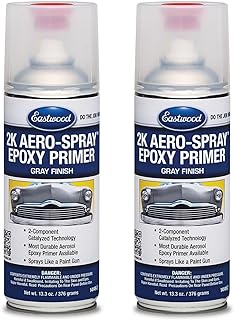
Best for: Enthusiasts seeking professional-grade performance with extended pot life. Suitable for car body panels, aluminum, steel, and fiberglass prep.
Why selected: A durable direct-to-metal primer using a robust two-component formula with a long shelf life once activated. Eastwood’s nozzle design supports a wide spray pattern for even coverage.
Limitations: Requires mixing activator; the 3-year shelf life applies to unopened cans, and pot life begins after mixing. Proper ventilation and protective equipment recommended.
NADAMOO All Surface Primer Spray – Matte Gray

Best for: Surfaces that are difficult to coat, including porcelain, glass, metal, plastic, and wood. This primer aims to seal and improve adhesion for topcoats across materials.
Why selected: It uses modified epoxy resins to boost adhesion and corrosion resistance, extending surface durability and reducing recoats. The thicker formula helps with coverage and hiding imperfections.
Limitations: As a one-part primer, it may require additional coats for very smooth finishes or extreme color changes. Verify compatibility with your chosen topcoat before use.
Buying Guide: Direct-To-Metal Epoxy Primer Essentials
Direct-to-metal epoxy primers are designed to bond to bare metal without extensive prep. When selecting, consider substrate type (steel, aluminum, galvanized), intended environment (indoor/outdoor), and topcoat compatibility. Two-component (2K) formulas typically offer superior adhesion and corrosion protection but require mixing and proper ventilation. One-part primers are simpler but may require more coatings for durability.
- Substrate compatibility: Ensure the primer adheres well to the metal you’re painting (steel, aluminum, galvanized, or fiberglass).
- Pot life and work time: Two-component primers have longer working windows after mixing but require controlled mixing conditions.
- Drying and overcoat windows: Check touch-dry times and overcoat windows to time topcoat application correctly.
- Topcoat compatibility: Confirm that your chosen topcoat works with the primer’s chemistry (epoxy, urethane, or enamel).
- Application method: Aerosol vs. spray-can formats offer different control levels and equipment needs.
- Safety and ventilation: Work in a well-ventilated area and use appropriate PPE due to fumes and solvents.
FAQ
- What is direct-to-metal epoxy primer best used for?
It provides corrosion resistance and a solid base for topcoats on bare or previously untreated metal surfaces. - Do I need a hardener for 2K epoxy primers?
Yes. 2K primers require a reactive hardener or activator to achieve full bonding strength and durability. - Can I apply epoxy primer over aluminum?
Yes, most epoxy primers are designed for aluminum when properly prepared and cleaned. - How long does epoxy primer take to dry before topcoating?
Drying times vary by product; many 2K primers dry to handling within minutes to hours, with full cure over 24–48 hours depending on environment and product. - Is etching primer necessary before epoxy primer?
For bare metal, etching primers help improve adhesion. If using a direct-to-metal epoxy, verify if etching is recommended by the product guidelines. - Should I sand between coats?
Lightly sanding between coats can help achieve a smoother final finish, depending on product instructions.