Find the right dark maple wood stain to deepen color, protect surfaces, and highlight natural grain. This guide focuses on stains that deliver rich, even coverage with low odor and minimal fuss. Best for DIYers and professionals who want fast dry times and reliable results across indoor furniture, cabinets, and trim. Each product below is selected for its suitability with maple and similar woods, its finish quality, and practical application notes.
| Product | Finish/Key Benefit |
|---|---|
| SENVEN Wood Stain, Walnut | Water-based, fast-drying, low odor; enhances natural grain |
| Varathane Premium Fast Dry Dark Walnut | Oil-based, one-coat coverage, quick dry |
| DWIL Water Based Wood Stain | Low odor, non-toxic, single-coat capability |
| Furniture Clinic Wood Stain – Dark Oak | Water-based, fast drying, multiple finish options |
| Varathane Premium Fast Dry Honey Maple | Oil-based, one-coat coverage, fast dry |
SENVEN Walnut Wood Stain — Quick, Natural Look

Best for: Home furniture refinishing projects where a rich, natural walnut tone is desired. The SENVEN stain uses a water-based formula that dries quickly and minimizes fumes, making it suitable for indoor use around families and pets. It provides a semi-transparent finish that highlights existing grain, ideal for maple surfaces with distinct patterns.
- One-coat color with deep penetration for faster results
- Low-odor, non-toxic, water-based formula
- Shaking recommended for even color distribution
Caution: Despite being water-based, surface prep (sanding and clean dust-free boards) yields a more even stain uptake on maple.
Varathane Premium Dark Walnut — One Coat Coverage

Best for: Projects needing rapid transformation of interior wood surfaces like furniture, cabinets, or doors with a durable oil-based finish. The stain offers one-coat coverage and dries to the touch in about an hour, making it suitable for quick updates on maple and other light woods.
- Oil-based formula for strong color and depth
- One-coat coverage; dries quickly
- Suitable for furniture, cabinets, and doors
Caution: Oil-based stains can have stronger fumes; ensure adequate ventilation during application and curing.
DWIL Water Based Wood Stain — Teak Finish

Best for: Indoor and outdoor projects where a single-coat application is preferred, with low odor and non-toxic safety. The DWIL stain enhances textural depth while preserving maple’s features, suitable for panels, furniture, and decks.
- Just one coat for natural matte finish
- Fast-drying, water-based formula
- Low odor and non-toxic
Caution: Very dark applications may require additional coats on dense woods; test on a hidden area first.
Furniture Clinic Dark Oak — Water Based

Best for: Individuals seeking a versatile, low-odor stain compatible with multiple wood species, including maple. A natural matte finish is achieved quickly, with visible grain preserved and enhanced in one coat on most indoor surfaces.
- Available in 12 colors; 1 coat coverage visible
- Water-based, fast-drying, low odor
- Environmentally friendly and non-toxic
Limitation: Careful color selection matters; lighter maple may require additional coats to reach deeper tones.
Varathane Premium Dark Honey Maple — Oil-Based
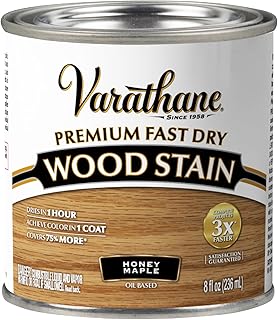
Best for: Projects requiring a honey-toned maple finish with quick curing properties. The oil-based formula provides durable color, suitable for cabinets and furniture where a warmer tone is desired on maple.
- One-coat coverage; fast dry time
- Oil-based formula yields robust color
- Ideal for interior furniture, cabinets, and doors
Caution: Oil-based products require ventilation and proper cleanup with mineral spirits as recommended by manufacturer guidelines.
Buying Guide: Key Considerations for Dark Maple Wood Stain
- Finish type: Water-based stains are low odor and easy clean-up; oil-based stains typically offer deeper color and longer durability. Choose based on indoor use and ventilation.
- One-coat coverage vs. multiple coats: If you need speed, prefer one-coat formulas that still reveal grain. For deeper color, plan for additional coats as needed.
- Color intent: Dark walnut and honey maple options will alter the tone of maple differently. Test on a scrap piece to verify hue before committing to a large surface.
- Wood grain preservation: Semi-transparent or translucent stains help highlight natural grain. Opaque stains will hide more texture, which may not be desirable on striped or figure-rich maple.
- Surface prep: Sanding to a smooth, dust-free surface improves even staining. Wipe down with a tack cloth to remove dust before applying.
- Safety and ventilation: For oil-based stains, ensure good ventilation and use appropriate respirators; water-based products generally have lower VOCs but still require airflow during application.
- Finish durability: Consider topcoat compatibility (polyurethane, polyurethane-modified finishes) after staining to enhance wear resistance on high-traffic maple surfaces.
Frequently Asked Questions
- What’s the best stain for maple furniture?
– A water-based stain with low odor is often best for indoor maple furniture, because it minimizes fumes and preserves grain without darkening too aggressively. - Can I use dark walnut stain on maple cabinets?
– Yes, but test first to ensure the tone matches your cabinets. Oil-based dark walnut can provide richer color; plan for proper ventilation. - Do I need a topcoat after staining maple?
– Yes, applying a compatible topcoat improves durability and surface protection, especially on high-traffic areas like tabletops or cabinet doors. - Is one coat enough for dark maple?
– For many stains, one coat can achieve a nice effect, but deeper tones may require a second coat or a follow-up application on porous maple. - Which stain should I avoid for indoor use?
– Heavily solvent-based stains with strong fumes may be uncomfortable indoors; opt for low-odor water-based options when working inside. - How do I test color before full application?
– Apply a small amount on a hidden scrap piece or a concealed area of the project to verify shade and absorption.