If you’re sealing a basement floor, your primary goals are moisture resistance, long-term durability, and a finish that won’t alter the surface’s appearance. The top picks below are designed for concrete basement floors, indoor and outdoor use, and offer different balances of penetration, flexibility, and coverage. This guide highlights five strong options, each suited for a specific buyer profile—from DIY homeowners to commercial spaces needing robust moisture control.
The following quick-reference table helps identify who each product is best for and why.
| Product | Best For | Why It Stands Out |
|---|---|---|
| Rust-Oleum 301239 | Basement floors needing moisture stop without changing look | Penetrates and seals quickly; covers up to 200 sq ft per gallon |
| Lithi-Tek 9500 Ultra Concentrate | Industrial-grade protection for high-moisture basements | Densifies, strengthens, and waterproofs; reduces hydrostatic pressure |
| 1 Gallon Concrete Sealer (OAIEGSD) | Outdoor/indoor use with water resistance and stain protection | Zero-VOC, invisible protection, long lifespan |
| Nanoprotect Concrete & Stone Sealer | Long-lasting interior and exterior protection | Deep-penetrating, reduces staining and dirt buildup |
| Liquid Rubber Foundation Sealant | Basement leaks and flexible waterproofing | Elastomeric, highly flexible, suitable for active leak areas |
Rust-Oleum 301239 Concrete Moisture Stop Fortifying Sealer

Rust-Oleum 301239 is a moisture-stop fortifying sealer designed for concrete floors. It seals the surface to prevent moisture from seeping through, allowing subsequent coatings to adhere without altering the concrete’s appearance. The product penetrates for about 45 minutes and covers up to 200 sq ft per gallon. This makes it a practical choice for homeowners with basements that experience dampness and who want a clear, unobtrusive sealer before finishing or painting.
Best for: Basements where stopping moisture ingress is the priority and a clear, non-changing finish is desired. Limitations: It focuses on moisture sealing and may not be a full densifier or long-term water barrier in extremely wet conditions. Consider pairing with a dedicated waterproofer for severe moisture issues.
Lithi-Tek 9500 Ultra Concentrate – 1 Gallon
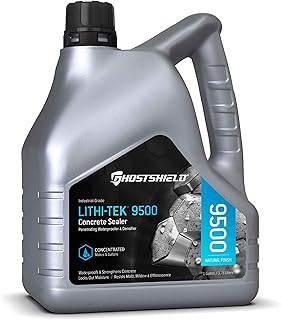
Lithi-Tek 9500 Ultra is an industrial-grade, water-based penetrating sealer that densifies, strengthens, and waterproofs concrete. It aims to reduce moisture intrusion and hydrostatic pressure while increasing abrasion resistance. The formula helps prevent efflorescence and is designed to work as a robust long-term basement solution, especially in areas with higher humidity or moisture exposure. It’s sold as a concentrate that yields five gallons, making it economical for larger basements or multiple projects.
Best for: Basements needing not only moisture resistance but also structural densification and improved abrasion resistance. Limitations: As a penetrating sealer, appearance remains largely unchanged; consider budget and mixing requirements before use.
1 Gallon Concrete Sealer – Water-Based Silane Siloxane

This water-based silane/siloxane penetrating sealer provides a protective barrier on concrete surfaces, ideal for indoor or outdoor use. It resists water absorption to prevent issues like cracking and freeze-thaw damage, making it suitable for basements with outdoor access or areas exposed to seasonal moisture. The formula also offers invisible protection against stains from oils, chemicals, and other substances, helping maintain a clean appearance over time.
Best for: Basements and garages where a clear, long-lasting barrier is needed with low odor and VOC considerations. Limitations: Penetrating sealers may not fill cracks; for active cracks, combine with crack fillers or additional sealing methods.
Nanoprotect Concrete & Stone Sealer Indoor & Outdoor

Nanoprotect offers deep-penetrating protection for concrete and stone surfaces, designed to remain active below the surface. It reduces water absorption and surface staining, helping maintain cleaner surfaces with less frequent maintenance. Real-world testing indicates long-lasting performance beyond 32 months, making it a solid choice for basements that require durable, long-term protection against moisture and dirt buildup.
Best for: Basements with heavy moisture exposure and high traffic areas where long-term protection and a natural look are valued. Limitations: Deep-penetrating sealers may require longer cure times and careful surface preparation for optimal results.
Liquid Rubber Foundation Sealant – Basement Waterproof Sealant

Liquid Rubber Foundation Sealant is a flexible elastomeric coating designed for basement waterproofing and active leak areas. It forms a permanent waterproof membrane with high elongation (900%), helping prevent leaks and water damage. The sealant is noted for its versatility, including compatibility with self-leveling concrete and its ability to act as a crack filler and general waterproofing solution for various surfaces.
Best for: Basements with active leaks or areas needing a flexible, durable waterproof membrane. Limitations: This is a heavy-duty option; ensure proper ventilation and surface preparation for best results.
Buying Guide: Concrete Sealer For Basement Floors
Key considerations help determine which product matches your basement needs:
- Moisture control: Choose penetrating sealers for moisture suppression, or elastomeric membranes for active leaks and flexible protection.
- Penetration vs. surface appearance: Penetrating sealers preserve the look of concrete; surface sealers may alter sheen or provide a protective layer.
- Indoor vs. outdoor exposure: Basements facing high humidity benefit from durable barriers and densifiers; vented spaces may tolerate lighter formulations.
- Flexibility and crack management: Basements with minor movement benefit from elastomeric or flexible coatings that withstand cracking.
- VOC and safety: Zero-VOC products are preferable for indoor use, especially in occupied basements; verify curing times and ventilation requirements.
- Long-term protection vs. immediate barrier: Densifiers and water repellents provide long-term durability; immediate moisture blocking can be achieved with penetration sealers.
Frequently Asked Questions
- What is the difference between penetrating sealers and surface sealers for basement floors?
Penetrating sealers soak into pores to reduce moisture absorption and improve durability without changing the surface look; surface sealers lay a protective film on top, which can alter appearance and may require maintenance. - Can a single product address both moisture and staining in basements?
Some products offer both moisture resistance and stain protection, but for heavy moisture or recurring leaks, a combination approach (penetrating sealer plus a flexible waterproof membrane) is often more reliable. - Are zero-VOC sealers suitable for basements with poor ventilation?
Yes, zero-VOC formulations are preferred in enclosed spaces to minimize odor and air quality concerns during application and curing. - How do I know if I need a densifier or a simple sealer?
If your concrete is porous and wears quickly, a densifier can strengthen the surface and improve hardness; if moisture is the primary issue, a penetrating sealer or waterproof membrane is typically appropriate. - Will these sealers prevent future cracking?
Most penetrating sealers don’t stop cracking; elastomeric or flexible sealants can bridge small cracks and adapt to movement, reducing the risk of leak pathways forming. - What maintenance is required after sealing a basement floor?
Regular inspection for cracks, cleaning to prevent buildup, and reapplication as recommended by the product manufacturer help maintain protection over time.