For concrete and masonry projects, the right primer builds a durable foundation for topcoats and prevents staining, peeling, and moisture issues. This guide highlights five primers that are well-suited for concrete, brick, stucco, and other masonry surfaces, with clear notes on best uses, application notes, and potential limitations. Whether you’re sealing exterior walls, preparing a basement, or refinishing a garage, choose the primer that matches your surface and climate.
Product Comparisons At A Glance
| Product | Best For | Key Benefit | Limitations |
|---|---|---|---|
| 1 Quart Bulls Eye 1-2-3 Primer Sealer Stain Killer (Zinsser) | Glossy or hard-to-coat interiors/exteriors | Bonds to glossy surfaces without scuff sanding; low-temperature application | May require multiple coats on very porous surfaces |
| KILZ Self-Priming Masonry, Stucco and Brick Paint | Textured masonry and exterior walls | Self-priming with good adhesion and water repellency | Self-priming feature depends on surface prep |
| Zinsser 286258 Bulls Eye 1-2-3 All Surface Primer | New or previously painted surfaces | Sticks to difficult surfaces without sanding; fast dry | Gray color may affect paint shade on light-topcoats |
| Zinsser 293248 Block Filler 2X High Build Primer | Concrete, masonry pores | High-build to fill and smooth pores | Heavy-duty; may require longer dry time |
| INSL-X SXA11009A-04 Stix Acrylic Waterborne Bonding Primer | Hard-to-coat surfaces | Superior adhesion to glossy surfaces and plastics | Higher price; ensure compatibility with topcoat |
Bulls Eye 1-2-3 Primer Sealer Stain Killer – Zinsser

Best for: Interiors and exteriors with glossy or previously coated surfaces. This primer seals stains while bonding to slick substrates without scuff sanding, making it ideal for doors, trim, and high-gloss surfaces in garages or basements. It tolerates low application temperatures down to about 35°F.
Why selected: Its stain-killing formula helps prevent bleed-through and provides a stable base for topcoats on challenging substrates.
Caution: On very porous masonry, additional coats may be necessary to achieve uniform coverage. Do not rely on it as the sole solution for deep substrate repairs.
KILZ Self-Priming Masonry, Stucco and Brick Paint

Best for: Textured interior and exterior masonry, drywall, and brick surfaces needing a convenient, all-in-one solution. It offers adhesion, water repellency, and alkali resistance up to pH 12.
Why selected: Its self-priming capability reduces steps before topcoating, saving time on large masonry projects.
Caution: May require proper surface preparation to maximize hiding and uniform appearance on very rough textures. Cleanup is with soap and water.
Zinsser Bulls Eye 1-2-3 All Surface Primer – Gray

Best for: Interior/exterior use on new or painted drywall, concrete, wood, masonry, metal, and glossy surfaces. It bonds without sanding and dries quickly.
Why selected: A versatile all-surface option that speeds up projects by combining bonding and primer steps in one coat on many substrates.
Caution: Gray finish may slightly alter the appearance of pale topcoats; test color in a small area before full application.
Zinsser Block Filler 2X High Build Primer – 5 Gallon

Best for: Concrete, cinderblock, brick, stucco, and other masonry surfaces that require leveling and pore filling before topcoats. Impressive for large porosity and texture.
Why selected: The high-build formula helps create a smooth base, reducing topcoat variation on rough concrete and masonry.
Caution: Priming with this product can take longer to dry; plan for extra cure time on hot or humid days.
INSL-X SXA11009A-04 Stix Bonding Primer – 1 Quart
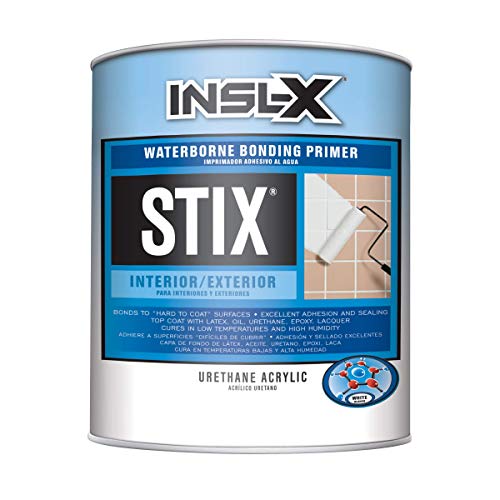
Best for: Surfaces that are notoriously hard to coat, including glossy tile, PVC, vinyl, glass, and galvanized metals, plus masonry walls. It provides superior adhesion and can be top-coated with almost any product.
Why selected: Stix is recognized for bonding to challenging substrates where standard primers struggle, making it ideal for renovations with diverse materials.
Caution: Bonding primers like Stix can require careful surface preparation and may interact with certain topcoats; verify compatibility with your chosen finish.
Zinsser Bulls Eye 1-2-3 Plus Spray Primer
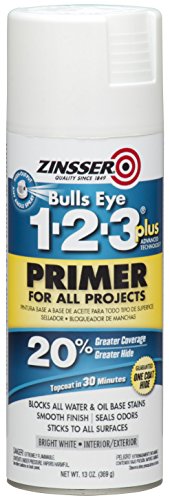
Best for: Quick, even coverage on interior and exterior surfaces including drywall, concrete, masonry, and metal. The spray format can reach difficult-to-reach areas and saves time on large jobs.
Why selected: Provides uniform, fast-drying base coats with minimal stippling on textured masonry; ideal for projects needing rapid turnaround.
Caution: Spray primers can overspray; use protective equipment and cover nearby surfaces to prevent unintended coating. Not ideal for extremely porous substrates without multiple passes.
Buying Guide
Key considerations for choosing a concrete and masonry primer:
- Surface type: Concrete, brick, stucco, cement blocks, drywall, or metal—different primers target different porosities and materials.
- Adhesion needs: For glossy or sealed surfaces, look for bonding primers (Stix or similar) to reduce prep work.
- Moisture and alkali resistance: For basements or exterior walls, choose primers with alkali resistance and moisture tolerance to reduce bleed-through and degradation over time.
- Coverage and build: High-build fillers help smooth rough porous concrete but may require longer dry times.
- Topcoat compatibility: Ensure the primer is compatible with the intended topcoat (latex, oil-based, acrylic, or specialty paints).
- Application method and climate: Self-priming or low-temperature formulations expand windows in challenging climates or limited spaces.
Frequently Asked Questions
- What is the purpose of a masonry primer?
To create a uniform base, improve adhesion for topcoats, seal stains, and/or fill minor surface imperfections on concrete, brick, or stucco. - Can I use normal wall primer on concrete?
Some all-surface primers work on concrete, but for best results on porous masonry, a dedicated masonry primer or high-build filler is often preferable. - Do I need to remove efflorescence before priming?
Yes. Clean and dry the surface, remove loose material, and address active moisture sources before priming. - How soon can I topcoat after priming?
Most primers dry to the touch in 30 minutes to 1 hour, but full cure times vary by product and conditions; always check the label. - Is a bonding primer necessary for glossy surfaces?
Yes. Bonding primers provide better adhesion on slick finishes where standard primers may fail. - Can I use spray primers for concrete walls?
Yes, spray primers can speed up coverage, especially for large areas; follow safety and masking guidelines.