Answering the common buyer question: which basement floor coating delivers longevity, ease of application, and wear resistance? The top picks here include 2‑part epoxy kits for heavy use, single‑component acrylic options for quick projects, and industrial-grade formulas for high-traffic areas. The best fit varies by space, traffic, and desired finish. Below are five strong choices with clear pros, best-use scenarios, and practical trade-offs. A quick summary table follows to help you compare at a glance.
| Product | Best For | Key Benefit | Limitations |
|---|---|---|---|
| Rust-Oleum 391282 EpoxyShield Basement Floor Coating Kit | Basement interiors needing durable epoxy | Two-part water-based epoxy with satin finish | 8 hours walk-on, 24 hours foot traffic |
| YOA Concrete Garage Floor Paint | Cost-conscious projects on concrete floors | Single-component, ready-to-use coating | Coverage varies; may require extra coats |
| Gorilla Epoxy Garage Floor Coating Kit | Large areas needing heavy-duty protection | 2-part 100% solids, high-gloss durability | Requires careful mixing; thicker coatings |
| KILZ 1-Part Epoxy Acrylic Floor Paint | Basements and garages with low odor needs | Satin finish, interior/exterior versatility | Not for vertical surfaces or hydrostatic pressure |
| SHENGWEI 100% Solids Self Leveling Epoxy | Industrial-grade basement floors or countertops | Very durable, self-leveling with textured finish | Higher material cost, needs precise prep |
Rust-Oleum 391282 EpoxyShield Basement Floor Coating Kit

Best for: Basements needing robust protection with a satin, easy-to-clean finish. The kit uses a 2‑part water-based epoxy that is designed for interior concrete surfaces and provides long-lasting resistance to stains and wear. It is suitable for spaces that will see regular foot traffic after a short cure period.
Why selected: A proven, industry-standard epoxy solution that balances durability with a manageable application process. The satin finish reduces glare and hides minor imperfections while remaining simple to clean.
Caution: Preparation quality matters for adhesion; ensure the concrete is clean and primed as directed to avoid lifting or peeling. Do not expose to heavy chemical spills beyond routine household use without confirming chemical compatibility.
YOA Concrete Garage Floor Paint
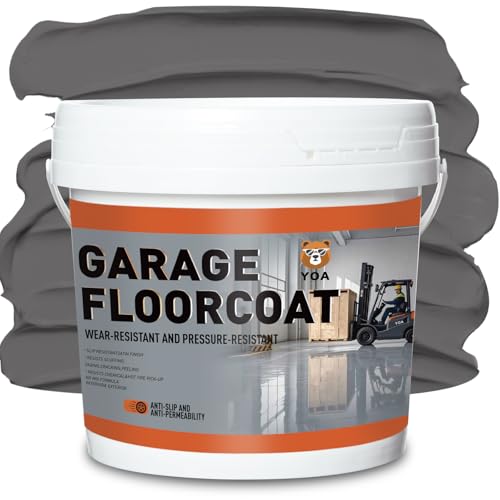
Best for: Quick-fix projects where a ready-to-use coating is preferred and cost is a consideration. The product provides broad indoor surface compatibility and is suitable for concrete in basements and garages.
Why selected: No mixing required, which simplifies the process. The coating claims broad compatibility and practical coverage, making it a good option for DIYers tackling small to mid-sized basement areas.
Caution: Actual coverage and durability depend on surface condition and thickness. Porous or rough floors may require patching or an extra coat for uniform appearance.
SHENGWEI 100% Solids Self Leveling Epoxy

Best for: Industrial-grade basement floors or countertops requiring high durability and a smooth, self-leveling finish. A 100% solids epoxy offers strong resistance to wear, acids, and yellowing.
Why selected: The formulation emphasizes long-lasting protection in harsher use scenarios, making it a strong choice for workshops or basements with heavy foot and equipment traffic.
Caution: Self-leveling products require precise surface prep and environmental control to achieve even thickness and avoid runs or craters.
Gorilla Epoxy Garage Floor Coating Kit
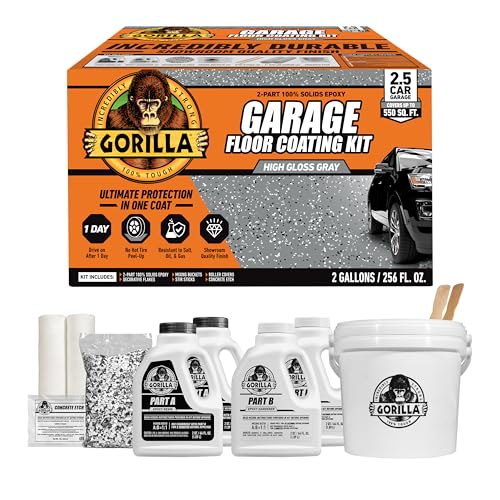
Best for: Large garages, workshops, or spaces needing a high-gloss, durable finish with significant chemical and abrasion resistance. This is a 2‑part, 100% solids system designed for longevity.
Why selected: The kit’s high gloss and tough protection make it suitable for environments where aesthetics meet heavy-duty performance. It covers up to 550 sq. ft., which is ideal for bigger basements or multi-car garages.
Caution: The application requires careful mixing and airless or controlled application to achieve a smooth, resin-rich coat without air pockets.
KILZ 1-Part Epoxy Acrylic Floor Paint

Best for: Basements and garages needing a satin, durable finish with versatile indoor/outdoor use. The single-component formula is convenient for DIY projects with moderate use expectations.
Why selected: Combines epoxy acrylic chemistry with practical interior/exterior versatility and a satin look that hides minor surface flaws while delivering protection against scuffing and fading.
Caution: Not suitable for vertical surfaces or areas subject to hydrostatic pressure or forklift traffic; use as a horizontal floor coating only.
5 Gallon ShangTianFeng Professional Floor Paint

Best for: Large-area projects like basements with heavy traffic, warehouses, or industrial spaces where durability and coverage are priorities. This is a no-mix, ready-to-use option with broad substrate compatibility.
Why selected: Offers substantial coverage per can with a self-contained formula designed for busy jobs that require minimal prep and rapid return-to-service time.
Caution: While convenient, ensure surface prep adheres to product guidelines, especially on porous or uneven concrete to avoid streaks or poor adhesion.
Buying Guide: How To Choose The Right Basement Floor Coating
- Foot traffic and use case: For basements with regular foot traffic or potential equipment movement, choose materials described as durable, wear-resistant, and chemical-resistant. For hobby spaces, less heavy-duty coatings may suffice.
- Surface prep requirements: Self-leveling and 2‑part epoxy systems usually demand thorough concrete prep (clean, patched, and primed). Ready-to-use single-component coatings may tolerate slightly rougher surfaces but still benefit from cleaning.
- Finish and aesthetics: Glossy finishes look striking but may show imperfections; satin finishes hide flaws better and are easier to maintain. Consider slip resistance for wet areas or pool-deck adjacent zones.
- Cure times and return to use: Look for products that specify walk-on times and drive-on times that fit your schedule. If you need quick turnover, a fast-drying single-component option can be advantageous.
- Chemical resistance and environment: If the basement hosts stored chemicals, or if spills are likely, select epoxy systems with strong chemical resistance and low VOC claims where possible.
- Cost and coverage: Large basements benefit from higher-coverage kits. Compare not only price but coverage per gallon to estimate total needs and minimize waste.
FAQ
- What is the easiest basement floor coating to apply? Ready-to-use, single-component coatings typically require less prep and no mixing, making them easiest for DIY projects.
- Do epoxy floor coatings stop moisture coming through concrete? Epoxy coatings primarily seal the surface; they are not a substitute for a moisture barrier. Address moisture separately if present.
- How long before I can walk on a newly coated basement floor? Most 2‑part epoxies cure to light foot traffic within 8–24 hours, depending on product and conditions.
- Can I apply epoxy coatings over existing coatings? Yes, but you must ensure proper surface preparation and compatibility. Some products require scoring or etching for adhesion.
- Are epoxy floors prone to yellowing? Some 100% solids epoxy formulations resist yellowing better, while others may yellow slightly with UV exposure. Choose formulations designed for indoor use and low UV impact if sun exposure is a concern.
- Is a gloss finish better than satin for basements? Gloss finishes look more vivid but highlight surface flaws. Satin finishes provide a practical balance of durability and concealment of imperfections.