Buying the right chemical resistant floor paint ensures long-lasting protection against spills, tire heat, and daily wear. This guide highlights five top options, each suited for different spaces and needs. The selections favor hard-wearing epoxy and polycuramine coatings that resist chemicals and abrasion. Ideal buyers include homeowners upgrading garages, workshop refurbishments, and property managers seeking durable concrete protection. Below is a quick summary of the featured products to help you compare at a glance.
| Product | Best For | Key Benefit |
|---|---|---|
| Rust-Oleum Concrete & Garage Floor Paint | Single-coat projects | Resists hot tires and chemicals |
| Two-Part Epoxy Floor Coating | High-traffic areas | Low VOC, self-leveling, anti-slip |
| RockSolid Garage Floor Coating Kit | DIY with decorative chips | No hot tire pickup, quick drive-on time |
| SENVEN Acrylic Concrete & Garage Floor Paint | Interior/Exterior concrete | Versatile for basements, porches, driveways |
| RockSolid Metallic Garage Floor Coating | Stylish durability | Metallic polycuramine finish |
Rust-Oleum Concrete & Garage Floor Paint

Best for: Small to medium garage projects requiring a simple, single-coat application. This paint and primer in one resists chemicals, UV, and weather, reducing the need for multiple coats. Suitable for DIYers who want a faster turnaround with a durable finish. The single-coat approach helps projects with tight timelines. Caution: Some garages with heavy chemical exposure may benefit from additional topcoat for enhanced chemical resistance.
Two-Part Epoxy Floor Coating

Best for: Garages and basements that demand high chemical resistance and a smooth, self-leveling finish. This kit uses a 1:1 mix ratio and provides a high-gloss appearance with anti-slip properties, making it suitable for workshops with wet or slippery conditions. Consider this option if you need a durable, long-lasting floor with low VOC. Limitation: Requires accurate mixing and a properly prepared substrate to achieve optimal results.
RockSolid Garage Floor Coating Kit, Gray

Best for: DIY projects that want a complete kit with decorative chips and a fast drive-on time. The polycuramine formula minimizes hot tire pickup and delivers a durable, visually appealing floor. The kit’s inclusions make it a convenient all-in-one option for homeowners updating a one-car or two-car garage. Caution: Surface preparation remains critical for best adhesion and longevity.
SENVEN Acrylic Concrete & Garage Floor Paint

Best for: Versatile use across interior and exterior concrete surfaces such as basements, porches, and driveways. The light gray finish offers a semi-gloss look with moderate chemical resistance, suitable for high-traffic residential areas. Choose this for projects needing a balance of ease of application and durability. Limitation: May require recoating over time in areas with heavy chemical exposure.
RockSolid Metallic Garage Floor Coating
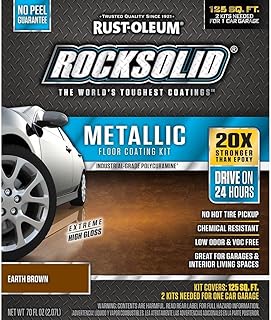
Best for: Those seeking a durable metallic finish with chemical resistance and a decorative edge for garages or workshops. This complete kit provides a stylish, heavy-duty solution that resists wear and chemicals while offering a unique visual appearance. Avoid this option if you prefer a non-metallic, flat finish or if you require ultra-quiet, slip-resistant textures year-round in oily environments.
Buying Guide
What should you consider when choosing a chemical resistant floor paint?
- Surface type and preparation: Concrete must be clean, dry, and free of contaminants. Some coatings require etching or priming for optimum adhesion.
- Chemical exposure: Identify common chemicals (oil, solvents, cleaners) to select formulations with appropriate resistance levels.
- Traffic and durability: Higher-traffic areas benefit from epoxy or polycuramine systems with anti-slip features.
- Application method: Single-coat paints are faster but may compromise coverage; two-part systems offer superior durability.
- Finish and aesthetics: Glossy finishes are easier to clean; metallic or decorative chips can blend with garage decor.
- Color and maintenance: Light colors reveal stains more readily; consider darker tones for hide-and-seek stain resistance.
Practical buying tips
- For quick, simple projects, choose single-coat options with chemical resistance.
- For basements or workshops with chemical spills, opt for a two-part epoxy or polycuramine kit.
- Decorative chips add wear protection and style but may require more thorough cleaning to maintain appearance.
- Prepare the substrate thoroughly; even the best coating struggles to adhere to dirty or damp concrete.
FAQ
- Q: What’s the main difference between epoxy and acrylic coatings for garages? A: Epoxy and polycuramine coatings typically offer higher chemical resistance and durability than acrylic paints, though they can require more careful mixing and surface prep.
- Q: How long should I wait before driving on a new garage floor coating? A: Drive-on times vary by product; some kits allow driving after 24–36 hours under proper curing conditions.
- Q: Can these coatings be applied over existing paint? A: Often yes with proper surface prep, but some products require adding a bonding primer or etching.
- Q: Do I need a topcoat for chemical protection? A: Some systems are self-contained, while others benefit from a topcoat for enhanced chemical resistance.
- Q: Are these coatings slip-resistant? A: Many epoxy and polycuramine coatings offer anti-slip additives or textures; check product specs for details.
- Q: How long do these floors last after application? A: Durability varies by product and environment; expect several years with proper maintenance and cleaning.