When sealing a basement, choose products that address moisture, prevent cracking, and fit your project timeline. This guide highlights five reliable options—ranging from patch fillers to penetrating sealers and elastomeric coatings—so you can pick the best cement sealer for basement use. It targets homeowners tackling leaks, cracks, and waterproofing, as well as DIYers planning a long-lasting basement finish. The table below summarizes the selected products for quick comparison.
| Product | Best For | Type | Notes |
|---|---|---|---|
| DAP Concrete and Mortar Filler and Sealant | Small cracks and patching | Patch filler/Sealant | Low odor, easy cleanup, 24-hour return to service |
| DAP Concrete Crack Filler, Gray | Horizontal cracks | Water-activated dry powder filler | Quick set for light traffic |
| DAP Liquid Cement Crack Filler (Ready to Use) | Interior/exterior cracks, fast repair | Liquid patch | Self-leveling, ready to go in minutes |
| Siloxa-Tek 8500 Ready to Use | Long-lasting concrete protection | Penetrating silane/siloxane sealer | Breathable, low VOC, DOT approved |
| Liquid Rubber Foundation Sealant | Basement waterproofing membrane | Elastomeric coating | Very high elongation, flexible across temperatures |
DAP Concrete and Mortar Filler and Sealant

Product overview: This gray concrete patch filler seals cracks and holes in exterior or interior concrete and masonry surfaces. The sealer is ready to use with no mixing required, making projects easier. It features low odor and flexible adhesion, and cleanup is water-based. It cures quickly, offering a 24-hour return to service time. Best for small cracks and patching in basements or foundation walls. Choose this if you want a straightforward, ready-to-use patch and seal option for light-duty repair.
Who it’s best for: DIY homeowners with minor cracks and holes who prefer a ready-to-use filler that doesn’t require mixing. Why selected: combines patching and sealing in one product, reducing steps and downtime. Caution: not designed for large structural repairs or heavy load zones.
DAP Concrete Crack Filler, Gray
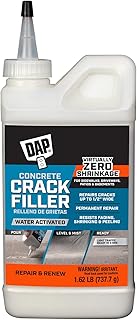
Product overview: A water-activated dry powder designed to repair horizontal cracks in concrete, stone, and other masonry. It dries white/gray to blend with many surfaces and is ready for light foot traffic in about four hours, with full return to service in 48 hours. Best for small, horizontal cracks that need a quick, durable fix. Choose this if you want a simple, water-activated solution for interior or exterior crack repairs.
Who it’s best for: Homeowners dealing with visible, horizontal cracks where traffic is light during cure. Why selected: fast-drying, ready-to-mix approach that requires minimal effort. Caution: limited to cracks up to about 1/2 inch wide and 1/2 inch deep.
DAP Liquid Cement Crack Filler (Ready to Use)

Product overview: This ready-to-use, gray liquid cement filler is ideal for repairing horizontal cracks in interior or exterior concrete. It self-levels and dries to blend with most existing concrete. Repairs are traffic-ready in 30 to 45 minutes, enabling faster project turnaround. Best for quick-fill jobs on flat surfaces where a seamless finish matters. Choose this if you want fast-drying, self-leveling crack repair with minimal prep.
Who it’s best for: DIYers who need a fast, easy repair on horizontal cracks without mixing. Why selected: rapid cure and good blend with existing concrete. Caution: not suited for deep structural fixes or high-pressure water exposure without additional sealing.
Siloxa-Tek 8500 Ready to Use

Product overview: A penetrating silane/siloxane sealer designed to reduce water and moisture intrusion. It is water-based, breathable, low VOC, and does not alter the natural look of concrete, brick, masonry, or pavers. The product is DOT approved and resists surface damage from chlorides and deicing salts. Best for long-term protection of basements and exterior surfaces without changing aesthetics. Choose this for a breathable, durable shield against moisture and freeze-thaw damage.
Who it’s best for: Property owners seeking a long-lasting, non-film-forming sealer that preserves appearance. Why selected: deep penetration provides durable protection with minimal surface buildup. Caution: may require multiple coats for very dense concrete or heavily exposed areas.
Liquid Rubber Foundation Sealant

Product overview: A flexible elastomeric coating designed for basement waterproofing, foundation leak repair, and other waterproofing needs. It forms a durable membrane with high elongation (about 900%), providing strong resistance to leaks and moisture. Best for situations requiring a continuous waterproof layer and where temperature variation occurs. Choose this if you need a robust, flexible sealant that can bridge cracks and movement. Caution: may be heavier to apply and requires proper surface prep for best adhesion.
Buying Guide: Key Considerations For Basement Cement Sealing
- Leak type and location: Determine whether you need patching, crack filling, or a continuous waterproof membrane. Patch fillers and crack fillers are ideal for minor cracks, while elastomeric coatings and penetrating sealers handle ongoing moisture.
- Surface and appearance: If you want to preserve the natural look, choose penetrating silane/siloxane sealers. For visible patches, select a gray filler that blends with concrete.
- Cure time and traffic: Consider cure times when planning space usage. Quick-drying products allow faster back-in-service, but ensure they’re appropriate for the crack width and load.
- Breathability and vapor management: Breathable sealers prevent moisture entrapment and reduce peeling risk, particularly in basements with humidity concerns.
- Application complexity: Ready-to-use formulas save steps but may have limitations on deep cracks or wide joints. Dry powders require mixing with water but can be precise for crack widths.
- Durability and climate: For freeze-thaw cycles and road salt exposure, choose products with proven resistance to salt, moisture, and temperature swings.
- Safety and VOCs: Low-VOC and water-based options are preferable for indoor use and home environments.
Frequently Asked Questions
- What is the best product for basement leaks?
- Can I seal cracks and patches at the same time?
- How long should a basement sealer cure before use?
- Is penetrating sealer better than a coating for basements?
- Will these products prevent future cracks?
- Are these products safe for indoor use?
For active leaks, a flexible sealant such as an elastomeric coating or a penetrating sealer can provide durable waterproofing. Start with a penetrating sealer for moisture management, and follow with a membrane if leaks persist.
Yes. For small cracks and patches, use a patch filler or crack filler to seal, then apply a penetrating or elastomeric sealer for moisture protection and long-term durability.
Cure times vary by product. Quietly plan for quick-drying fillers (minutes to hours) or longer-curing sealers (up to 24 hours or more) before resuming heavy activity.
PENETRATING sealers block moisture while preserving appearance and breathability. Coatings provide a thicker, continuous barrier but may require surface prep and can peel if moisture remains behind them.
Elastomeric coatings and high-elasticity sealants can accommodate some movement and help prevent new cracking from spreading. They do not eliminate movement entirely but reduce moisture-related stress.
Many are water-based with low VOC content, designed for indoor use, but always follow label directions and ventilation recommendations for basement environments.