Answering the question “which ceiling paint should I choose for my kitchen?” this guide highlights five top products that balance durability, mold resistance, and ease of use. Ideal buyers include homeowners updating already-painted ceilings, renters seeking cleanable finishes, and DIYers who want quick-drying, low-odor options. The list prioritizes mold/mildew resistance, stain blocking, and excellent hide to brighten kitchens. A concise product table follows to help you compare at a glance.
| Product | Best For | Key Benefit |
|---|---|---|
| Zinsser 02774 PERMA-WHITE | Moist environments, mold-prone kitchens | 5-year mold/mildew-proof film |
| Zinnser 03688 Covers Up Stain | Stain-prone ceilings | Stain-blocking finish |
| Glidden White Flat Ceiling | Budget-friendly bright ceilings | High hide, flat finish |
| INSL-X Color-Changing Ceiling Paint | Precise edge control for ceilings | Color-change helps prevent missed spots |
| Zinsser 260967-2PK Ceiling Paint & Primer In One | One-coat priming and painting | Low odor, wide coverage |
Zinsser 02774 PERMA-WHITE Mold & Mildew Proof Interior Paint

Best for kitchens with high humidity or moisture exposure. This eggshell white interior paint is self-priming and features a mold-and-mildew-proof film guaranteed for five years. The film resists dirt and moisture, helping ceilings look cleaner longer. Best for homeowners who want a low-effort project with durable, washable results. Consider caution: the eggshell finish may show lighter sheens on very flat ceilings, requiring careful application for uniform appearance.
Zinnser 03688 Covers Up Stain Sealing Ceiling Paint

This option focuses on stain blocking, making it suitable for ceilings with water stains or smoke marks. It helps seal stains before or during repainting, lowering the risk of bleed-through. Best for rooms where ceiling stains are a frequent concern. Limitation: as a stain-sealing product, it may require a second coat for uniform color depending on ceiling texture and stain severity.
Glidden White Flat Ceiling Interior Paint

Designed as a grab-and-go white ceiling paint, Glidden’s flat finish provides excellent hide and helps brighten ceilings that have dulled over time. It covers approximately 300–400 sq. ft. per gallon, making it cost-effective for larger kitchens. Best for budget-conscious projects where a smooth, non-reflective surface is desired. Caution: flat finishes can be more prone to showing surface imperfections in very bright lighting; ensure proper surface preparation.
White Touch Up Paint Pen by Vigorder

While not a ceiling paint, this touch-up pen is included for rapid repairs on white ceilings and adjacent walls. Best for small touch-ups after painting, quick repairs for chips, and keeping a seamless look between coats. Choose this if you want a precise, ready-to-use pen for minor imperfections. Limitation: not suitable for large areas or ceiling painting; use the pen for small touch-ups only.
Zinsser Ceiling Acrylic Paint & Primer In One
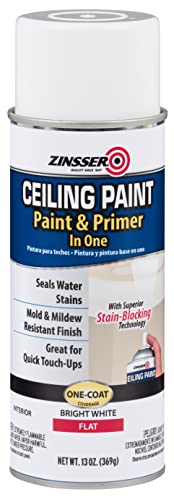
This one-coat ceiling paint and primer in one is ideal for quick updates on interior ceilings. The low odor formula suits kitchen environments, and it dries to the touch quickly, covering up to 15 sq. ft. per can. Best for small ceiling projects or touch-ups. Limitation: coverage per can is limited, so larger kitchens may require multiple cans for even finish.
Zinsser 260967-2PK Ceiling Paint & Primer In One

This two-pack provides two gallons of ceiling paint with primer in one. It’s designed to block stains and offer a wide coverage range, with a relatively low odor profile for interior spaces. Best for DIYers who want a straightforward, fewer-coat solution for kitchens. Limitation: larger rooms may require careful planning to maintain uniform color across cans.
Buying Guide: Key Purchase Considerations
- Moisture resistance: Kitchens benefit from mold- and mildew-resistant formulas. Look for guarantees or film properties that resist moisture and dirt.
- Finish choice: Flat or eggshell finishes soften imperfections and reflect light. For busy kitchens, consider satin or matte finishes for durability and ease of cleaning.
- Primer compatibility: Some paints include primer (or are self-priming). If you’re painting over a stained or glossy surface, a primer can improve adhesion and stain blocking.
- Odor and drying time: Low-odor formulas reduce ventilation needs during painting. Short drying times help you finish quicker and reduce kitchen downtime.
- Coverage: Calculate total square footage and account for texture. Ceilings with heavy stipple may need more cans for even appearance.
- Application tool readiness: Some paints are easier to apply with rollers, brushes, or spray. Consider your preferred method and equipment availability.
Frequently Asked Questions
- What type of finish is best for kitchen ceilings? A: Flat or eggshell ceilings minimize reflections and hide minor imperfections, while being washable enough for occasional cleaning.
- Do ceiling paints block stains effectively? A: Many ceiling paints include stain-blocking properties or are designed to prime and seal in one coat, reducing bleed-through.
- Is low-odor paint important for kitchens? A: Yes. Low-odor formulas reduce indoor air exposure during application and cure more quickly with less ventilation.
- Can I use wall paints on ceilings? A: Some ceiling paints are formulated specifically for ceilings to resist spatter and provide proper leveling; using wall paint may yield inconsistent results.
- How many coats are typically required for ceilings? A: Most ceilings require one to two coats depending on color, surface condition, and coverage per gallon.
- Is priming necessary for kitchens with stained ceilings? A: A stain-blocking primer or a paint with built-in stain coverage is recommended to prevent bleed-through.