Best brush stroke wall paint results come from choosing the right brush set for the job. This guide highlights five Amazon brushes that are well-suited for walls, trim, and precision work on a variety of interior surfaces. Each option targets different buyer needs—professional-like accuracy, budget-friendly variety, or detailed trim control—so you can pick the one that matches your project scope. The following summary table helps compare core strengths at a glance.
| Product | Best For | Key Strength |
|---|---|---|
| Pro Grade Paint Brushes, 5-Piece Set | General walls, trim, and cabinets | Complete set with premium SRT synthetic bristles |
| Set of 3 Chip Paint Brushes | Priming, staining, and quick touch-ups | Versatile chip brushes for various finishes |
| Bates Trim Brush Set | Edge work, corners, and detailing | Ergonomic, precise trim brushes |
| 3 Pack Trim Edge Brushes | Sharp lines and wall edge touch-ups | Three sizes for versatile edging |
| Magimate 8 Inch Wide Paddle Brush | Large areas and smooth coverage | Extra-large for fast, broad strokes |
Pro Grade 5-Piece Brush Set For Walls And Trim
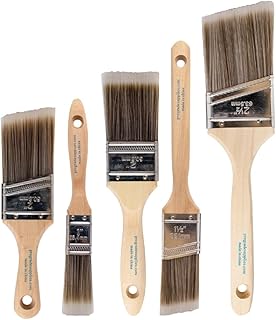
This complete 5-piece set covers every phase of a wall project. It includes 1 Inch Flat, 1.5 Inch Angle, 2 Inch Flat, 2 Inch Angle Stubby, and 2.5 Inch Angle brushes. Best for homeowners and DIY enthusiasts who want professional-grade performance at a lower cost, it works with latex, oil-based paints, primers, sealers, and wood stains. The stiff SRT synthetic filaments hold more paint and release evenly for a smooth, streak-free finish on walls, ceilings, and trim.
Who it’s best for: DIYers tackling rooms with walls, trim, cabinets, or doors who value a full set rather than purchasing individually. Better for those needing a dedicated angle stubby for tight spaces such as cabinet interiors and window sashes. Caution: avoid if you only paint small, quick touch-ups—some users may prefer a single brush for simple jobs.
Set of 3 Chip Paint Brushes With Synthetic Bristles

This trio of wood chip brushes offers versatility for priming, staining, and applying varnishes. Their synthetic bristles work with most paints, stains, and varnishes, making them suitable for walls, cabinets, gates, fences, and DIY projects. The wooden handle provides a firm grip for controlled strokes, making them a practical choice for projects where chip brushes are preferred for their absorbency and texture.
Who it’s best for: Budget-conscious buyers who want a simple, multipurpose chip brush set for priming, staining, or small DIY jobs. Choose this if you’re painting rough wood surfaces or need quick, broad coverage on non-wall areas. Limitation: not ideal for ultra-smooth finishes on large wall surfaces where larger flats or angles are preferred.
Bates Trim Brush Set, 3 Pieces
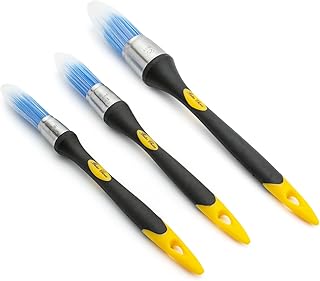
This Bates trim brush trio is designed for edges, corners, and tight detailing. Each brush features finely bristled ends for a smooth, consistent application and an ergonomic grip to reduce fatigue during extended sessions. Best for precise finish work on trim, window casings, and door frames where accuracy matters more than broad coverage.
Who it’s best for: Professionals or DIYers who focus on trim work and need comfortable control across several small sizes. Better for clean lines than for filling large wall areas. Caution: bristle stiffness may vary; ensure the brush you choose matches your paint type for optimal results.
3 Pack Trim Edge Brushes For Sharp Lines

This three-pack focuses on edge control and wall edging. The set provides three sizes to handle sharp house edges, door frames, and trim lines with minimal splatter. Ergonomic handles are designed to reduce hand strain during longer sessions, delivering steady lines and precise coverage for neat details.
Who it’s best for: Homeowners or painters who prioritize clean edges and consistent lines along walls and trim. Choose this if you want flexible sizes for different edging tasks. Limitation: may not be ideal for large surface coverage where wide flats would be more efficient.
Magimate 8-Inch Wide Paddle Brush

This wide paddle brush is designed for large-area coverage. Its 8-inch width makes it a time-saver on walls, fences, and other expansive surfaces. The brush aims to deliver smooth, even application for wallpaper paste, gesso, varnishes, and general paint. Best for projects where speed and broad strokes matter more than meticulous edge control.
Who it’s best for: Buyers tackling large wall surfaces or mural work where broad, rapid coverage is needed. Better for big areas than for precision edging. Caution: because it’s wide, it can be harder to control in tight spaces or near corners.
Buying Guide: Practical Considerations For Brush Stroke Wall Paint
Choosing the right brush impacts final wall appearance, edge sharpness, and the ease of your painting project. Consider the following questions to match a brush to your needs:
- What surface and paint type will you use? Latex, oil-based paints, stains, and varnishes may require different bristle materials and sizes.
- Do you need a full set or targeted brushes? Complete sets provide flexibility for walls, trim, and detail work; single-purpose brushes excel at specific tasks.
- Is edge control important? For precise trim and corners, opt for angle or wedge brushes; for broad walls, wide flats or paddles save time.
- How comfortable should the tool be? Ergonomic handles reduce fatigue on longer projects, especially when detailing is involved.
- What is your budget and project scale? Chip brushes are budget-friendly for priming or large areas; premium sets offer long-term value for frequent use.
Materials And Bristle Types
Synthetic bristles deliver even paint release and are versatile across latex and oil-based paints. For wood stains and varnishes, bristles that maintain stiffness and control help prevent runs and brush marks. Ferrule quality and handle grip influence durability and comfort across extended sessions.
Edge And Detail Strategy
Use angle or trim brushes for lines near edges, windows, and molding. For large walls, switch between a flat brush for coverage and an angled brush for cutting in at corners. A dedicated 2-inch angle stubby can be ideal for tight interiors and between trim pieces.
Application Speed vs. Precision
Wide brushes speed up large-area painting, while smaller brushes ensure crisp lines and smoother cuts-in. Balance your tool selection to avoid sacrificing finish quality for speed, or vice versa.
Maintenance Tips
Clean brushes promptly after use, reshape bristles, and dry bristles facing downward to extend life. Store brushes upright or flat to prevent bristle misshaping. Proper care sustains performance across multiple projects.
FAQ
Q: Which brush is best for cut-in work on ceiling edges?
A: An angled sash or trim brush, typically 2 inches, provides precise control for ceiling lines.
Q: Are chip brushes suitable for walls?
A: Chip brushes can work for priming or rough surfaces, but for smooth walls, prefer flats or angled brushes with synthetic bristles.
Q: Can I use the same brush for latex and oil-based paints?
A: Some brushes are designed to work with both, but check the bristle material and manufacturer guidance to avoid bristle damage or paint residue transfer between types.
Q: How important is the handle design?
A: An ergonomic handle reduces fatigue during extended painting sessions and improves control on fine detailing tasks.
Q: Should I buy a wide paddle brush for walls?
A: Yes, for fast coverage on large walls or murals. Pair it with a smaller angled brush for edges and trim to maintain clean lines.
Buying multiple brush styles can optimize your workflow by combining fast coverage with precise edging. Each option listed targets different project needs, enabling a balanced approach to achieving smooth, professional-looking brush stroke finishes on walls.