Answering the common buyer intent: these bonding primers are designed to stick laminate and other slick surfaces so coatings grab hold reliably. This guide highlights top options for different needs, from home DIY to small professional projects. Best for projects where laminate is the surface, and you need a durable bond before paint or epoxy. The top products below are chosen for adhesion to glossy, non-porous, or hard-to-coat laminates, and for versatile top-coat compatibility. The quick reference table summarizes who each product is best for.
| Product | Best For | Notes |
|---|---|---|
| INSL-X SXA11009A-04 Stix Acrylic Waterborne Bonding Primer | Glossy laminates, plastics, metal | Quart size; excellent adhesion on hard-to-coat surfaces |
| Stone Coat Countertops Bonding Primer and Sealer | Laminate, tile, and slick countertop surfaces for epoxy coatings | Low-odor, low-VOC; designed for epoxy projects |
| INSL-X SXA11009A-01 Stix Acrylic Waterborne Bonding Primer | Similar to quart version; larger coverage | Gallon size; broad surface compatibility |
| INSL-X AP100009A-04 Prime All Multi-Surface Primer | Interior and exterior surfaces; varied substrates | 100% acrylic; strong sealing and adhesion |
| Clear Bonding Primer – Chalk Style Furniture Prep | Laminate, glass, metal; furniture refinishing | Clear finish; eco-friendly and low-VOC |
Introduction to the featured products: each option offers distinct advantages depending on surface type, project scale, and the final coating you plan to apply. The list below presents five well-suited primers for laminate and other slick surfaces, with guidance on who benefits most from each choice.
INSL-X SXA11009A-04 Stix Bonding Primer (Quart)
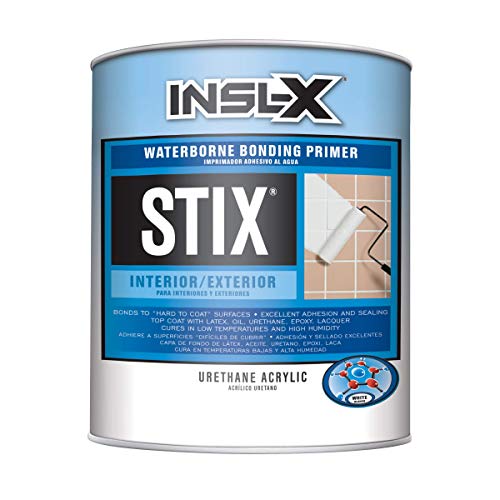
Best for: projects requiring a robust bond on glossy laminate, PVC, glass, and other challenging surfaces. This premium acrylic-urethane primer-sealer delivers strong adhesion and can be top-coated with almost any product. It is especially suitable for drywall, wood trim, metal, Formica, and masonry substrates that are notoriously hard to coat. A key benefit is bonding to “hard-to-coat” surfaces and maintaining compatibility with many topcoats.
Why chosen: It provides deep adhesion on non-porous surfaces typical of laminate countertops or glossy cabinetry. It suits both interior repairs and refinishing tasks where surface slickness would otherwise hinder adhesion. A potential limitation is the need for appropriate surface preparation to maximize adhesion on very smooth laminates.
Best for whom: homeowners and professionals tackling laminate projects that require a durable base coat before painting or epoxy finishes. Choose this when bonding to multiple hard surfaces is anticipated and a versatile topcoat is planned.
Stone Coat Countertops Bonding Primer and Sealer (Quart)

Best for: epoxy countertop projects and other slick laminate-like surfaces where a strong base coat is essential before applying epoxy coatings. It’s designed to create a durable bond on laminate, tile, granite, quartz, and similar substrates. The formula is an upgraded version intended to replace prior primers with improved reliability.
Why chosen: The primer is tailored for epoxy countertop work, providing better adhesion on glossy surfaces and a reliable foundation for subsequent epoxy layers. A caution: indoor use is typically fine, but ensure ventilation during application due to primer vapor. It’s ideal when you want a low-odor option with strong compatibility for epoxy pours.
Best for whom: professional remodelers and DIYers planning epoxy countertop projects on laminate or other slick surfaces. Choose this if epoxy is the final finish, and you need a dependable bonding base on multiple hard substrates.
INSL-X SXA11009A-01 Stix Bonding Primer (Gallon)

Best for: larger laminate projects, interior and exterior broad-surface bonding where versatile adhesion is needed across multiple substrates, including glossy surfaces and pre-coated materials. This is the gallon-size variant of the Stix bonding primer series.
Why chosen: It offers similar adhesion strengths to the quart version but with greater coverage for bigger jobs. A limitation: larger containers may require careful storage and longer open time to avoid skinning in humid conditions.
Best for whom: contractors or serious DIYers tackling bigger laminate refinishing tasks, cabinetry projects, or multi-room updates where uniform adhesion is essential and topcoating follows soon after.
INSL-X AP100009A-04 Prime All Multi-Surface Primer
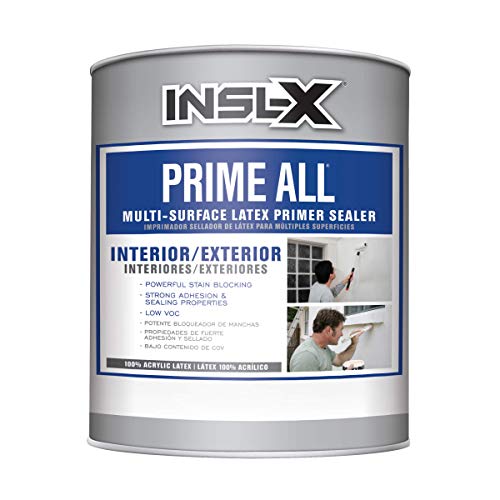
Best for: a versatile option for interior and exterior substrates, including laminate and other non-porous materials. It provides strong sealing properties and adhesion suitable for multiple topcoats.
Why chosen: The 100% acrylic formulation makes it a dependable all-around primer for projects where you need one product that handles varied surfaces. A potential limitation is that the finish and level of sheen will vary depending on topcoat choice, so plan for a compatible system from primer to final coat.
Best for whom: homeowners seeking a single primer solution for mixed-material projects, or for those who want fewer product SKUs on hand while still achieving solid bonding performance on laminate.
Clear Bonding Primer – Chalk Style Furniture Prep

Best for: furniture refinishing on laminate, glass, metal, or wood where a clear primer is preferred to preserve the original wood tone or achieve a distressed look later. It’s chalk-style friendly and suitable for furniture painting projects.
Why chosen: The clear finish allows you to see the original substrate better during distressing, which helps achieve the desired aesthetic. A caveat: color-clarity and final appearance will depend on the topcoat choices, so test a small area first.
Best for whom: furniture hobbyists and DIYers who want a primer that won’t obscure natural tones and who plan to distress or layer light paint finishes over laminate surfaces.
INSL-X High Build Peel Bonding Primer (Gallon)

Best for: projects where weather variability might affect adhesion; this primer remains flexible and breathable to prevent peeling or cracking with seasonal changes. It handles rust-stain blocking and tannin bleed too.
Why chosen: Its high-build capability allows thicker coats, which is useful on challenging laminate surfaces with minor imperfections. A limitation: higher build may require longer drying time between coats and careful surface prep to avoid trapped moisture.
Best for whom: exterior or high-humidity interiors where a robust, breathable primer can prevent future peeling on laminate or wood surfaces.
Buying Guide: Bonding Primer For Laminate
Where to start: identify your laminate type (high gloss, PVC, melamine), project scale, and planned topcoat. For glossy surfaces, prioritize primers that state strong adhesion to hard-to-coat materials. For epoxy countertops, look for primers explicitly designed for epoxy bonding and low odor.
Key considerations
- Surface compatibility: ensure the primer advertises bond to laminate, glossy surfaces, plastics, and metals you plan to coat.
- VOC and odor: indoor projects benefit from low-VOC, low-odor formulations.
- Topcoat compatibility: some primers are designed to work with almost any topcoat; others require specific systems.
- Open time and recoat window: larger projects benefit from primers with practical recoat intervals to prevent skinning.
- Application method: check whether brushing, rolling, or spray is recommended for your product and surface.
Practical questions
- Which primer is best for glossy laminate? Choose a Stix-type acrylic bonding primer with proven adhesion to slick surfaces.
- Do I need a sealer? If you’re applying epoxy or heavy coatings, a bonding sealer helps improve base stability.
- Can I use a clear primer on laminate? Clear primers are useful when you want to preserve underlying tones or achieve a distressed look.
- Is low-odor important? For indoor spaces, low-VOC options reduce fumes during application and curing.
FAQ
- Q: Will bonding primer work on plastic laminate? A: Yes, many bonding primers are formulated to adhere to plastic laminates and other non-porous surfaces.
- Q: Can I topcoat any paint over the primer? A: Most primers listed here are designed to work with a wide range of topcoats; always test compatibility with your chosen finish.
- Q: Do I need to sand glossy laminates before priming? A: Some primers bond well without sanding, but light scuff sanding can improve adhesion on very slick surfaces.
- Q: How should I store primer after opening? A: Reseal tightly and store upright in a cool, dry place to prevent skinning and spoilage.
- Q: How long does primer cure before painting? A: Follow the product’s label for recoating times; in general, allow adequate drying between coats.