Answering the buyer’s search, these bonding primers improve adhesion on concrete and other challenging surfaces, making DIY repairs and professional jobs more reliable. This guide highlights primers that work well on concrete, masonry, and surfaces that often resist coating. Each product is chosen for clarity, surface versatility, and practical bonding strength. The top picks are suitable for concrete patches, new slab overlays, and basement or garage projects. A quick summary table follows to compare core details at a glance.
| Product | Best For | Surface Compatibility |
|---|---|---|
| INSL-X Stix Acrylic Waterborne Bonding Primer | Hard-to-coat surfaces like glossy tiles and plastics | Concrete, masonry, metal, glass, PVC, wood, drywall |
| Zinsser Bulls Eye 1-2-3 All Surface Primer | General purpose interior/exterior upgrades | Drywall, concrete, wood, masonry, metal, glossy surfaces |
| SIKA SikaLatex R Concrete Admix | Bonding grout or concrete admix for strong adhesion | Cement, concrete, mortar |
| DAP Concrete Bonding Additive | Patch, resurfacing, and leveling of concrete | New or old concrete surfaces |
| BEEST Multi-Purpose Primer | Prepping diverse substrates including concrete | Concrete, metal, wood, elastomeric coatings |
INSL-X Stix Acrylic Bonding Primer
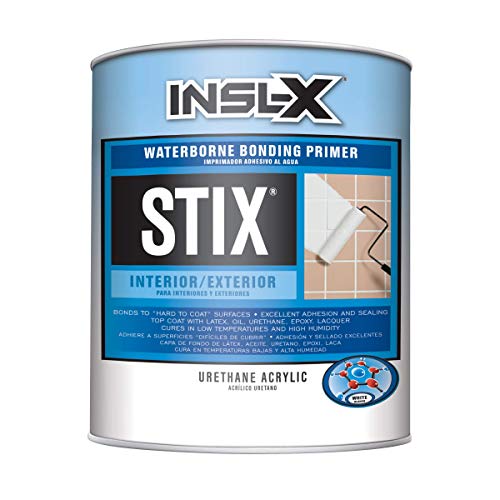
Best for extremely challenging surfaces, INSL-X Stix is a premium acrylic-urethane bonding primer-sealer. It adheres to glossy tile, PVC, vinyl, plastic, glass, glazed block, Formica, and other hard-to-coat surfaces. It also bonds well to drywall, plaster, wood trim, and masonry. The formula supports top-coating with nearly any product, making it a versatile base for repairs and renovations. Choose this if you’re dealing with glossy or non-porous materials that typical primers struggle to bond.
Best-for note: Ideal for projects needing a robust, adhesion-first base layer on a wide range of substrate types. Caution: The product can be overkill for simple drywall work where standard primers suffice.
Zinsser Bulls Eye 1-2-3 All Surface Primer

Zinsser Bulls Eye 1-2-3 is a versatile water-based primer designed for interior and exterior use on drywall, concrete, wood, masonry, metal, and glossy/difficult surfaces. It seals evenly, sticks without sanding, and dries quickly to a recoat-ready state. This makes it a solid choice for larger projects or when quick project turnover matters. Best for: general priming tasks where multiple surface types are present. Limitation: while strong, it may not provide the same level of adhesion on extreme glossy or non-porous substrates as specialty bonding primers.
SIKA SikaLatex R Concrete Admix
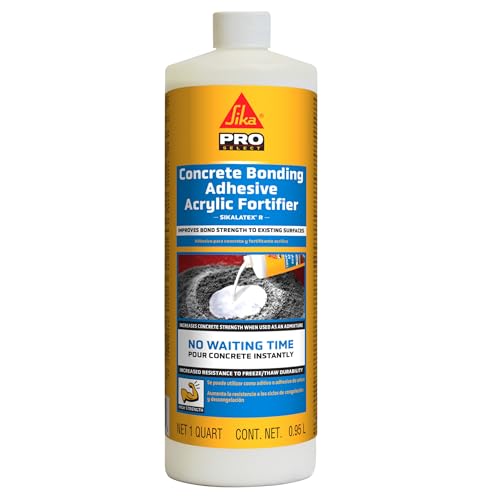
SIKA SikaLatex R is an acrylic admixture designed to be added to cement, concrete, or mortar for stronger bonding and improved tensile strength. It is durable against freezing and thawing, helping bonds endure temperature fluctuations. Practical for bonding grout or as an admixture when working on Portland cement mortar. Best for: projects requiring enhanced longevity and freeze-thaw resistance. Caution: no dilution is needed, so follow product-use instructions precisely to achieve optimal results.
DAP Concrete Bonding Additive

DAP Concrete Bonding Additive is a vinyl acetate copolymer bonding agent that can be used for patching, resurfacing, and leveling concrete. It creates a high-moisture resistant, high-density concrete when combined with cement products. Best for: repairs on steps, driveways, and patios where a strong bond is required. Caution: ensure proper surface preparation and avoid over-application on porous surfaces that may absorb the additive too quickly.
BEEST Multi-Purpose Primer
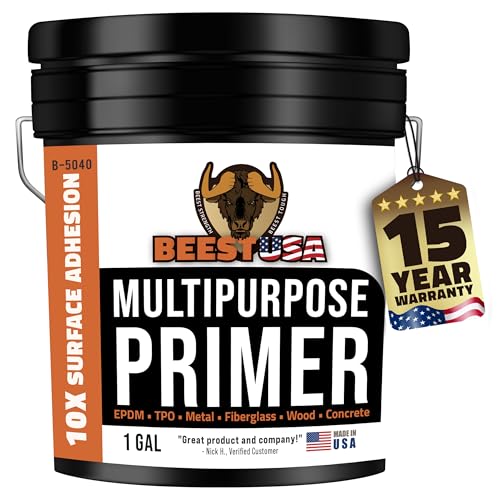
BEEST Multipurpose Primer is designed to improve adhesion across a range of substrates, including concrete. It’s described as environmentally friendly with ultra-low odor and easy application, making it suitable for projects where odor or exposure is a concern. Best for: prep work on concrete before applying sealants or coatings, especially when working in enclosed spaces. Limitation: being a general-purpose primer, it may not provide the same extreme bonding performance as primers marketed specifically for concrete-to-concrete adhesion in high-stress areas.
Buying Guide: Key Considerations For Selecting A Concrete Bonding Primer
- Surface type and condition: Determine whether you’rebonding to concrete, masonry, metal, glass, or glossy surfaces. Specialty bonding primers excel on hard-to-coat substrates.
- Environment and exposure: Consider indoor vs. outdoor use, moisture, and temperature cycles. Admixtures or fortifying primers help in freeze-thaw environments.
- Top-coat compatibility: Some primers can be top-coated with almost any paint or sealant, while others are more limited.
- Ease of use: Dry time, recoat window, and odor are practical factors for DIY projects and job sites.
- Project scope: For small repairs, a general-purpose primer may suffice; large or critical substrates may require a bonding primer with robust adhesion specifications.
Frequently Asked Questions
- What is a bonding primer used for on concrete?
A bonding primer improves adhesion between concrete and subsequent coatings, especially on smooth, sealed, or non-porous surfaces.
- Do I need a concrete bonding primer before painting concrete?
In many cases, yes, especially on slick or previously painted concrete, glossy surfaces, or when applying coatings that require strong adhesion.
- Can bonding primers be used on old concrete?
Yes, bonding primers are suitable for old or weathered concrete to enhance adhesion of new overlays or paints.
- Is a primer with freeze-thaw resistance important?
For exterior or outdoor concrete, primers with weather resistance help maintain bond integrity during temperature fluctuations.
- Do bonding additives replace primer?
No, bonding additives are often used with cement or mortar to improve adhesion, but primers typically provide surface sealing and improved coating compatibility.