Finding the right flexible quarter round molding can simplify finishing baseboards, caps, and edge transitions around curved stairs, columns, and bathtubs. This guide highlights five top options that install with peel-and-stick ease, resist moisture, and adapt to curved or irregular spaces. Ideal buyers include: DIY homeowners seeking quick projects, renters needing temporary solutions, and remodelers looking for flexible, low-profile trim. The table below compares key specs to help you choose quickly.
| Product | Material & Features | Best For |
|---|---|---|
| Conwang Flexible Quarter Round Molding | 118″ L, 0.6″ W, 0.6″ H; self-adhesive; suitable for curves | Curved stairs and columns |
| Risunpet Flexible Quarter Round Molding | 0.7″ W x 0.86″ H; aviation/medical grade rubber; waterproof | Gaps around doors, windowsills, walls |
| KNEELISA Flexible Quarter Round Molding | 15mm x 20mm; 3m/6m/12m rolls; strong double-sided adhesive | Wall-to-floor edges and cabinetry |
| URUAST 118 Inch Flexible Quarter Round Molding | 118″ L; silicone; lightweight, dust/moisture barrier | Baseboards and countertops with curves |
| cuysfead 39.2′ Flexible Quarter Round Molding | 0.6″ W x 0.6″ H; 90-degree edge fit; self-adhesive | Stairs, countertops, and bathroom edges |
Conwang Flexible Quarter Round Molding

Conwang offers a 118-inch flexible crown-like quarter rounding trim designed for curved spaces. The edge is self-adhesive, enabling clean, quick installation on smooth surfaces, including floors, walls, and bathtubs. Its porous interior aids flexibility around curved stairs and columns. This product is best for DIYers tackling irregular room shapes or temporary renovations where a versatile, wraparound edge is desired. Caution: ensure surfaces are clean and dry before pressing to maximize adhesion.
Best for: Home projects involving curves where a long roll is advantageous. Why selected: It combines length with pliable construction, reducing seams on curved transitions. Limitation: Some users report the need for re-adhesion over time in high-traffic areas.
Risunpet Flexible Quarter Round Molding

Risunpet’s option uses aviation and medical grade rubber for a sturdy, soft, and water-resistant quarter round. With 0.7″ width and 0.86″ height, it provides a more pronounced edge that’s easy to cut with a utility knife. It adheres well to smooth surfaces and is suited for gaps around doors, windowsills, and counters. Best for: installations requiring a stronger edge and better water resistance. Choose this if you want a slightly larger profile that still remains flexible. Limitation: Higher-profile edge may be more noticeable in tight quarters.
KNEELISA Flexible Quarter Round Molding

KNEELISA’s trim features a right-angle design and extra-strong double-sided adhesive, minimizing edge gaps while blending into cabinets and countertops. Width is about 15mm with a 20mm thickness, and it’s sold in 3m/6m/12m rolls to limit waste. It’s designed for walls, bases, and kitchen areas where a clean, invisible edge finish is desired. Best for: homeowners who want a near-invisible seam with robust adhesion. Limitation: Might require warming the adhesive in cold conditions for optimal bonding.
URUAST 118 Inch Flexible Quarter Round Molding

URUAST provides an 118-inch silicone quarter round with a lightweight, dust- and moisture-resistant barrier. The winged, porous interior contributes to flexibility around curved surfaces, while silicone offers a smooth, wipe-clean surface. Best for: baseboards and countertops that require moisture resistance with a soft edge. Limitation: Silicone-based products can be more expensive and may require precise surface preparation for best adhesion.
cuysfead Flexible Quarter Round Molding
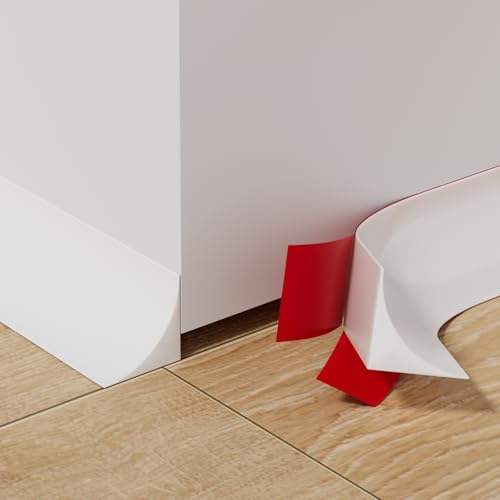
cuysfead’s 39.2-foot roll provides a long, self-adhesive option with a 0.6″ by 0.6″ profile and a 90-degree bottom edge. It’s designed for seamless alignment along floors, stairs, and bath areas. Best for: larger projects needing long, continuous runs without frequent seams. Limitation: Some users may require additional adhesive for high-traffic environments to maintain long-term adhesion.
Buying Guide: Key Considerations For Picking Flexible Quarter Round Molding
Material choice affects durability and maintenance. Silicone-based options are more water-resistant and easier to clean, while rubber and TPE options offer excellent flexibility and ease of cutting. Measure the gap precisely, including any curved or irregular sections, to avoid gaps or stiff edges.
Adhesion is critical for peel-and-stick trims. Look for strong double-sided adhesives and consider surface preparation steps—clean, dry, and dust-free surfaces yield the best bond. In colder environments, some adhesives perform better when warmed before application.
Size and profile influence finish. A wider profile can cover larger gaps but may not fit tight corners. A 0.6″ profile is common for baseboard edges, while 0.86″ height creates a more pronounced edge. Decide whether you need a subtle, invisible transition or a bold edge line.
Length matters for seams. Rolls of 118″ or longer reduce the number of joints, improving continuity on long walls or around curved structures. Check whether the product offers rolls in multiple lengths to minimize waste.
installation notes: For best results, press firmly along the entire length, especially at corners. In curved or irregular areas, follow the edge with slow, gradual bending to prevent creasing. Always follow the manufacturer’s guidance for surface prep and curing time.
FAQ
- What is baseboard quarter round molding used for?
It creates a clean edge between walls and floors, protects corners, and can accommodate curves around stairs or columns.
- Is peel-and-stick molding durable in bathrooms?
Yes, many options use moisture-resistant materials; choose silicone or rubber formulations for better water resistance.
- How do I measure for the right size?
Measure the gap width and height, plus any curved sections. Choose a profile that fully covers the edge without gaps.
- Can these trims be painted or finished?
Most peel-and-stick varieties are designed to be paintable after installation; check product specs for compatibility.
- Do I need special tools to install?
Usually no tools beyond a utility knife for trimming and a clean cloth for surface prep are needed.
- Which option is best for curved stairs?
Flexible quarter rounds with higher pliability and a longer adhesive life are preferred for curved stairs and columns.