The best 9-inch round sandpaper depends on the job: choose a coarse disc for heavier material removal, a finer grit for smoothing, or a mixed-grit pack for a range of tasks. The options below include a 40-grit disc for aggressive sanding, 120-grit multipacks for general-purpose work, an assorted conventional set, and mesh discs designed for dust extraction. Before ordering, confirm that your sander’s diameter, attachment style, and hole pattern match the disc.
| Product | Best For | Key Detail |
|---|---|---|
| Awutzut 40 Grit, 10-Pack | Coarse sanding | Aluminum oxide; hook-and-loop backing |
| SACKORANGE 120 Grit, 50-Pack | Frequent general-purpose sanding | Anti-clog coating; 10 holes |
| HZXBGF Mixed Grit, 30-Pack | Multiple sanding stages | 40–240 grit assortment |
| Tonmp 180 Grit, 10-Pack | Intermediate smoothing | Anti-clog coating; aluminum oxide |
| dunescrape Mesh, 25-Pack | Dust-conscious sanding | Mesh construction; five grits |
Awutzut 40-Grit Sanding Discs

Best for: Buyers who need a coarse 9-inch disc for initial sanding or heavier material removal. This 10-piece pack uses 40 grit and aluminum oxide abrasive, making it the coarsest option among the conventional discs featured here.
The hook-and-loop backing is intended to attach to a 9-inch drywall sander. The product description says the discs stick to the sander and are designed to stay attached during use. Choose this option when a coarse abrasive is more important than a fine, ready-to-finish surface.
Limitation: The pack contains 40-grit discs only, so it does not cover finer finishing stages. Check your tool’s attachment and hole arrangement before buying; the listed details do not specify a hole count.
SACKORANGE 120-Grit 50-Pack

Best for: Users who expect to go through many 120-grit discs during drywall, wood, or furniture sanding. The 50-disc pack offers a larger quantity than the 10-piece options, and its stated 10-hole configuration is useful information for checking tool fit.
The discs use aluminum oxide grain and a resin bond system. SACKORANGE also lists a hook-and-loop backing for quick changes and an anti-clog stearate coating intended to reduce buildup on the abrasive surface. At 120 grit, these are positioned between coarse stock removal and finer smoothing.
Limitation: This is a single-grit pack. It is not the most versatile choice if you need coarse and fine abrasives in one purchase. Confirm that your sander uses a compatible 10-hole layout as well as a 9-inch hook-and-loop disc.
HZXBGF 40–240-Grit Assortment
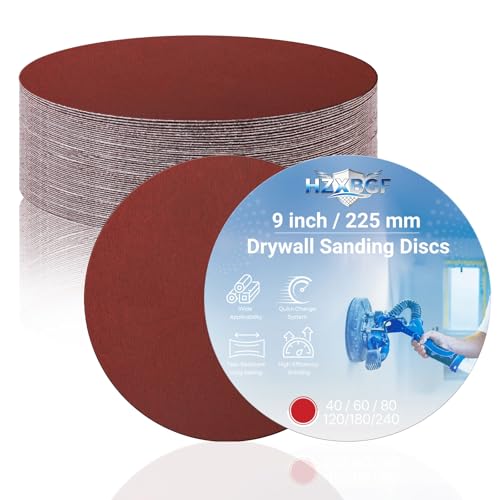
Best for: DIYers who want several grit levels for a project that moves from rough sanding toward finer smoothing. The 30-piece set is described as a 40–240 grit mix, giving it broader grit coverage than the single-grit packs in this list.
These discs use alumina abrasive and a hook-and-loop backing for quick changes. The product information lists uses including sanding wood and metal, paint stripping, and heavy material removal. That range makes the assortment a practical option when the required grit may change from one task to another.
Limitation: The listing does not state how many discs are included at each grit, so check the pack details if you need a specific quantity of one grade. It also does not identify a hole pattern; verify your sander’s dust-port layout before ordering.
Tonmp 180-Grit Sanding Discs

Best for: Sanding tasks that call for a middle-to-fine 180-grit abrasive, such as smoothing after a coarser pass. The 10-piece pack is a focused choice for buyers who know they need this grit rather than a broad assortment.
Tonmp describes these 9-inch discs as hook-and-loop backed and sized for most brands of drywall power sanders. They use aluminum oxide grain with a resin bond system and an anti-clog stearate coating. The manufacturer lists wood, metal, stone, and glass among the materials for which the discs are designed.
Limitation: The pack includes 180 grit only, so it cannot supply a complete sequence of sanding grades. “Most brands” does not guarantee fit with every sander; check the diameter, hook-and-loop face, and dust-hole layout of your tool.
dunescrape Mesh Multi-Grit Discs

Best for: Buyers who prioritize dust extraction and want several grades in one pack. The 25-piece set is listed with 60, 80, 120, 180, and 240 grit options. Its mesh construction has perforations intended to let dust pass through to an extraction system.
The manufacturer says the discs can be shaken, vacuumed, or rinsed with water for reuse. It also describes the abrasive grains as renewing sharp edges during use. These features may suit sanding where dust management and access to multiple grits matter, but the mesh must work with the user’s sanding setup.
Limitation: The listing describes compatibility with a drywall sander and a random orbital sander, but users should still verify that the 9-inch size and hook-and-loop attachment match their particular tool. Dust extraction depends on a compatible setup and does not replace appropriate protective equipment.
Buying Guide: How to Choose 9-Inch Round Sandpaper
Which grit should you choose?
Grit number is a quick way to compare how coarse or fine an abrasive is. In general, lower numbers indicate a coarser abrasive for faster, more aggressive removal, while higher numbers are finer and more suited to smoothing. The products here range from 40 grit to 240 grit.
- 40 grit: Choose it for coarse sanding and heavier removal. It leaves a rougher surface than finer grades.
- 120 grit: Consider it for general sanding when you need a balance between removal and smoothing.
- 180–240 grit: Choose finer grades when the goal is a smoother surface or a later sanding stage.
These are general comparisons, not a guarantee of the right grade for every material or finish. Follow the project’s requirements and test an inconspicuous area when uncertain. Avoid jumping directly from a very coarse grit to a fine one if visible scratches remain; a gradual progression can help reduce scratch marks.
Does the backing need to be hook-and-loop?
All five featured products are described as having hook-and-loop backing. This attachment style allows the disc to be removed and replaced without adhesive, but it must match the sander’s pad. A disc that is the correct diameter may still be unsuitable if its backing or attachment surface differs from your tool.
Check the manufacturer’s instructions or the markings on your sander. Confirm the 9-inch diameter and hook-and-loop attachment before buying. Do not assume that “fits most” means it fits every model.
Why does the hole pattern matter?
Many sanding tools use holes in the pad and disc to route dust toward an extraction system. A hole count is provided for some products in this selection, including the SACKORANGE 10-hole disc, but not for every option. Compare the disc’s hole layout with your sander’s pad and dust ports when using a perforated system.
If the pattern is not specified in the product information, check the seller’s product details before ordering. A mismatch can interfere with dust collection, even when the disc attaches to the pad.
Should you buy a single grit or a variety pack?
A single-grit pack is a straightforward choice when you already know the grade needed. The Tonmp 180-grit discs and SACKORANGE 120-grit pack are examples. A mixed pack is more flexible for projects that involve several sanding stages, but confirm how many discs are included at each grit if that matters to your workload.
For frequent use of one grade, a larger pack can reduce how often you need to restock. For occasional DIY work or a project with changing surface conditions, an assortment may avoid buying several separate packs.
What should you know about mesh and dust control?
Mesh sanding discs have open areas that can let dust pass through when used with a compatible extraction setup. The dunescrape discs are described as washable and reusable, while the conventional discs in this list use solid abrasive sheets. Mesh construction may be worth considering for dust-conscious work, but it does not guarantee a dust-free workspace.
Use suitable dust collection and personal protective equipment for the material and task. Follow the sander and abrasive instructions, especially when sanding painted, coated, or otherwise potentially hazardous surfaces.
Which material and abrasive details matter?
Aluminum oxide is listed for several conventional products in this roundup. The product descriptions identify uses across materials such as wood and metal, and some also list stone or glass. Treat those listed uses as product claims, and check the abrasive and tool instructions for the specific surface you plan to sand.
Anti-clog coatings, such as the stearate coating listed for Tonmp and SACKORANGE products, are intended to reduce abrasive buildup. They may be useful when sanding material that tends to load the disc, but they do not eliminate the need to inspect and replace worn or clogged abrasives.
Frequently Asked Questions
What does 9-inch sandpaper mean?
It refers to a round sanding disc with a nominal diameter of 9 inches. Measure or check your sander’s pad specifications to confirm that this diameter is appropriate for your tool.
Can any 9-inch disc fit a drywall sander?
No. Diameter is only one fit requirement. Check the backing type, hole pattern, and the sander manufacturer’s compatibility guidance before using a disc.
Is 40 grit coarser than 120 grit?
Yes. A 40-grit abrasive is coarser than 120 grit and is generally used for more aggressive initial sanding. A finer grit typically produces a smoother result but removes material less aggressively.
What grit is best for smoothing after coarse sanding?
The right next grit depends on the material, starting grade, and desired finish. The products in this guide include 120-, 180-, and 240-grit options that can serve as progressively finer choices. Check the surface between sanding stages for scratches.
Are mesh sanding discs reusable?
The dunescrape product is described as reusable and says it can be shaken, vacuumed, or rinsed with water. Actual reuse depends on the disc’s condition and the manufacturer’s care instructions.
Does hook-and-loop sandpaper collect dust automatically?
No. Hook-and-loop describes how the disc attaches to the sander. Dust collection depends on the tool’s design, the disc’s hole or mesh layout, and a compatible extraction setup.


