Answering the common buyer question: a 4 inch putty knife is ideal for precision finishing, wallpaper removal, plaster repairs, and light drywall work. The top picks below are best suited for pros who need reliable metal blades and comfortable handles, as well as DIYers tackling frequent patches and smoothing tasks. Read on to see which tool aligns with your project type and hand size, plus practical buying notes for selecting the right blade flex and grip.
Summary Table of Selected Products
| Product | Best For | Material | Notable Benefit |
|---|---|---|---|
| 4″ Soft-Grip Stainless Steel Drywall Joint Knife – LEVEL5 | Professional finishing on drywall | Stainless steel | Precision hollow-grind for smooth finishes |
| Putty Knife, 4Pcs Spackle Knife Set – Beyotool | Value set for varied tasks | Stainless steel blades | One-piece blade and handle for durability |
| Bates 4-Inch Carbon Steel Putty Knife | Versatile DIY and pros | Carbon steel | Flexible blade for smooth application |
| ESreake 6-Pack 4″ Putty Scraper | Bulk kit for multiple tasks | Metal blades with plastic handles | Pairs well with frequent replacement needs |
| DEWALT 4″ Putty Knife | Trusted brand, reliable everyday use | Stainless steel | Hollow ground for precise flex |
4″ Soft-Grip Stainless Steel Drywall Joint Knife

This LEVEL5 model is designed for professional finish work. Best for finishing joints on sheetrock and gypsum boards where a smooth, consistent edge matters. The precision hollow-grind places the flex point midway up the blade, giving better control and faster application with less fatigue during extended use. A durable metal hammer head addition supports nail setting tasks, making this knife a compact, multi-purpose choice for finishing and patching. Suitable for daily job-site use by professional finishers who need reliable, long-lasting performance. Caution: the blade is metal and sharp; handle with care during storage and transport.
Putty Knife Set, 4 Pcs Spackle Knife
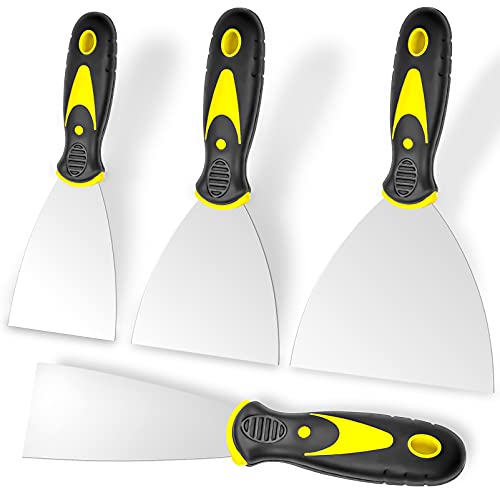
This Beyotool 4-piece set offers sizes 2, 3, 4, and 5 inches, giving versatility for patching large and small areas. The blades are stainless steel and designed with a one-piece blade-to-handle construction for durability and longevity. The ergonomic handle blends soft rubber with sturdy plastic to reduce hand fatigue during longer sessions. Ideal for DIY and light professional use. Warning: can be less flexible for heavy scraping tasks; choose a larger blade for thick compounds.
Bates 4-Inch Carbon Steel Putty Knife

The Bates Choice putty knife provides a flexible 4-inch blade, designed for smooth putty and plaster applications. Its ergonomic, non-slip handle improves grip during extended use, while the carbon steel blade offers a balance of flexibility and durability. This knife suits pros and DIYers who need reliable edge control for patching and finishing. Caution: carbon steel can rust if left damp; keep it dry and clean after use.
ESreake 6-Pack 4″ Putty Scraper
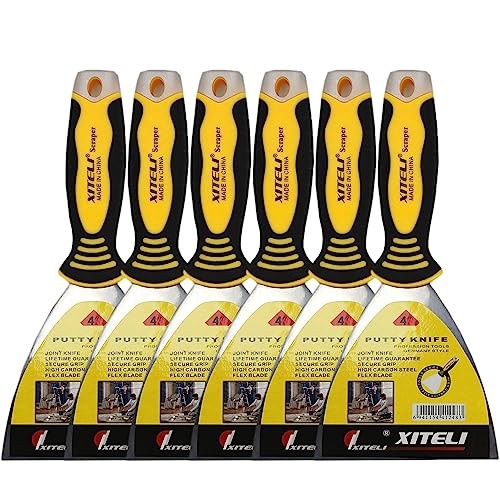
The ESreake six-pack is a bulk option for frequent use across multiple tasks. Each scraper features a 4-inch blade with a durable metal edge and a plastic ergonomic handle. They are suitable for scraping paint, removing wallpaper, and smoothing putty. Best for contractors who need spares or for workshops where several users share tools. Limitation: plastic handle may wear with heavy-duty use over time; consider rotating among tools to extend life.
Mister Rui 4 Inch Putty Knife With Hammer End

This Mister Rui knife adds a hammer-end feature, enabling light nailing tasks without switching tools. The stainless steel blade is designed for durability and long life, with a handle crafted for comfortable grip. Best for light-duty carpentry along with putty and plaster work. Choose this if you need a compact, multi-tool feel in a single blade. Limitation: hammer end is light-duty; do not rely on it for heavy nail setting or demolition tasks.
Buying Guide: 4 Inch Putty Knife Essentials
- Blade material and flexibility: Stainless steel blades resist rust and provide ease of cleaning, while carbon steel blades tend to be more flexible, aiding smoother putty application. Choose stainless for moisture-prone areas or frequent cleaning, and carbon steel for tasks demanding high flexibility.
- Blade width and edge: A 4-inch blade balances control and coverage for patches and smoothing. Look for a hollow-ground edge for better flex and reduced gouging. For drywall finishing, a slightly flexible blade helps create feathered edges.
- Handle design: Ergonomic handles with soft grip reduce hand fatigue during long projects. Consider a non-slip grip and a reinforced core for durability on demanding sites.
- Durability features: One-piece blade-to-handle construction improves longevity. Some models add a hammer end or nail-setting capability for small carpentry tasks.
- Maintenance: Stainless blades are easiest to maintain; wipe clean and dry after use. Store with blade edge protected to prevent dulling or bending.
- Use-case alignment: For frequent wall repairs and spackling, choose a flexible blade with a comfortable grip. For occasional light carpentry tasks, a hammer-end model may add convenience without adding bulk.
Frequently Asked Questions
- What is the main difference between stainless and carbon steel putty knives?
Stainless steel resists rust and is easier to maintain, while carbon steel blades are typically more flexible and can offer a smoother spread for certain compounds. - Is a 4-inch putty knife suitable for drywall finishing?
Yes, a 4-inch blade provides a good balance of control and coverage for finishing joints and patches. - Should I prefer one-piece construction?
One-piece blade-to-handle construction tends to be more durable and less prone to loosening over time, especially under frequent use. - What maintenance steps prolong blade life?
Wipe blades clean after use, dry thoroughly, store in a dry location, and avoid leaving compounds on the blade to prevent staining and corrosion. - When is a hammer-end putty knife beneficial?
A hammer-end feature is useful for light nailing tasks on site, reducing the need to switch tools for small carpentry tasks. - How many sizes should I own?
A core set often includes 2″, 4″, and 5″ blades to cover patches, edging, and broader scraping needs; a spare 4″ is useful for shared workspaces.