Essential for evenly spreading mortar and adhesives, the 1/8 V notch trowel is a top choice for small to medium tile and flooring jobs. This guide highlights five reliable options, explaining who each tool suits best, and why one might be preferred over another. Ideal buyers include DIY homeowners tackling small room projects, pros seeking consistent results, and renovators needing durable, easy-to-clean blades. Below is a quick summary table of the selected products to help you compare at a glance.
| Product | Notch Type | Best For |
|---|---|---|
| M-D Building Products 20061 | 1/8″ x 1/8″ x 1/16″ Flat V | Flooring and walls; precision adhesive rows |
| Capitol 115111 | 1/8″ x 1/8″ x 1/16″ Flat-Top V-Notch | Professional flooring installations; comfort grip |
| Marshalltown Economy Notch Trowel (223) | 1/8″ x 1/8″ x 1/16″ Flat V | Contractor-grade, easy spreading |
| Marshalltown Economy Notch Trowel (243) | 1/8″ x 1/8″ x 7/16″ Flat V | Medium-to-large tile projects; broader adhesive lines |
| Goldblatt 2-Piece Set | 1/8″ x 1/8″ Square; 1/4″ x 1/4″ | Versatile for varying tile sizes |
Note: Not all products offer identical blade widths or notch dimensions. When selecting, consider tile size, adhesive type, and application area to ensure the notch leaves uniform, gap-free rows for best adhesion.
M-D Building Products 20061 Notch Trowel

Blade: Stainless steel with rubber handle. Pattern: Flat V notch measuring 1/8 in. x 1/8 in. x 1/16 in. Use: Spreads mortar on floors and walls. Best for small to medium tile installations where precise adhesive distribution matters. This option is best for DIYers and professionals seeking durability and a comfortable grip. A potential limitation is the narrower notch which may require more passes for larger areas.
Capitol 115111 Flat-Top V-Notch Trowel

Blade: Hardened steel with a large wood handle for a firm grip. Pattern: 1/8″ x 1/8″ x 1/16″ Flat-Top V-Notch. Use: Ideal for increased spacing between adhesive rows, suitable for professional floor installations. Best for long sessions due to comfort handle; consider the need for occasional blade cleaning to maintain smooth spreading. Notches help prevent over-application in tight joints.
Marshalltown Economy Notch Trowel (223)
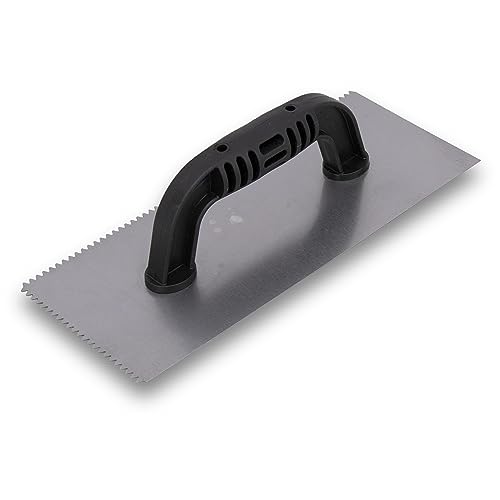
Blade: 11 x 4 1/2 inches; 1/8 x 1/8 x 1/16 Flat V Notch. Use: Contractor-grade tool designed for easy spreading of material in flooring and tiling projects. Best for pros who need a robust, affordable option with consistent results. Limitation: Economy models may have slightly heavier handles for long sessions; consider balance with tile size and substrate.
Marshalltown Economy Notch Trowel (243)
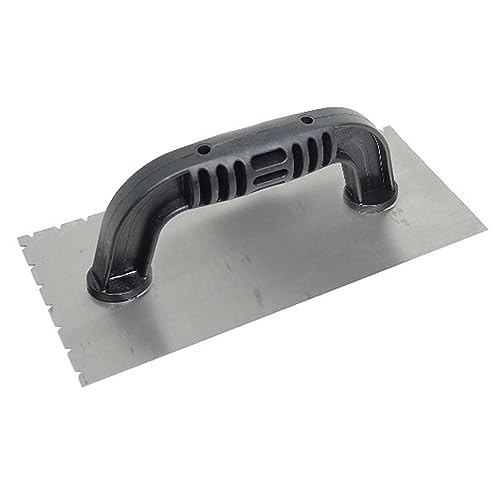
Blade: 9 x 4 inches; 1/8 x 1/8 x 7/16 Flat V Notch. Use: Suitable for medium-sized tiling projects; offers a slightly larger notch for more adhesive per stroke. Best for professionals balancing efficiency with control. Limitation: Not suitable for very small tile joints where precision is critical; choose a smaller notch for tiny tiles.
Goldblatt 2-Piece Notch Trowel Set

Bundle: Includes 1/8″ x 1/8″ and 1/4″ x 1/4″ square notches, crafted from premium stainless steel with soft-grip handles. Use: Versatile for masonry and tile work; larger notches for bigger tiles, smaller notches for precise joints. Best for contractors who want a single purchase covering multiple tile sizes. Limitation: The set may be heavier than single-notch trowels; plan for comfort on longer jobs.
M-D Building Products 20055 U Notch Trowel

Blade: Stainless steel with rubber handle. Pattern: 1/8 in. x 1/8 in. x 1/8 in. U Notch. Use: Spreads mortar on floors and walls; useful for applications requiring uniform adhesive thickness with a U notch. Best for uniform rows across larger areas. Limitation: Not ideal where precise V-notched texture is required for certain tile adhesives.
Buying Guide
What notch size should I choose? For most small to medium tile projects, a 1/8″ x 1/8″ x 1/16″ V-notch provides consistent adhesive distribution. Larger tiles may benefit from larger notches (such as 7/16″ V-notch) to maintain proper grout lines and bond. Consider tile size, substrate, and adhesive type when selecting.
Material and durability: Stainless steel blades resist rust and wear; choose blades with ergonomic handles for comfort during longer jobs. For frequent use, a hardened steel blade improves longevity, especially when cutting or spreading across hard surfaces.
Handle design: Rubber or soft-grip handles reduce hand fatigue and improve control. A larger handle can help with extended sessions but may add weight; test balance if possible before purchasing.
Set vs single trowel: Sets offer versatility for varying tile sizes and projects in one purchase. If you work with multiple tile sizes regularly, a two-piece or multi-notched set can save time and improve consistency.
Maintenance tips: Clean the blade after use to prevent mortar from hardening in the notches. Dry thoroughly to avoid rust, and store in a dry area to extend life.
FAQ
- What is a 1/8″ V-notch trowel best used for? It spreads thin to moderate adhesive layers suitable for smaller tiles and detailed placement.
- Should I choose a flat-top V-notch or a standard V-notch? Flat-top V-notches help maintain uniform rows and reduce adhesive squeeze-out along the top edge.
- Is a trowel with a larger handle better? A larger handle can improve grip and control during long jobs, reducing fatigue.
- Are sets more economical than buying individual trowels? Yes, sets provide options for different tile sizes and applications in one purchase.
- How do I maintain my trowel blades? Clean after use, dry completely, and store in a dry place to prevent rust and corrosion.
- Can I use a 1/8″ V-notch trowel for epoxy projects? Some 1/8″ V-notches can be used for epoxy spreads, but check the product’s intended use to ensure compatibility.