The best paint for a small kitchen depends on what you are painting: walls, cabinets, or small damaged areas. For cabinet makeovers, Rust-Oleum Cabinet Transformations & Trim Paint is the strongest fit in this selection because it is made for cabinets and has an easy-clean semi-gloss finish. Zinsser PERMA-WHITE is the wall-oriented option for moisture-prone areas. DWIL suits smaller DIY wood projects, while the two touch-up products are better for minor repairs than full-room painting.
| Product | Best For | Finish or Format |
|---|---|---|
| Rust-Oleum Cabinet Transformations & Trim Paint | Cabinet and trim refreshes | Semi-gloss paint, quart |
| Zinsser PERMA-WHITE | Moisture-prone kitchen walls | Eggshell interior paint, quart |
| DWIL Cabinet Paint | Small wood furniture projects | Semi-gloss paint kit, 16 oz |
| spot. Touch-Up Paint | Small blue-surface repairs | Matte finish, three-pack |
| White Paint Touch-Up Pen | Small white nicks and marks | Semi-gloss, 30 ml pen |
Rust-Oleum Cabinet Transformations & Trim Paint
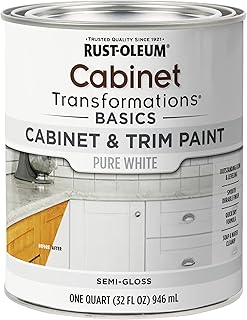
Best for: Homeowners refreshing cabinets, vanities, furniture, or trim with white paint. This quart-size product is specifically described for cabinet and trim projects, making it a more appropriate choice for those surfaces than ordinary wall paint.
The listed features include a Pure White color and smooth semi-gloss finish. Rust-Oleum describes the coating as easy to clean and resistant to dirt, grime, and mildew on the paint film, as well as household chemicals. Its flow and leveling properties are intended to help create a smooth result with a brush, roller, pad applicator, or airless sprayer.
Why it was selected: It directly addresses a common small-kitchen update: brightening cabinets without repainting the entire room. A semi-gloss finish can also be practical where painted surfaces need regular cleaning.
Limitation: This is presented as cabinet and trim paint, not general-purpose wall paint. Choose a wall product for kitchen walls, and follow the product label for surface preparation and application instructions.
Zinsser PERMA-WHITE Interior Paint

Best for: Buyers looking for interior paint for kitchen walls or other areas where moisture is a consideration. Of the five options, this is the one identified as interior paint rather than a cabinet coating or repair product.
The product is listed in eggshell white. Its features describe a self-priming formula that requires no sanding, a paint film designed to resist mold and mildew, and resistance to dirt and moisture on the coating. The product listing also states a five-year guarantee for the mold- and mildew-proof paint film.
Why it was selected: A small kitchen can have areas exposed to cooking moisture and frequent cleaning. This product’s stated interior use and moisture-related film features make it a relevant wall-paint option in this set.
Limitation: The supplied information identifies the color as eggshell white and the container as a quart. Confirm the coverage and suitability for your particular wall surface on the product label; the listed features do not specify coverage.
DWIL Water-Based Cabinet Paint

Best for: DIYers painting a limited number of cabinet doors, drawers, a vanity, or wood furniture. Its 16-ounce size and included application tools make it a practical format for a small makeover rather than a large whole-kitchen project.
DWIL describes the paint as water-based, low-odor, fast-drying, and semi-gloss. The kit includes paint and essential application tools. According to the listing, no primer or top coat is required on properly prepared surfaces. It is intended for cabinets, vanities, doors, drawers, tables, and other wood furniture surfaces.
The stated coverage is up to 80 square feet, but actual coverage may vary with surface condition, color change, number of coats, and application method. That estimate can help buyers judge whether one container is appropriate for a small project, but it should not replace measuring the actual surfaces.
Why it was selected: It combines a small project size with features aimed at indoor DIY use. Limitation: Its listed applications focus on wood furniture and similar surfaces, not general kitchen walls. The no-primer and no-top-coat claim is conditional on proper surface preparation.
spot. Multi-Tone Blue Touch-Up Paint

Best for: Someone repairing small chips or scuffs on a blue cabinet, wall, door, or furniture surface. The listing describes a three-pack of multi-tone blue touch-up paint with a matte finish, so it is distinct from the white cabinet paints above.
Its name identifies the paint as quick-drying, self-priming, and low-odor, and says that no sanding or primer is needed. The named uses include cabinets, walls, doors, and furniture. These details make it a spot-repair option when the goal is to cover localized damage rather than repaint a full kitchen.
Why it was selected: It covers a specialized need that a white quart of cabinet paint cannot: small repairs on blue surfaces. The matte finish may be useful when the surrounding surface is also matte, but matching depends on the existing color and sheen.
Limitation: This is not a general-purpose full-room paint. The available product information does not specify coverage, exact shades in the pack, or whether the colors will match a particular cabinet or wall.
White Multi-Surface Touch-Up Paint Pen

Best for: Small white repairs on cabinets, doors, furniture, walls, or other listed surfaces. The 30 ml pen format is designed for touch-ups, not for coating a full wall or a complete set of cabinets.
The product name describes a semi-gloss white enamel touch-up paint for metal, walls, doors, cabinets, wood, furniture, appliances, and acrylic surfaces. This broad list may be useful in a kitchen where small marks appear on different kinds of surfaces. However, the name alone does not confirm that the paint will adhere to every finish or match every shade of white.
Why it was selected: It offers a compact repair format and names several kitchen-adjacent surfaces. Choose it if the project is a small white nick or scratch, rather than a color change or broad repaint.
Limitation: It is only 30 ml and is described as touch-up paint. The listing information supplied here does not state coverage, application preparation, or precise surface compatibility, so check the label before applying it to a specific material.
Buying Guide: How to Choose Paint for a Small Kitchen
The first decision is what needs painting. “Kitchen paint” can mean wall paint, cabinet paint, trim paint, or a small repair coating. Those products are not interchangeable by default. A cabinet coating may be formulated and marketed for doors and wood furniture, while an interior wall paint may be more appropriate for broad wall areas. Touch-up paint is intended for small defects, not full surfaces.
Are you painting walls or cabinets?
For walls, begin with a product identified as interior paint and verify that its label suits the wall material and room conditions. Zinsser PERMA-WHITE is the wall-oriented option among these five products; its listed features focus on a self-priming interior coating and resistance to moisture and mold or mildew on the paint film.
For cabinets and trim, use a product whose stated applications include those surfaces. Rust-Oleum Cabinet Transformations & Trim Paint is specifically described for cabinets and trim. DWIL is also described for cabinets, vanities, doors, drawers, and wood furniture. Read each label for surface preparation and application guidance, especially if the existing finish is glossy, damaged, or unknown.
Which finish makes sense in a compact room?
Finish affects how a painted area looks and how easily a surface may be cleaned. The products here include semi-gloss finishes for cabinet paint and a touch-up pen, eggshell for the interior wall paint, and matte for the blue touch-up kit. A sheen difference can make a repair stand out even when the color is close. When repairing an existing surface, compare both color and finish.
In a small kitchen, strong contrast between walls, cabinets, and trim can make the room feel visually busy. A coordinated palette can create a calmer appearance, but the right colors depend on lighting, existing flooring, countertops, and personal preference. Test or compare color samples in the room before committing to a larger application.
How much paint should you buy?
Measure the surfaces you plan to coat and use the coverage information on the product label to estimate quantity. The DWIL listing states coverage of up to 80 square feet for its 16-ounce size, while also noting that coverage can vary with surface condition, color change, coat count, and application method. The other supplied product details do not provide coverage figures, so avoid assuming that a quart or small repair bottle will cover a particular area.
Cabinet doors, drawer fronts, and wall area require different estimates. Count cabinet faces and measure walls separately. If the project includes a major color change, rough or absorbent surfaces, or several coats, the amount needed may differ from a simple estimate.
Do you need a full repaint or a touch-up?
Choose a full-size product for a planned color change or a continuous area that needs an even finish. Use a touch-up product only when the damage is limited and the surrounding paint is in good condition. The spot. product is listed for multi-tone blue repairs with a matte finish; the 30 ml white pen is described for small repairs on several surfaces.
A touch-up may remain visible if the existing paint has faded, has a different sheen, or is not the same color. For a consistent result across a wall or cabinet front, repainting the complete surface may be more suitable than dabbing isolated spots.
What should you check before opening the paint?
- Surface: Confirm that the product is intended for the material and location you plan to paint.
- Preparation: Follow the product label for cleaning, repairs, sanding, and priming. Do not assume every surface can skip preparation.
- Finish: Match matte, eggshell, or semi-gloss as closely as possible when making a repair.
- Color: “White” can refer to different shades. Compare the paint with the existing surface under kitchen lighting.
- Application: Check whether the product is intended for a brush, roller, sprayer, or small touch-up application.
- Room conditions: Follow label guidance about ventilation, drying, and when painted surfaces can be used or cleaned.
Frequently Asked Questions
What is the best paint here for kitchen cabinets?
Rust-Oleum Cabinet Transformations & Trim Paint is the clearest cabinet-focused pick in this group. DWIL is another cabinet option, especially for a smaller wood-surface DIY project.
Which option is meant for kitchen walls?
Zinsser PERMA-WHITE is identified as interior paint and is the most wall-oriented product listed. Check its label to confirm suitability for your specific wall surface and conditions.
Is semi-gloss or eggshell better for a small kitchen?
There is no single best sheen for every kitchen surface. These products specify semi-gloss for cabinet paint and eggshell for the interior wall paint. Choose based on the surface, desired appearance, cleaning needs, and the product label.
Can I use cabinet paint on kitchen walls?
Do not assume that cabinet paint is appropriate for walls. The Rust-Oleum and DWIL products are described for cabinets and related surfaces, while Zinsser PERMA-WHITE is identified as interior paint.
Is touch-up paint enough to repaint a cabinet?
Touch-up paint is better suited to small chips or marks than to coating an entire cabinet. For a full cabinet refresh, use a product intended for cabinets and follow its surface-preparation instructions.
Does DWIL paint require primer or a top coat?
The listing says no primer or top coat is required on properly prepared surfaces. The claim is conditional, so follow the current product label and prepare the surface as directed.


