The best white tongue and groove paneling depends on whether you want painted-white boards, naturally light white oak, or a moisture-resistant panel for a humid room. The Millwork Outlet’s unfinished white oak suits custom finishes, while its clearcoated oak is ready for installation. Plastpro is the moisture-resistant choice, and INTERWOOD offers white oak planks with a plywood core. UFP-Edge is a textured white shiplap alternative rather than a traditional tongue-and-groove product.
| Product | Best For | Key Difference |
|---|---|---|
| The Millwork Outlet Unfinished White Oak | Custom color and finish | Real oak with an unfinished surface |
| The Millwork Outlet Clearcoat White Oak | Ready-to-install natural wood | Clear-coated oak grain |
| Plastpro Reversible PVC Panels | Humid rooms | Waterproof beadboard or shiplap faces |
| UFP-Edge Rustic White Shiplap | Textured DIY accent walls | Rough-sawn pine shiplap boards |
| INTERWOOD White Oak Panels | Engineered wood-plank walls | Oak face over Baltic birch plywood |
The Millwork Outlet Unfinished White Oak

Best for: Homeowners who want real oak paneling and plan to choose their own stain or clear finish. These indoor planks have a slim 3/8-inch thickness and can be installed vertically or horizontally on an interior wall or ceiling.
The unfinished surface lets you select a finish to coordinate with existing trim or create contrast. The listing describes genuine oak with visible natural grain, so this is not a factory-painted white board. White oak’s light, neutral palette may suit a restrained or modern farmhouse interior, while the final appearance depends on the finish you apply.
Why it stands out: It offers more control over the final color than a prefinished product. The listed features also say it can be installed with or without power tools.
Limitation: The boards are unfinished, so plan for the additional finishing step. Choose another option if you need a ready-coated surface or a panel specifically described as waterproof.
The Millwork Outlet Clearcoat White Oak
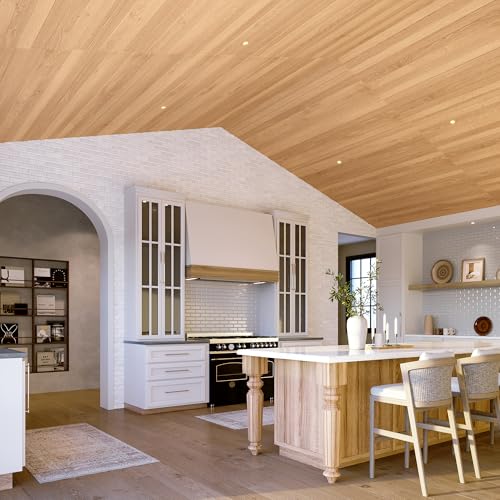
Best for: Buyers who want natural white oak grain without applying their own clear finish. The manufacturer describes these indoor planks as clear-coated and ready for installation. Their 3/8-inch thickness is intended for interior surfaces, including feature walls and ceilings.
Unlike painted-white paneling, clear-coated white oak shows the wood’s natural grain and color. This makes it a better fit for a light wood look than for a uniform, opaque white wall. The boards can be arranged vertically or horizontally to change the visual direction of a room.
Why it stands out: It combines genuine oak with a finish already applied, reducing the need to select and apply a separate clear coat before installation. It is a direct alternative to the unfinished version for shoppers who prefer a simpler finishing process.
Limitation: The clear coat does not make this product a painted-white panel, and the listing identifies it for indoor applications. Avoid choosing it if you need a solid white color or a panel specified for wet areas.
Plastpro Reversible PVC Wall Panels

Best for: Buyers prioritizing moisture resistance in a bathroom, kitchen, laundry room, or other humid space. The seven-piece kit includes 8-foot PVC panels and trim. Each panel is reversible, with beadboard on one face and shiplap on the other.
The panels connect with tongue-and-groove edges that snap together, according to the listing. The reversible design gives you a choice between two patterns without selecting a separate beadboard or shiplap product. The manufacturer describes the panels as waterproof and moisture-resistant, and says they can be wiped with a damp cloth without painting or routine maintenance.
Why it stands out: It is the strongest fit in this group for buyers who need a white paneling solution for a high-humidity room. The kit also includes trim, and the listing says no special tools are required.
Limitation: This is PVC, not real wood, and its appearance differs from oak grain. Check the kit’s coverage and layout against your wall dimensions before ordering.
UFP-Edge Rustic White Shiplap Pine

Best for: DIY decorators looking for a white, rustic wall treatment with visible surface texture. This six-pack contains 1-inch-by-8-inch-by-6-foot pine shiplap boards. The listed rough-sawn surface creates a more textured look than smooth-finish paneling.
These boards are shiplap, not a product described as tongue and groove. They are included as a relevant white paneling alternative for shoppers who value a rustic, overlapping-board appearance. The manufacturer says the boards are lightweight and easy to cut and install, and that they can be used alongside UFP-Edge Barn Wood trim.
Why it stands out: The white finish and rough texture make it a better match than natural oak for buyers seeking a visibly white, rustic style. The six-board pack is also presented as a DIY project material.
Limitation: The listing does not specify tongue-and-groove construction or waterproof performance. Choose a different product if you require a true interlocking tongue-and-groove profile or paneling for a humid room.
INTERWOOD White Oak Wall Planks

Best for: Shoppers who want a white oak surface with an engineered core and a varied-plank layout. Each box covers approximately 14 square feet and includes planks in mixed lengths, with individual boards up to 47-1/4 inches long.
The product has a 4mm solid European white oak face over a Baltic birch plywood core. The listing describes natural knots, grain, and texture, along with a four-sided tongue-and-groove profile. It can be installed horizontally, vertically, or diagonally. The manufacturer also describes options for flush joints, nickel gaps, or wider spacing, allowing different visual layouts.
Why it stands out: Compared with the Millwork Outlet’s 3/8-inch oak planks, this product uses an engineered plywood core and mixed plank lengths. It may be the better match for buyers seeking a reclaimed-look arrangement rather than a uniform board pattern.
Limitation: The listed coverage is approximately 14 square feet per box, so calculate the required quantity for the project and allow for cuts. This is natural white oak, not opaque white-painted paneling.
Buying Guide: How To Choose White Tongue And Groove Paneling
Do you want painted-white boards or natural white oak?
First decide what “white” means for your room. White-painted paneling has an opaque, consistent color. White oak generally refers to the wood species and its naturally light tone; it still shows grain, knots, and variation. The oak options here are natural wood products, not listings for white-painted boards. UFP-Edge is explicitly described as white shiplap, while Plastpro is a PVC panel kit with beadboard and shiplap faces.
If you want to control the oak’s final appearance, the unfinished Millwork Outlet boards let you choose a finish. If you prefer to skip that step, its clearcoated version arrives with a clear coat. If your priority is a visibly white, rustic board style, compare the UFP-Edge shiplap instead, while remembering that it is not described as tongue and groove.
Which paneling is suitable for a humid room?
For a bathroom, laundry room, or kitchen, prioritize product information that explicitly addresses moisture. Plastpro describes its PVC panels as waterproof and moisture-resistant and says they resist warping, swelling, cracking, and rot in high-humidity spaces. The oak listings specify indoor use, but do not describe the products as waterproof. Do not assume that a wood panel is appropriate for a wet area based only on its finish.
Does the installation profile match your project?
Tongue-and-groove boards interlock along their edges. Plastpro’s panels use snap-together tongue-and-groove edges, and INTERWOOD lists a four-sided tongue-and-groove profile. The Millwork Outlet products are identified as tongue-and-groove planks. UFP-Edge is identified as shiplap, which is a different board profile. Confirm the profile and installation instructions before buying, especially if you are matching existing paneling.
How should you plan coverage and board layout?
Measure the wall or ceiling width and height, then calculate the area to cover. Compare the result with each product’s stated package quantity. INTERWOOD lists approximately 14 square feet per box, and Plastpro specifies a seven-piece kit with 8-foot panels. For products without clear coverage information in the supplied details, check the product listing before estimating how many packages you need.
Also decide whether the boards should run horizontally, vertically, or diagonally. Horizontal lines can emphasize a wall’s width; vertical lines draw the eye upward. The oak products are described as suitable for horizontal or vertical use, while INTERWOOD also lists diagonal installation. Confirm that your chosen layout suits the room and the installation directions.
Should you choose solid wood, engineered wood, or PVC?
Solid oak is the choice for shoppers who want genuine wood grain and a finish they can customize or leave clear-coated. INTERWOOD pairs a solid oak face with a Baltic birch plywood core, which the listing says is designed for strength and dimensional stability. PVC is a different material and is the clearest choice in this selection when moisture resistance and wipe-clean maintenance are priorities. Compare appearance, room conditions, and the manufacturer’s installation guidance rather than choosing by color alone.
What should you check before ordering?
- Confirm whether the product is painted white, naturally light oak, clear-coated wood, or PVC.
- Verify the board profile: tongue and groove, reversible PVC panel, or shiplap.
- Check package quantity, coverage, board dimensions, and any trim included.
- Review whether the product is intended for walls, ceilings, or both.
- For unfinished wood, account for the finishing work and materials needed.
- Follow the manufacturer’s instructions for the room, substrate, fastening method, and installation.
Frequently Asked Questions
Is white oak paneling the same as white-painted paneling?
No. White oak is a wood species with a naturally light color and visible grain. White-painted paneling has an opaque white surface. Check the product description for finish details before buying.
Which product in this selection is best for a bathroom?
Plastpro is the option whose listing specifically describes the panels as waterproof and moisture-resistant for humid spaces. Follow the manufacturer’s directions for installation and use.
Can white tongue-and-groove paneling be installed on a ceiling?
The Millwork Outlet oak planks are described for indoor walls and ceilings. INTERWOOD also lists ceiling use. Confirm the installation requirements for the specific product and ceiling structure.
Are the UFP-Edge boards tongue and groove?
The supplied product details describe them as rustic shiplap pine boards, not tongue-and-groove boards. They are a white paneling alternative, but may not match a project that requires interlocking edges.
Should I choose unfinished or clearcoated oak?
Choose unfinished oak if you want to select the finish yourself. Choose clearcoated oak if you want natural grain with a clear coat already applied, as described in the listing.


