The most direct way to protect carpet while painting is to cover it fully with a floor protector and secure the edges so paint cannot seep underneath. Self-adhesive carpet film is best for covering long stretches of carpet, while plastic drop cloths are useful for covering furniture and larger areas quickly. The TapeManBlue 48-inch roll suits wider coverage; its 36-inch and 24-inch versions offer narrower options. BISupply provides a shorter roll, and the six-pack of plastic sheets can cover rooms or furniture.
| Product | Best suited for | Size or coverage detail |
|---|---|---|
| TapeManBlue Carpet Film, 48-inch | Wide carpet runs | 48 inches by 500 feet |
| TapeManBlue Carpet Film, 36-inch | Standard-width coverage | 36 inches by 500 feet |
| BISupply Carpet Protector Film | Smaller projects | 36 inches by 200 feet |
| Six-Pack Plastic Drop Cloths | Furniture and broad temporary coverage | Six sheets, each 12 by 9 feet |
| TapeManBlue Carpet Film, 24-inch | Narrow areas and edges | 24 inches by 200 feet |
TapeManBlue Carpet Film, 36-Inch

This self-adhesive plastic carpet protector measures 36 inches wide and 500 feet long. The product name describes clean removal and easy unwind, with a durable covering intended for construction-related protection. Its long roll can cover extended carpet paths, such as a hallway or a route between a work area and an exit.
Best for: Homeowners and painting crews who need a long supply in a standard-width roll. It was selected because its adhesive film format is made for carpet protection and the listed roll length supports larger jobs.
Limitation: A 36-inch width may require overlapping strips on broad rooms. As with any adhesive film, check the package directions and test a small, inconspicuous area before applying it to carpet.
TapeManBlue Carpet Film, 48-Inch

The 48-inch version is a self-adhesive plastic film roll measuring 48 inches by 500 feet. Its width is the largest among the listed carpet-film options, so each pass can cover more floor than the 36-inch or 24-inch versions. The product name also specifies clean removal and easy unwind.
Best for: Larger painting jobs, wide carpet paths, and buyers who want fewer parallel strips. It was selected as the broad-coverage choice because it combines the widest listed format with a 500-foot roll.
Limitation: The wider roll may be less convenient in tight spaces or around narrow doorways. Confirm the film is appropriate for the carpet and follow its application and removal directions.
BISupply Carpet Protector Film, 36-Inch

This plastic carpet protector film measures 36 inches wide and 200 feet long. Compared with the 500-foot rolls above, it is a shorter supply while retaining the same listed width as the 36-inch TapeManBlue option. That makes it a practical format to consider when the project does not call for a very long roll.
Best for: Smaller painting projects or buyers who need a moderate amount of carpet film. It was selected because it is specifically listed as carpet protector film and provides a distinct roll-length option.
Limitation: The 200-foot length covers less distance than either 500-foot roll. The supplied product information does not specify removal or adhesive details, so check the label before use and test a discreet patch first.
Six-Pack Plastic Drop Cloths, 12 By 9 Feet

This set includes six clear plastic sheets, each measuring 12 by 9 feet. The listed product details describe the sheets as lightweight, 0.4-mil plastic and state a combined coverage area of 648 square feet. They are designed for covering furniture and can also be laid over a floor or carpet. The sheets are disposable, which can make cleanup straightforward.
Best for: Painters who need to cover furniture as well as broad areas, or who prefer individual sheets instead of cutting from a long roll. The six-piece format was selected for its stated room and furniture coverage.
Limitation: These thin sheets may shift or tear more easily than a purpose-made carpet film under foot traffic. Secure edges safely and avoid relying on them as a durable walkway protector.
TapeManBlue Carpet Film, 24-Inch
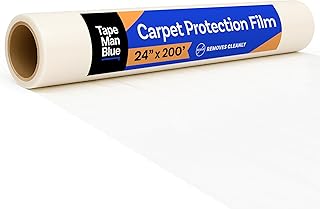
This self-adhesive plastic carpet film is 24 inches wide and 200 feet long. The product name describes clean removal, easy unwind, and protection from dirt and spills. Its narrower width can be useful for a limited carpet strip or a constrained space where a wider roll is awkward to place.
Best for: Protecting narrow hallways, smaller rooms, and specific paths near painting work. It was selected as the narrow-format option among the carpet films.
Limitation: A 24-inch roll can require more strips and seams across a broad room. Plan the layout before starting, and check the manufacturer’s directions for suitable surfaces and removal timing.
Buying Guide: How To Protect Carpet While Painting
Should you use carpet film or a drop cloth?
Self-adhesive carpet film is designed to adhere to carpet and is generally a more practical choice for a walking route or a large carpeted area that needs continuous coverage. A plastic drop cloth is easier to spread over furniture and can cover a wide surface quickly, but loose sheets can move if people walk across them. Match the material to the task rather than assuming one cover works equally well for every surface.
For a room with both carpet and furniture, use carpet film on the floor and separate sheets over furnishings. This reduces the chance that a furniture cover will slide into the work area or leave carpet exposed. For a short, low-traffic job, a securely placed sheet may be sufficient, but inspect it regularly.
What width and roll length should you choose?
Measure the carpeted area and the main route people will use before choosing a roll. A 48-inch film covers more width in one pass than a 36-inch roll, while a 24-inch roll is easier to position in narrow areas. Wider film can reduce the number of parallel strips, but it may be harder to handle around doorways and corners.
Roll length matters as much as width. The 500-foot options suit projects with long routes or multiple areas; the 200-foot rolls may fit smaller jobs. Estimate the total length, then allow for overlaps and turns. Do not assume the stated roll length equals the exact amount of usable carpet coverage.
How should you apply carpet protection film?
- Vacuum the carpet so grit and loose debris are not trapped under the film.
- Read the product label and check whether the film is appropriate for the carpet type and planned duration.
- Test a small, inconspicuous area first, especially on delicate, unusual, or recently installed carpet.
- Apply the film smoothly, keeping it flat and pressing it down without stretching it.
- Overlap adjoining strips enough to avoid gaps, and check seams and edges before painting begins.
Do not use an adhesive protector if the manufacturer’s directions rule it out for your carpet. Remove film according to the stated instructions; leaving adhesive products in place longer than directed may make removal more difficult. If paint reaches the carpet, address it promptly using guidance appropriate for the paint type and carpet, rather than rubbing it deeper into the fibers.
How do you prevent paint from getting underneath?
Most spills and drips reach carpet through uncovered edges, loose seams, or a cover that has shifted. Extend protection beyond the immediate painting area when possible, and secure the perimeter in a way that does not damage carpet or adjacent finishes. Pay special attention to door thresholds, corners, and the edges beside baseboards.
Keep paint containers on a stable, separately protected surface. Avoid dragging ladders, tools, or heavy equipment across loose plastic. Check the covering during the job, especially after moving furniture or repeatedly walking over it. Replace a torn or displaced section before continuing to paint.
Which option is better for furniture and carpet together?
Carpet film is the more direct option for the floor, while large plastic sheets can cover sofas and other furnishings. The six-pack listed here includes 12-by-9-foot sheets and is described as suitable for furniture and floor covering. Since the plastic is lightweight, use it primarily as a cover rather than as a heavily trafficked floor surface.
When a room contains valuable or delicate furniture, remove smaller items from the work zone if practical. Cover remaining items fully and keep the plastic away from wet paint, open containers, and equipment that could snag it.
Frequently Asked Questions
Can I use regular plastic sheeting to protect carpet while painting?
Yes, plastic sheeting can cover carpet, but loose sheets may shift or tear under foot traffic. A carpet-specific adhesive film is often easier to keep in place. Secure edges without damaging the carpet, and check the covering during the work.
Is self-adhesive carpet film safe for every carpet?
No product should be assumed suitable for every carpet. Follow its label, test a discreet patch, and consider extra caution with delicate or unusual fibers. Stop if the carpet’s appearance or texture changes during the test.
How much carpet film do I need?
Measure the length and width of the carpeted area or walking path. Account for multiple strips, overlaps, corners, and transitions. Compare that estimate with both the roll width and length, rather than relying on room size alone.
Can I walk on plastic drop cloths?
Walking on loose drop cloths can cause them to bunch, shift, or tear. Use a more secure floor covering for regular traffic and inspect any sheet covering often. Keep walkways clear to reduce trip hazards.
When should carpet protection be removed?
Remove protection when the painting and related work are finished, following the product’s instructions. For adhesive film, do not leave it on longer than the directions allow. Peel it carefully and inspect the carpet as you go.


