For a maple outside corner molding project, the EWCG11 maple corner guard is the closest match for a straight, unfinished wood trim profile. The EWCR63 maple block is intended for crown-molding corners, while the poplar and white oak alternatives offer similar 1-by-1-inch hardwood coverage in different species. A flexible peel-and-stick guard is a different, non-wood option for buyers prioritizing quick installation over a traditional wood finish.
| Product | Best For | Key Detail |
|---|---|---|
| EWCG11 Maple Corner Guard | Straight maple corner trim | 7/8-by-7/8-inch, 42-inch length |
| EWCR63 Maple Crown Corner Block | Crown molding intersections | Unfinished solid hardwood block |
| Millwork Outlet Poplar Trim | Substantial hardwood coverage | 1-by-1-inch, 47-inch length |
| Millwork Outlet White Oak Trim | Oak-finish projects | 1-by-1-inch, 47-inch length |
| Duzzy Flexible Corner Protector | Flexible adhesive protection | 20 feet; inside and outside corners |
EWCG11 Maple Corner Guard

The EWCG11 is the most direct fit among these options for someone searching for maple outside corner molding. It is listed as unfinished maple trim, measuring 7/8 by 7/8 inches and 42 inches long. Its compact profile is intended to cover and protect a straight corner while retaining a natural wood material.
Best for: Buyers who want a solid maple corner guard they can finish to suit a restoration or new build. The product details state that the trim is ready for paint or stain and is milled in the USA.
The listing also describes the wood as sustainable and VOC-free, with no harmful chemical emissions. Those details may matter to buyers selecting materials for an indoor project, although they do not replace checking the product and finish requirements for a particular room.
Limitation: The 7/8-inch profile is smaller than the 1-inch options below, and its 42-inch length may require multiple pieces for a taller corner. Measure the corner and compare the profile before ordering.
EWCR63 Maple Crown Corner Block

This maple corner block is designed for a crown-molding application rather than as a simple full-length corner strip. The listing describes unfinished solid hardwood and gives a flat crown area 2-3/8 inches wide by 3-1/2 inches high. It also lists an overall height of 6-1/4 inches and a 4-3/4-inch face.
Best for: Buyers finishing a crown-molding corner who want a maple block component instead of cutting and joining the crown profile at the corner. Its flat area is specifically described as a surface for crown, making it more suited to that use than straight corner guard molding.
The piece is unfinished, so its natural color may vary from one piece to another. The listing says it is made in America from sustainable, carbon-neutral wood. Because this is a block with specified face and crown dimensions, compare those measurements with the planned molding before choosing it.
Limitation: This is not described as a long, continuous corner strip. Choose another product if the project calls for a simple molding length running vertically along a wall edge.
Millwork Outlet Poplar Corner Trim

This 1-by-1-inch outside corner trim is made from real poplar hardwood and measures 47 inches long. It is intended to cover the joint between two perpendicular surfaces, helping conceal raw edges and gaps while adding protection to a 90-degree outside corner.
Best for: Buyers who want a straight hardwood molding profile with more coverage than the 7/8-inch maple option. The product is not maple, but its listed dimensions and outside-corner purpose make it a relevant alternative when a project allows another hardwood species.
The listing describes the trim as durable real American hardwood and says its 1-inch-by-1-inch profile provides substantial coverage against everyday bumps and wear. That larger square profile may suit a project where the corner needs a more prominent trim detail.
Limitation: Poplar is not maple, so the species and resulting appearance will differ. It is also listed at 47 inches, so check the required finished length and whether the piece can cover the intended corner in one run.
Millwork Outlet White Oak Corner Trim

This 1-by-1-inch outside corner molding is made from real white oak hardwood and is listed at 47 inches long. Like the poplar version, it is designed to cover the joint between two perpendicular surfaces, conceal unsightly gaps and raw edges, and protect a 90-degree corner.
Best for: Buyers who need a substantial hardwood outside-corner profile and prefer white oak over poplar or maple. It is a species alternative, not a maple product, so choose it only when the project can accommodate a different wood appearance.
The listing describes the molding as durable and says its dimensions provide broad corner coverage. The 1-inch square profile makes it a useful point of comparison with the narrower 7/8-inch maple guard. For a consistent finish, consider how the trim species will look beside the surrounding wood or painted surfaces.
Limitation: White oak is not maple, and the listing does not specify a maple finish. It may not be the right choice when matching existing maple millwork is essential.
Duzzy Flexible Corner Protector
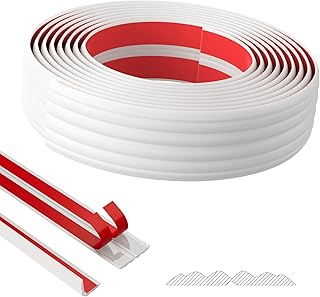
The Duzzy product is a flexible, self-adhesive corner protector supplied as a 20-foot strip. The listing describes it for inside and outside edges, including wall corners, ceilings, door frames, and countertops. It is a different kind of solution from solid hardwood molding and should be compared as a convenience-oriented alternative, not as maple millwork.
Best for: Buyers who want a flexible strip for multiple edge types and prefer a peel-and-stick format. The listed length may be useful when a project needs more coverage than a single short wood trim piece.
Limitation: The supplied product information does not identify it as maple or solid wood, and it does not provide material, profile, or surface-preparation details. Avoid choosing it when matching natural maple grain or a traditional wood molding is the priority.
Buying Guide: How to Choose Maple Outside Corner Molding
Does the project require maple specifically?
Start by deciding whether the wood species must match existing trim. The EWCG11 is the listed straight corner guard specifically identified as maple. The EWCR63 is also identified as maple, but it is a crown corner block rather than a continuous straight molding strip.
The poplar and white oak selections are hardwood alternatives with similar outside-corner purposes. They may be relevant when the project allows a contrasting or separately finished species. They are not substitutes for a true maple match if grain, color, or species consistency is essential.
Should you choose a strip or a corner block?
A straight corner guard runs along the edge of a corner. Compare the EWCG11 maple profile with the 1-by-1-inch poplar and white oak strips according to required coverage and species. The 7/8-by-7/8-inch maple profile is narrower than the one-inch alternatives.
A crown corner block serves a different purpose. The EWCR63 is described with a flat area for crown molding and defined face dimensions. Choose that format for a crown intersection, not simply because the word “corner” appears in the product name.
How much length and coverage do you need?
Measure the full corner run before selecting a length. The listed straight wood options include a 42-inch maple piece and 47-inch poplar and white oak pieces. If the corner is longer, determine whether you will need additional pieces and where joins can be placed.
Also compare the molding’s profile with the corner. A 7/8-inch-by-7/8-inch trim and a 1-inch-by-1-inch trim will not cover exactly the same area. For the crown block, use its stated flat area, face, and overall height to check the intended fit.
What finish do you want?
The maple corner guard and maple crown block are listed as unfinished. The EWCG11 is described as ready for paint or stain, while the EWCR63 listing notes that natural color can vary from piece to piece. Plan the finish around the surrounding surface and follow the finish manufacturer’s directions.
Do not assume that poplar, white oak, and maple will look alike after finishing. If the trim will remain visible beside existing woodwork, species and sample appearance can matter as much as nominal dimensions.
Is a flexible adhesive strip appropriate?
A flexible peel-and-stick protector can suit buyers seeking a strip for varied edge locations. It is not the same as solid hardwood corner molding, and the supplied listing does not identify it as maple. Compare the installation format and intended appearance before choosing it over wood trim.
What should you check before ordering?
- Confirm the corner is an outside corner and check whether it is a 90-degree joint.
- Measure the corner length and the face coverage needed.
- Match the product format to the job: straight strip, crown block, or flexible protector.
- Check the listed wood species and whether an unfinished surface suits the project.
- Compare the product dimensions with adjoining trim and the corner itself.
- For a species match, prioritize maple rather than treating other hardwoods as equivalent.
Frequently Asked Questions
Which listed product is the closest match for straight maple outside corner molding?
The EWCG11 Corner Guard Molding is the closest listed match. It is identified as unfinished maple, measures 7/8 by 7/8 inches, and is 42 inches long.
Is the EWCR63 maple block a straight corner trim strip?
No. It is described as a crown outside corner block with a flat area for crown molding. Choose it for that block-style application rather than a continuous straight corner guard.
Are the poplar and white oak products maple?
No. They are listed as real hardwood outside corner trim in poplar and white oak, respectively. They are alternatives only if the project does not require maple.
What is the difference between the maple guard and the one-inch trims?
The maple EWCG11 measures 7/8 by 7/8 inches. The poplar and white oak trims measure 1 by 1 inch, so they have a larger stated profile and are different wood species.
Can the flexible Duzzy protector be used as maple molding?
The listing describes a flexible self-adhesive protector but does not identify it as maple or solid wood. It is better considered a separate adhesive protection option, not a maple molding match.


