The best spray gun for ceramic glaze depends on the finish you want, your air-compressor setup, and whether you need a pottery-specific tool or a general-purpose sprayer. The K-Grip is a straightforward choice for a compressor-powered circular spray pattern, while the adjustable stainless-steel pottery gun offers more control over fluid and fan shape. A 200 ml atomizer is better suited to small, detailed applications. One listed high-pressure water sprayer is not designed for ceramic glaze, so it is included only as a comparison—not as a glaze recommendation.
| Product | Best suited for | Key distinction |
|---|---|---|
| K-Grip Siphon Spray Gun | Basic compressor-powered glaze spraying | 16 oz jar and adjustable circular pattern |
| Adjustable Stainless-Steel Pottery Spray Gun | Potters seeking spray and fluid controls | Needle, pattern, and air adjustments |
| Dynastus Siphon Air Spray Gun | General-purpose spraying where glaze suitability is confirmed | Requires a minimum 3/4 hp compressor |
| 1/2-Inch NPT High-Pressure Spray Gun | Water cleaning, not glaze application | Designed for high-flow water tasks |
| 200 ml Pottery Glaze Atomizer | Small-area glaze, underglaze, or oxide effects | Compact stainless-steel atomizer |
K-Grip Siphon Spray Gun

The K-Grip Siphon Spray Gun is a practical option for potters who want a basic, compressor-powered tool for applying ceramic glaze. Its listed features include a circular spray pattern adjustable from 1/2 inch to 2-1/2 inches, a 16-ounce plastic jar, and a 1/4-inch NPT fitting. The manufacturer says it can operate with an air compressor as small as 3/4 horsepower.
Best for: Buyers who want a defined circular pattern and a jar larger than a small detail sprayer. It was selected because its listed pattern range, air-compressor requirement, and included fitting are directly relevant to setting up a glaze-spraying station.
Consider: The product information does not specify a fluid-control adjustment, a fan-pattern adjustment, or compatibility with every glaze. Check that your glaze preparation and compressor setup suit the gun before use. The 16-ounce jar also means it is not the most compact option in this group.
Adjustable Stainless-Steel Pottery Spray Gun

This siphon-feed spray gun is described as a tool for ceramic glaze spraying, mold coloring, and paint spraying. Its controls allow the user to adjust fluid delivery with a needle knob, change fan-pattern size with pattern control, and adjust air with an air valve. The listing also describes an ergonomic design and says the gun is designed for convenient cleaning.
Best for: Potters who want separate adjustments for fluid amount, pattern size, and air. It was selected because those controls can help users tailor application to a particular task, rather than relying on a single fixed spray shape.
Consider: The provided product details do not give a compressor horsepower requirement, fitting size, or container capacity. Confirm those specifications before buying, especially if you already own an air compressor or need a particular jar size. The listing’s cleaning claims do not replace checking and cleaning the tool according to its instructions after use.
Dynastus Siphon Air Spray Gun
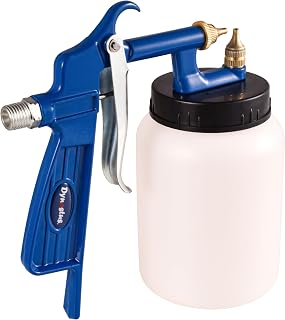
The Dynastus is a general-purpose siphon spray gun listed for materials including latex, enamels, stains, lacquers, and adhesives. Its composite body is described as corrosion-resistant and easy to clean. The stated minimum compressor requirement is 3/4 horsepower, and the product is described for small- to medium-sized painting jobs in automotive, home, and furniture applications.
Best for: Buyers comparing general-purpose siphon guns who can verify that the tool and their prepared glaze are appropriate for the intended application. It was selected as a broader-use alternative, but the listed materials do not specifically identify ceramic glaze.
Consider: Do not assume that a gun intended for paint and adhesives is suitable for every ceramic glaze. Confirm the manufacturer’s guidance on materials, nozzle setup, and cleaning before using it for pottery. Its 3/4 hp minimum is also an important compressor requirement to check in advance.
1/2-Inch NPT High-Pressure Spray Gun

This heavy-duty spray gun is described as a high-flow tool for water, cleaning, garden irrigation, and industrial or agricultural environments. It has a 1/2-inch NPT inlet and a large nozzle intended to increase water flow and impact force. Its metal construction is described as resistant to corrosion and impact, and the listing mentions use with various chemical solvents.
Best for: Water-based cleaning or irrigation tasks where a high-flow nozzle and 1/2-inch NPT connection fit the setup. It is included to distinguish a pressure-cleaning spray gun from a pottery glaze sprayer.
Consider: This product is not a recommended ceramic-glaze spray gun. Its listed purpose is high-flow water spraying, and the supplied information does not describe a siphon feed, glaze container, or controls for applying a fine glaze mist. Avoid choosing it for glaze application based on its “spray gun” name alone.
200 ml Pottery Glaze Atomizer

This 200 ml stainless-steel atomizer is specifically described for ceramic glaze spraying. The listing says it can be used to apply enamel or oxide to clay products, and identifies underglaze painting, detail work, oxide blending, and gradient effects as uses. Its compact capacity makes it a different kind of option from a larger compressor-powered spray gun.
Best for: Potters looking for a small-capacity tool for detail work or localized application of underglaze, glaze, or oxide. It was selected because the product description directly addresses pottery and ceramic surface effects.
Consider: The listed capacity is 200 ml, so it may be less convenient when a task calls for holding more material between refills. The provided details do not state an air-compressor requirement, nozzle specifications, or adjustment controls. Check the product instructions to confirm how it operates and what material preparation it requires.
Buying Guide: How To Choose A Spray Gun For Ceramic Glaze
A glaze sprayer is only one part of a successful application setup. Before choosing a product, compare its stated purpose, feed style, capacity, pattern controls, and air requirements with the glaze and work you plan to do. Product listings often use broad terms such as “spray gun,” but a water nozzle, a paint sprayer, and a pottery glaze tool are not interchangeable based on the name alone.
Is the tool specifically intended for ceramic glaze?
Start with the intended use in the product description. The adjustable pottery gun and the 200 ml atomizer explicitly mention ceramic or pottery applications. The K-Grip listing provides pattern and compressor details for a siphon spray gun. The Dynastus listing describes paint and other general-purpose materials, so ceramic-glaze suitability should be confirmed rather than assumed. The high-pressure 1/2-inch NPT product is described for water tasks, not glaze.
Glaze mixtures differ, and the available product details do not establish that any one tool will handle every formulation. Consult the sprayer’s instructions and the material guidance for your glaze. Do not infer compatibility from a product’s ability to spray paint, water, or other liquids.
What pattern and level of control do you need?
A controlled, smaller application may call for a tool with a stated pattern adjustment or a compact atomizer. The K-Grip lists a circular pattern ranging from 1/2 inch to 2-1/2 inches. The adjustable pottery gun lists fluid, pattern, and air controls. The 200 ml atomizer is described for detail depiction and blending, but its supplied details do not specify adjustable controls.
If you need to cover a larger piece or repeat a particular spray shape, look for clear information about pattern size and adjustment. If you are applying accents or working on smaller areas, capacity and handling may matter more than a large spray pattern. Compare stated features rather than assuming that a general paint gun offers a particular level of precision.
Will your air compressor meet the requirement?
Two listings specify a minimum compressor size: the K-Grip and Dynastus each state a requirement of at least 3/4 horsepower. The adjustable pottery gun’s supplied features do not include a compressor requirement, and the atomizer listing does not state one either. Check the full product specifications and your compressor’s requirements before purchase.
A horsepower figure alone does not provide every setup detail. If the listing or manufacturer provides other operating requirements, such as pressure or air consumption, compare those with your compressor as well. Do not assume that a fitting will connect to your equipment just because the tool is described as compressor-powered.
How much material should the sprayer hold?
Capacity affects how often you may need to refill during a task. The K-Grip comes with a listed 16-ounce plastic jar, while the pottery atomizer is described as holding 200 ml. The other product details supplied here do not state a container capacity. Choose based on the amount of glaze you expect to apply and whether a larger container or a compact tool better suits your work.
Before filling a container, confirm that the product instructions permit the material and preparation you intend to use. A stated capacity is not proof that a sprayer is suitable for a particular glaze, or that the glaze will flow through its components.
What should you check about cleaning and materials?
Glaze residue can make maintenance important, but the available listings provide limited cleaning instructions. The adjustable pottery gun is described as convenient to clean, and the Dynastus has a composite body described as easy to clean. These claims do not establish which cleaning method is appropriate for a particular glaze. Follow the manufacturer’s care instructions and clean the sprayer promptly as directed.
Also check what materials contact the liquid. The atomizer is described as stainless steel, the K-Grip includes a plastic jar, and the Dynastus has a composite body. The supplied information does not give a full material breakdown for every product, so confirm details if the glaze or cleaning process makes them important.
Which option makes sense for your pottery workflow?
- Choose the K-Grip if you want a siphon gun with a listed 16-ounce jar, a circular pattern range, and a stated minimum 3/4 hp compressor.
- Choose the adjustable pottery gun if separate fluid, pattern, and air controls are priorities and its unspecified setup requirements match your equipment.
- Consider the atomizer if a 200 ml capacity and pottery-focused detail or blending applications suit your work.
- Consider the Dynastus only after checking glaze suitability because its stated applications focus on general-purpose paints and related materials.
- Do not choose the high-pressure water gun for glaze based on the provided description; it is listed for water and cleaning tasks.
Frequently Asked Questions
Can I use any paint spray gun for ceramic glaze?
No. A paint sprayer is not automatically suitable for ceramic glaze. Check the manufacturer’s material guidance and confirm that the tool’s feed system, controls, and cleaning instructions fit your intended glaze.
Which listed product has the clearest adjustment controls?
The adjustable stainless-steel pottery spray gun lists a fluid-control knob, pattern control, and an air adjustment valve. Its supplied details do not state a compressor requirement or container capacity.
Which listed sprayer has the largest stated capacity?
The K-Grip includes a 16-ounce plastic jar. The pottery atomizer is listed at 200 ml. The provided descriptions do not state capacities for the other products.
What compressor size do the K-Grip and Dynastus require?
Both listings state a minimum air-compressor size of 3/4 horsepower. Confirm any additional operating requirements in the product instructions before connecting the tool.
Is the 1/2-inch NPT high-pressure spray gun suitable for glaze?
The supplied description does not identify it as a glaze sprayer. It is intended for high-flow water, cleaning, irrigation, and related tasks, so it should not be treated as a ceramic-glaze application tool.
Is the 200 ml atomizer better for detailed pottery work?
Its listing describes underglaze detail depiction, oxide blending, and special surface effects, making it a relevant option for small or localized applications. The supplied details do not specify its operating method or adjustment range, so check those before purchase.


