Stick-on wood trim can add a decorative edge, cover minor surface wear, or create a finished look without nails. For wood-grain repair, the ZYJT tape is the most direct match; Soengsau offers flexible beaded molding, while Symyda is designed for quarter-round edges. The TIANLDD and Art3d options are wood-look or cherry-colored borders for decorative applications. Match the trim’s shape and finish to your surface, and check the product dimensions before ordering.
| Product | Best For | Style or Material |
|---|---|---|
| ZYJT Cherry Wood Grain Tape | Covering small worn or scratched areas | Self-adhesive cherry wood-grain patch |
| Soengsau Faux Wood Beaded Molding | Decorative edges and accents | Flexible, paintable PVC with beaded profile |
| TIANLDD Wood Grain Wallpaper Border | Flat decorative borders, including mirrors | Dark oak wood-grain tape |
| Symyda Flexible Quarter Round Molding | Curved edges and floor or wall transitions | Flexible quarter-round profile |
| Art3d Outside Corner Trim | Outside corners and surface edges | Cherry-colored vinyl trim |
ZYJT Cherry Wood Grain Repair Tape

This self-adhesive tape is the closest fit for someone searching for stick-on wood trim to disguise small areas of wear. The listed size is 2.4 inches wide by 15 feet long, and the product description gives a thickness of 0.3 millimeters. It is presented as a wood-veneer strip with adhesive already applied to the back.
Best for: DIY repairs on furniture and trim, including tables, chairs, baseboards, doors, and windows. The broad strip can be cut to the length and shape needed for a patch. The listed application steps are to peel, cut, apply, and press the surface by hand.
Why it was selected: Unlike decorative molding with a raised profile, this product is intended to cover or refresh a flat area with a cherry wood-grain appearance. That makes it a more relevant choice for minor surface repairs than for building out a corner or adding dimensional molding.
Limitation: The listing describes a cherry wood-grain look, so it may not blend with other wood species or finishes. Check the color and grain against the target surface before applying it to a visible area.
Soengsau Faux Wood Beaded Molding
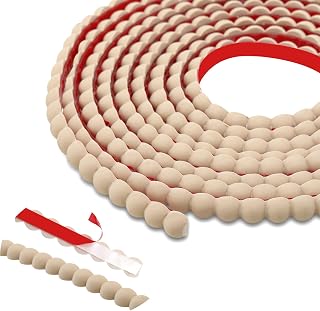
Soengsau’s peel-and-stick trim is a decorative molding option with a semi-circular beaded profile. The listing describes it as flexible PVC and gives a length of 118 inches and a width of 0.39 inch. It is available in white and faux wood finishes, and the product is described as unfinished and paintable.
Best for: Adding a narrow decorative accent to a mirror, door, wall, or cabinet edge. Choose this if a raised bead detail is more important than a flat wood-grain repair strip. The flexible material and cut, peel, and stick installation are intended to simplify DIY placement.
Why it was selected: It provides a distinct molding profile rather than a plain adhesive film. Its stated paintability may also help buyers who want to customize the appearance, although the product details do not specify paint type or preparation requirements.
Limitation: The beaded profile is not a flat patch and may not suit a surface where an even, flush finish is needed. Confirm that the 0.39-inch width and raised design fit the intended edge.
TIANLDD Dark Oak Wood Grain Border

This 27-foot peel-and-stick border is listed in a dark oak finish and is described as a thin, 0.1-millimeter wood-grain tape. The product is intended for decorative borders and covering scratches or worn areas on flat surfaces. Its listed uses include mirror frames, walls, ceilings, corners, and bathroom decor.
Best for: Buyers who want a long roll of dark oak-look border for a flat decorative application, such as framing a mirror or adding an accent line. The listing also describes the material as water-resistant, heat-resistant, and colorfast, which may make it worth considering for some kitchen or bathroom projects.
Why it was selected: Its long listed roll length and wood-grain appearance make it a useful alternative to short molding pieces when the project calls for a narrow, continuous border. It is more suitable for a visual accent than for a thick, structural trim profile.
Limitation: The listed thickness is very thin, so it should not be expected to conceal deep damage or create raised molding. Water resistance does not establish suitability for every wet location; check the surface and application instructions before use.
Symyda Flexible Quarter Round Molding

Symyda’s flexible trim is shaped as quarter-round molding for edges and transitions. The product title lists a 118-inch length. Its features describe a flexible profile that can bend around curves, stairs, columns, rounded walls, and irregular edges. The adhesive backing is intended for clean, dry, smooth surfaces, and the trim can be cut with scissors.
Best for: Buyers who need a rounded finishing edge rather than a flat wood-grain strip. Consider it for curved areas or corners where rigid molding may be difficult to fit. The listed installation process is to clean and dry the surface, peel the backing, and press the trim firmly into place.
Why it was selected: Its quarter-round shape and stated flexibility make it the most purpose-built option in this group for following curved edges. It is also described for use on floors, walls, cabinets, and corners.
Limitation: The product title says 118 inches, while the feature text also refers to a “118 ft roll.” Because those details conflict, verify the supplied length in the current listing before planning a project. The product description also calls for smooth, clean surfaces.
Art3d Cherry Outside Corner Trim

Art3d’s product is a 20-foot outside corner trim in a cherry color. The listing describes it as vinyl with water resistance and heat resistance, and says it can be cut with scissors. Its backing is described as acrylic adhesive, with use on smooth surfaces such as furniture and countertops.
Best for: Finishing an outside corner or adding a cherry-colored edge to a smooth surface. Choose this if the project needs a corner piece rather than a flat repair patch or beaded accent. The flexible, peel-and-stick application can be cut to suit the required section.
Why it was selected: It combines a corner-trim format with a cherry finish, giving it a different purpose from the flat wood-grain tapes and flexible quarter-round molding. The listed 20-foot length may suit projects that need multiple sections.
Limitation: The product is vinyl, not wood veneer, and its cherry color may not match natural cherry or other wood finishes exactly. The listing emphasizes smooth surfaces, so it may not adhere as intended to dusty, rough, or uneven material.
Buying Guide: How to Choose Stick-On Wood Trim
“Stick-on wood trim” can mean several different products: a thin adhesive film, a repair strip, a decorative molding, or a corner profile. Start by identifying the job. A flat scratch cover does not replace raised molding, and a flexible quarter-round is not designed to cover a broad damaged panel.
Do you need a flat strip or a raised molding?
Choose a flat tape or border when you want to cover minor surface wear, add a narrow visual line, or create a frame around a flat feature. The ZYJT product is described as a wood-veneer repair strip, while TIANLDD is a thin wood-grain border. For a raised decorative detail, Soengsau’s beaded molding has a three-dimensional profile. For a rounded edge, compare the quarter-round shape of Symyda with Art3d’s outside corner trim.
Which shape fits your edge?
- Flat surface or small patch: Consider a wood-grain tape or border. Measure the area and check the listed width.
- Decorative line or frame: A narrow border can create an accent without adding a thick molding profile.
- Beaded detail: A semi-circular molding provides texture and dimension, but its profile may stand out from a flat surface.
- Curved transition: A flexible quarter-round is designed to follow curves and irregular edges.
- Outside corner: Look for trim specifically described for corner edges rather than a flat tape.
How important is the finish match?
Compare the trim with the surface in the same lighting where it will be installed. “Cherry,” “dark oak,” and “faux wood” describe appearance, not a guarantee of an exact match to a particular cabinet, floor, or wood species. Grain pattern, color, sheen, and the direction of the grain can all affect how visible a patch looks. If possible, check a small section or sample placement before covering a larger area.
Will peel-and-stick trim adhere to your surface?
The listed products generally call for a clean or smooth surface, and Symyda specifically says to remove dust and moisture before pressing the trim into place. Clean the application area according to the surface manufacturer’s care guidance, then let it dry fully. Avoid assuming that adhesive trim will bond reliably to rough, dirty, damp, or peeling finishes. Follow the product’s own application directions, especially for paintable or water-resistant trim.
How much trim should you measure for?
Measure each run, including corners and short sections, before selecting a roll. Add the individual lengths to estimate the total needed, and account for cuts and alignment. Check both the roll length and width: a longer roll does not necessarily have enough width to cover a scratch, while a broad strip may be harder to place precisely on a narrow edge. Verify dimensions in the current product listing, particularly when product information conflicts.
What limitations should you consider?
Adhesive trim is primarily a surface-finishing option. It does not repair a loose joint, replace missing structural material, or automatically hide deep gouges. Thin tape may follow minor surface details but can remain visible over substantial damage. Flexible molding may bend around curves but still needs a suitable surface and careful pressing. For a long-lasting appearance, choose the right profile, prepare the surface, and avoid stretching or misaligning the strip during installation.
Frequently Asked Questions
Can stick-on wood trim cover scratches?
Some products in this list are described for covering scratches or worn areas. Thin wood-grain tape or a border is the most relevant format for a flat, minor blemish. Deep damage may remain visible or require a separate repair before trim is applied.
Is peel-and-stick trim made of real wood?
Not necessarily. The listed options include a wood-veneer repair tape, flexible PVC molding, thin wood-grain border tape, and vinyl corner trim. Check the material description rather than relying on a wood-look color or pattern.
Can I cut adhesive trim to size?
The product descriptions state that ZYJT tape can be cut to length, Soengsau molding can be cut as part of installation, and Art3d and Symyda trim can be cut with scissors. Use the instructions for the specific product and measure before cutting.
Will stick-on trim work on curved edges?
Symyda is specifically described as flexible for curves, rounded walls, columns, and irregular edges. Other products may be intended mainly for flat surfaces or corners. Confirm that a product’s shape and flexibility suit the curve before choosing it.
Can peel-and-stick wood trim be used in a bathroom?
TIANLDD is described as water-resistant and intended for applications that include bathroom mirror borders. That does not mean every adhesive trim is suitable for direct water exposure. Check the product directions and avoid assuming that water resistance means waterproof installation in every location.


