The best epoxy resin for a wall depends on whether the product is specifically approved for vertical application: self-leveling formulas may run, and most products listed here are described primarily for countertops, floors, crafts, or other surfaces. Stone Coat’s kits are the closest matches because their descriptions mention shower walls. The larger coating kit is better suited to bigger projects, while the half-gallon kit may fit a smaller area. Confirm the manufacturer’s directions for wall use before buying.
| Product | Best suited for | Key consideration |
|---|---|---|
| Stone Coat 2-Gallon Kit | Larger projects where the listed shower-wall use is relevant | Confirm vertical-application instructions |
| Stone Coat Half-Gallon Kit | Smaller projects where the listed shower-wall use is relevant | Limited quantity for broad coverage |
| Epoxy Resin Coating 3-Gallon Kit | Large coating jobs on listed surfaces | Wall use is not specified in the supplied details |
| Epoxy Resin 1-Gallon Kit | Small coating or craft projects | Wall compatibility is not specified |
| JANCHUN 16-Ounce Kit | Small decorative or test projects | Primarily described for crafts and furniture |
Stone Coat Countertops 2-Gallon Kit

Best for: Buyers considering a larger project who want a product description that specifically mentions shower walls, alongside countertops and bar tops. The listed volume is two gallons, making this a more substantial option than the half-gallon kit in this selection.
The product is described as producing a clear, glossy finish and as resistant to heat and scratches. Its features also say it can be combined with color pigments, metallic or mica powders, and glitter. Those details may matter when the goal is a decorative surface rather than a plain clear coating.
Why it was selected: Of the supplied products, this kit explicitly includes shower walls among its suggested applications. That makes it more relevant to a wall-coating search, though the listing does not establish that every wall or installation method is suitable.
Limitation: The supplied features do not provide wall-specific application instructions, coverage, or details about applying the self-leveling material vertically. Verify those points with the product label or manufacturer before use. The product description also makes safety-related claims; follow the current label and safety directions rather than relying on a short feature summary.
Stone Coat Countertops Half-Gallon Kit

Best for: Buyers looking at a smaller project who want a product described for shower walls, countertops, and bar tops. The half-gallon package is the smallest listed Stone Coat option here, so it may be easier to assess for a limited job than a larger kit.
The supplied description calls out a glossy finish and resistance to UV exposure, scratches, and heat. It also says the resin can be used with pigments and powders. These are product-listed features, not a substitute for checking whether the surface and application conditions match the directions.
Why it was selected: Like the two-gallon version, this kit explicitly names shower walls as a possible use, making it more directly relevant than products described only for crafts, floors, or countertops.
Limitation: The listing details provided do not explain wall coverage or how to prevent a coating from moving on a vertical surface. The smaller quantity may also be insufficient for a broad wall. Check the label for approved substrates, application method, and coverage before estimating materials.
Epoxy Resin Coating 3-Gallon Kit
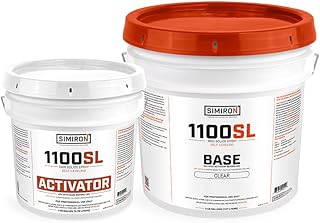
Best for: Buyers comparing larger-volume coating kits for broad projects on surfaces named in the product description, including floors, countertops, and garages. The kit is described as a two-component, 100% solids, solvent-free coating with a standard cure speed.
The listed features also include self-leveling and chemical resistance. Those properties may be relevant to a coating project, but they do not establish that the resin can be applied to a wall. Self-leveling behavior in particular may be a concern on vertical surfaces unless the manufacturer explicitly provides a suitable application method.
Why it was selected: It is clearly presented as a coating product and offers the largest listed quantity in this selection, which makes it useful for comparison when planning a substantial job.
Limitation: The supplied product information does not name walls as an approved use. Do not assume that a floor or countertop coating is suitable for vertical application. Confirm wall compatibility, substrate preparation, and application instructions before purchase.
Clear Epoxy Resin 1-Gallon Kit
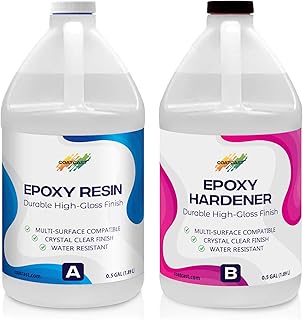
Best for: Buyers considering a one-gallon clear resin for a limited coating project, provided the intended substrate and application are approved by the manufacturer. The supplied description names wood, concrete, and stone and highlights a high-gloss finish.
The kit is described as easy to use, self-leveling, and designed for a clear coating. These features may suit a project where a smooth glossy appearance is desired. The listing also mentions arts and crafts, so the product spans decorative and coating uses in its description.
Why it was selected: It is presented as a coating resin for several surface types and comes in a middle quantity between the small craft kit and the larger coating kits.
Limitation: The supplied features do not specifically mention walls or provide instructions for vertical application. “Self-leveling” does not mean the coating will stay in place on a wall. Check approved uses and application limits before choosing it for a vertical surface.
JANCHUN Crystal Clear 16-Ounce Kit

Best for: Small decorative trials or craft-scale projects, not broad wall coverage. JANCHUN describes this 16-ounce kit for table tops, molds, tumblers, painting, jewelry, and DIY gifts. It includes plastic cups, mixing sticks, droppers, and gloves, according to the supplied features.
The product is described as a 1:1 mixing resin with a clear, glossy finish and self-leveling behavior. Its features also mention an anti-UV formula and use for furniture and artwork. The included accessories may help buyers who need basic mixing tools for a small project.
Why it was selected: It is a clear coating resin that may be considered for a small decorative test, but its listed applications make it less suitable for a wall-coating purchase than the products that mention walls or broader coating work.
Limitation: The package is small, and the supplied product information does not identify wall use. Avoid choosing it for a large wall or assuming it can be applied vertically without manufacturer confirmation.
Buying Guide: How to Choose Epoxy Resin for a Wall
Does the product explicitly allow vertical application?
Start with the label, technical data sheet, or manufacturer’s application instructions. A product called an epoxy coating is not automatically appropriate for walls. Many resins are intended for horizontal surfaces, where they can spread and level without running. Look for explicit instructions for vertical or wall application, including any limits on thickness, surface type, or application technique.
In this product selection, Stone Coat’s descriptions mention shower walls. The other supplied descriptions focus on countertops, floors, garages, crafts, furniture, or general coating. A product name or general claim of versatility should not replace specific wall-use guidance.
What surface are you coating?
Identify the existing substrate before selecting a resin. Painted drywall, masonry, wood, tile, and other materials can require different preparation and may not all be approved for the same epoxy. Check whether the product instructions name the substrate, whether a primer is required, and whether the surface must be clean, dry, or otherwise prepared.
Do not assume that a coating formulated for concrete floors or countertops will bond to a painted interior wall. When the manufacturer’s instructions do not address the surface, contact the manufacturer or choose a product with clearly documented compatibility.
How much coating do you need?
Measure the wall area and compare it with the product’s stated coverage at the intended application thickness. Do not estimate coverage from container volume alone. The supplied product details do not provide coverage figures, so consult the current package or technical documentation before calculating how many kits are required.
For a small test area, a smaller kit may reduce leftover material, but it may not be enough for a full wall. For a large project, a larger quantity can be more practical only if the product is confirmed for that application. Account for extra material only according to the manufacturer’s coverage guidance.
Is self-leveling a benefit or a concern?
Self-leveling can help create a smooth finish on horizontal surfaces. On a vertical wall, the same flow can cause sagging or uneven thickness unless the formula and method are designed for that use. Check whether the instructions specify a wall-safe application process, suitable coating thickness, or multiple thin coats.
Do not try to solve a runny coating by adding more material or changing the mix unless the manufacturer directs it. Follow the specified mixing ratio and working method. Incorrect measuring or mixing can affect the finished coating.
What finish and performance claims matter?
Choose the finish based on the room and project goal. The products here are described mainly as clear or glossy, and some mention resistance to heat, scratches, UV exposure, or chemicals. These claims are product-specific and should not be treated as universal guarantees for every surface or use.
For a decorative wall, consider whether you want a clear finish over an existing design or a colored effect using compatible pigments. Confirm which colorants are allowed and whether adding them changes the application or cure instructions. In a wet area, verify that the product is approved for the intended location and installation, rather than inferring suitability from a general mention of shower walls.
What safety and preparation details should you check?
Read the current safety label before mixing or applying any two-component resin. Follow the specified protective equipment, ventilation, handling, cleanup, and curing directions. Product claims in a short listing are not a replacement for the full safety documentation.
Prepare the surface as directed, protect nearby areas, and test the coating in an inconspicuous or small area if the manufacturer recommends it. Avoid starting a full wall until you understand the working time, application steps, and conditions stated by the product maker.
Frequently Asked Questions
Can countertop epoxy be used on a wall?
Not automatically. Countertop epoxy is usually described for horizontal surfaces, and it may run when applied vertically. Use it on a wall only if the manufacturer’s current instructions explicitly approve that application and explain the method.
Which listed product most clearly mentions wall use?
Both Stone Coat kits in this selection list shower walls among their suggested applications. Confirm that the specific wall, substrate, and installation conditions meet the manufacturer’s instructions.
Is self-leveling epoxy suitable for vertical surfaces?
Not necessarily. Self-leveling is useful for smoothing a horizontal coating, but a flowing resin may sag on a vertical surface. Look for explicit vertical-application guidance before using it on a wall.
How do I calculate how much epoxy I need?
Measure the area and use the manufacturer’s stated coverage for the required application thickness. The supplied product details do not list coverage, so check the label or technical documentation rather than estimating from kit volume.
Can epoxy resin be applied over paint or tile?
Compatibility depends on the product and the condition of the surface. Check the manufacturer’s approved substrates and preparation steps before coating paint, tile, or another existing finish.
Do clear epoxy coatings stay clear over time?
That depends on the formula and exposure conditions. Some supplied product descriptions mention anti-yellowing or UV-related features, but no clear coating should be assumed to remain unchanged in every environment. Review the product’s current documentation for its specific claims and limitations.


