The best brush-on appliance paint depends on the size of the repair: Rust-Oleum Appliance Epoxy is best for repainting larger areas, while Rust-Oleum Appliance Touch-Up is better for small chips and scratches. For an indoor project with tools included, consider the DWIL kit. The options below cover spot repairs, broader refinishing, and different application needs. Check the product directions and the appliance maker’s guidance before painting, especially for surfaces exposed to heat or food.
| Product | Best For | Notable Feature |
|---|---|---|
| Rust-Oleum Appliance Epoxy Gloss White | Broader refinishing | Quart-size epoxy coating |
| Rust-Oleum Appliance Touch-Up Gloss White | Small chips and scratches | Built-in precision brush |
| DWIL Appliance Paint Kit | Indoor projects with supplies included | Water-based paint and tools |
| SENVEN Appliance Touch-Up Paint | Detailed surface repairs | Brush-tip applicator |
| Meuvcol Appliance Paint | Broader coating on metal or plastic | Water-based formula with tool |
Rust-Oleum Appliance Epoxy Gloss White

Best for: Repainting or refurbishing larger appliance surfaces, such as refrigerators and laundry machines. This quart-size product is intended for interior appliances and is a better fit for a broad coating job than a tiny scratch repair.
The epoxy formula is described as drying to a smooth, hard enamel finish. The listed coverage is 60 to 120 square feet per can, and the product is dry enough to handle in five to nine hours. Those details make it useful for planning a project, but handling time should not be treated as the same as full curing time.
Why it was selected: It is the clearest option in this list for a substantial brush-on appliance repaint rather than isolated blemishes. Its moisture-resistant finish is also relevant for appliances used in kitchens and laundry areas.
Limitation: A quart may be excessive for a single small chip, and the listed drying time calls for allowing several hours before handling the painted surface. Follow the label for preparation and recoat instructions.
Rust-Oleum Appliance Touch-Up Gloss White

Best for: Small scratches, chips, and imperfections on white appliances. Its 0.6-ounce size and built-in cap brush are designed for controlled application in detailed areas, so it is better suited to spot repairs than repainting an entire refrigerator or washer.
The listed formula is intended for interior metal, porcelain, and enamel surfaces. It dries in 10 minutes according to the product name and leaves a durable, washable finish. The brush applicator can make it easier to place paint directly on a small damaged area without preparing a larger quantity of coating.
Why it was selected: It addresses a common repair need with a small container and an integrated brush. Choose this if the damage is limited and the appliance finish is gloss white.
Limitation: The small amount is not meant for broad refinishing, and a gloss white repair may not visually match an aged, yellowed, or differently toned appliance. Check the color and sheen in an inconspicuous spot when possible.
DWIL Appliance Paint Kit

Best for: Buyers who want a paint kit with basic preparation and application supplies. The 32-ounce white paint is listed for plastic and metal surfaces, and the package includes masking tape, film, a roller, sandpaper, gloves, a brush, and a stir rod.
DWIL describes its formula as water-based, low-odor, and low in volatile organic compounds. The listing also says it is engineered to withstand high temperatures and daily wear. These claims may make it worth considering for an indoor project, but the exact appliance surface and use conditions should still be checked against the product instructions.
Why it was selected: The included brush and preparation materials can help buyers who do not already have project supplies. It is a broader-project alternative to small touch-up bottles.
Limitation: The kit is a larger purchase in quantity and equipment than a spot-repair product. The listing does not provide a coverage figure or a specific drying time, so plan by following the label rather than assuming a schedule.
SENVEN Appliance Touch-Up Paint
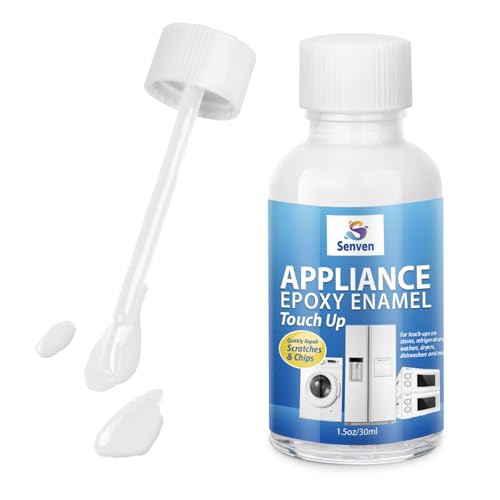
Best for: Detailed repairs to small marks on metal, porcelain, or enamel appliances. The product has a mess-free brush tip and is listed for scratches and imperfections on refrigerators, washers, dryers, dishwashers, and other household appliances.
The manufacturer describes the coating as high-gloss, quick-drying, and water-resistant. It also lists heat- and water-resistant factors. The compact format is designed to be stored for later touch-ups, which may be convenient for homeowners who expect to repair more than one small spot over time.
Why it was selected: Its brush-tip design and stated range of appliance surfaces make it a direct match for buyers searching for brush-on repair paint. It offers a useful comparison with the Rust-Oleum touch-up bottle for small, precise jobs.
Limitation: This is a touch-up product, not a full-size refinishing coating. The listing does not give a coverage area or drying time, so avoid planning a large repaint around the bottle’s stated features.
Meuvcol Appliance Paint With Tool

Best for: Buyers considering a larger water-based coating for metal or plastic appliance surfaces. The listing identifies a 35-ounce container and says it is intended for appliances such as refrigerators, dishwashers, washers, and microwaves.
Meuvcol describes its coating as water-based, low-VOC, and suitable for indoor use. It also claims resistance to moisture, scrubbing, and daily wear, and says cleanup is possible with soap and water. The product listing describes the finish as matte, so it may suit a different appearance goal from the gloss-white options in this guide.
Why it was selected: Its larger size and stated use on metal and plastic make it a potential option for broader repairs, while its matte finish gives buyers a distinct sheen choice.
Limitation: The stated matte finish may not match a glossy factory appliance surface. Confirm the desired sheen and surface suitability before applying; the listing does not provide coverage or drying-time details.
Buying Guide: How To Choose Brush-On Appliance Paint
Start by identifying whether the job is a spot repair or a full repaint. A small chip generally calls for a precision brush and a small container. A large faded panel or a broader refinishing project needs more paint and usually more surface preparation. Buying based on the repair area helps avoid using a touch-up product for a job it is not designed to cover.
Which paint is best for scratches and chips?
Choose a small touch-up product with a built-in brush or brush tip when the damage is limited to a few marks. Rust-Oleum Appliance Touch-Up is listed for small scratches and chips and includes a cap brush. SENVEN also offers a brush-tip format for detailed repairs. Compare the listed color and sheen with the appliance, because white and gloss finishes can vary.
Which product is better for repainting a large area?
For broader coverage, compare larger containers such as the Rust-Oleum quart and the DWIL 32-ounce kit. Rust-Oleum lists coverage of 60 to 120 square feet per can, while DWIL includes preparation tools but does not state a coverage figure in the provided product details. Meuvcol is another larger-format option, though its listing does not specify coverage.
Do not estimate solely from container size. Appliance shape, the number of coats, surface condition, and application method all affect how much paint a project may require. Use the product label’s coverage guidance where available.
Should you choose water-based paint or epoxy?
These products use different formula descriptions, so compare the stated features rather than assuming one type is universally better. Rust-Oleum describes its epoxy as forming a smooth, hard enamel finish and lists moisture resistance. DWIL and Meuvcol describe water-based formulas; DWIL also highlights low odor and low VOCs, while Meuvcol describes soap-and-water cleanup.
Consider the room, the surface, and the product instructions. A low-odor description may matter for an indoor project, while the intended finish and compatibility matter for the final appearance. Do not apply a product to a surface unless its label identifies that surface as suitable.
How important are color and sheen?
Color names alone do not guarantee a perfect match. An older appliance may have faded or yellowed, and gloss, matte, and enamel finishes reflect light differently. Check whether the product’s stated finish matches the appliance, and test a discreet area if the instructions allow it. Meuvcol lists a matte finish, while the Rust-Oleum touch-up option is gloss white.
What preparation should you plan for?
Read the product directions before starting. In general, plan to clean the area, let it dry, and protect nearby surfaces from splashes. The DWIL kit lists sandpaper, masking materials, gloves, and application tools, but the manufacturer’s instructions should determine whether and how to use each item. Avoid painting over loose coating, dirt, or moisture.
Work with the appliance powered down when appropriate, and do not paint moving parts, vents, controls, or surfaces that the product label excludes. For ovens, stovetops, or areas exposed to high heat, verify that the chosen paint is specifically suitable for that location. A general appliance-paint description should not be treated as proof of suitability for every hot surface.
How should drying time affect the project?
Use the time stated for the specific product, and distinguish between drying to the touch, handling, and full curing. Rust-Oleum’s quart epoxy is listed as ready to handle in five to nine hours. The Rust-Oleum touch-up product is described as drying in 10 minutes. Those times are not interchangeable, and neither should be assumed to mean the coating is ready for heavy use.
Follow instructions for recoating and returning the appliance to service. Temperature, airflow, and coat thickness can affect drying, so avoid rushing the process based on a general estimate.
Frequently Asked Questions
Can appliance paint be applied with a brush?
Yes, the products in this guide include brush-on formats, such as built-in touch-up brushes and kits that include a brush. Check the individual label for the recommended application method and surface preparation.
Can I use touch-up paint to repaint an entire refrigerator?
A small touch-up bottle is generally intended for limited scratches and chips, not a full appliance repaint. For a large area, compare a larger coating and its stated coverage, such as a quart-size product.
Does appliance paint work on plastic?
Some listings identify plastic as a suitable surface, including DWIL and Meuvcol. Surface compatibility varies by product, so confirm that the exact paint label lists the appliance material before applying it.
How do I match white appliance paint?
Compare the product’s color and sheen with the appliance, and remember that an older finish may have changed over time. Test a discreet area when permitted by the product directions before making a larger repair.
Can I use appliance paint on an oven or stovetop?
Do not assume that general appliance paint is appropriate for high-heat areas. Check the product label for explicit suitability for the exact surface and temperature conditions, and follow the appliance maker’s guidance.
How long should I wait before using the appliance?
Follow the product’s drying, curing, and reassembly directions. A stated handling or touch-dry time does not necessarily mean the paint is fully cured or ready for regular use.


