The best caulk for an expansion joint depends on its orientation and the materials it must seal. For horizontal concrete joints, SIKA Sikaflex Self-Leveling is a strong fit; DCP Donseal PU440 is better suited to vertical joints and mixed materials. Akonaflex is a concrete-focused option, while SIKA All-Purpose Construction Joint Sealant addresses joints between several building materials. Gorilla Silicone is a general-purpose alternative, not a specifically designated concrete expansion-joint product.
| Product | Best for | Key distinction |
|---|---|---|
| SIKA Sikaflex Self-Leveling | Horizontal concrete joints | Self-leveling and waterproof after curing |
| DCP Donseal PU440 | Vertical or horizontal joints | Non-sag polyurethane for several materials |
| Akonaflex Pro | Concrete repairs | Stated coverage for joints up to specified dimensions |
| Gorilla Silicone | General indoor and outdoor sealing | Built-in applicator; not specifically described for concrete expansion joints |
| SIKA All-Purpose Construction | Joints between building materials | Adheres to listed masonry, wood, concrete, and metal surfaces |
SIKA Sikaflex Self-Leveling Concrete Sealant

Best for: Horizontal expansion joints in concrete driveways, garages, sidewalks, and pavement. This gray, 10.1-ounce polyurethane sealant is designed to level out after application, which can make it a practical choice for joints where the bead should settle into a consistent surface.
The listed features describe permanent elasticity and water resistance after curing. The product becomes tack-free within a couple of hours, according to the product information, and reaches final cure in less than a week. Once cured, it can be painted, sanded, or stained. Those properties make it relevant when a concrete joint needs a flexible seal and exposure to moisture is a concern.
Why it was selected: It is specifically presented as a self-leveling sealant for concrete expansion joints, with several common outdoor and garage applications identified.
Limitation: Because it self-levels, it is best considered for horizontal joints rather than vertical wall joints. Confirm the product directions for joint preparation and application conditions before use.
DCP Donseal PU440 Non-Sag Sealant
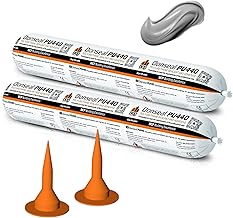
Best for: Buyers sealing vertical joints, basement walls, or projects that combine different listed materials. DCP Donseal PU440 is a non-sag polyurethane sealant supplied as two 20.2-fluid-ounce sausages in gray. Its non-sag description distinguishes it from self-leveling products intended to settle into horizontal joints.
The product information lists concrete, wood, gypsum board, aluminum, steel, and ceramic among its possible base materials. It also identifies horizontal construction joints and vertical applications such as basement walls. The polyurethane cures through a reaction with air humidity and forms an elastic joint material. Its stated service temperature range is -22°F to 175°F.
Why it was selected: It covers a broader set of orientations and materials than a concrete-only self-leveling product, making it a useful comparison for projects involving walls or mixed substrates.
Limitation: This sealant is non-sag rather than self-leveling. Choose another type if the job specifically calls for a product that flows and levels across a horizontal joint. Check the package instructions for application and curing requirements.
Akonaflex Pro Self-Leveling Joint Repair

Best for: Concrete driveways, sidewalks, patios, steps, garage floors, above-ground foundations, and other concrete surfaces. Akonaflex Pro comes in a 10-ounce container and is described as a self-leveling expansion-joint filler, making it a straightforward option to compare for horizontal concrete repairs.
The product listing specifies coverage for cracks up to 1.5 inches deep and 2.5 inches wide. It is described as water-resistant after two hours and as forming a waterproof seam. It can be painted when dry. These details help buyers compare it with products that describe their curing or finishing properties differently.
Why it was selected: Its stated concrete applications and maximum listed crack dimensions provide practical selection information for a homeowner assessing a repair.
Limitation: The stated dimensions are not a substitute for checking whether a particular joint is suitable for this product. Its self-leveling design is more appropriate for horizontal work than vertical joints; follow the product directions for joint depth and preparation.
Gorilla 100% Silicone All-Purpose Sealant

Best for: General indoor or outdoor sealing where a built-in applicator is useful, rather than buyers specifically seeking a product labeled for concrete expansion joints. This 6.75-ounce white silicone sealant has a trigger and dial for controlled application, so it does not require a separate caulk gun.
Gorilla describes the formula as waterproof and resistant to mold and mildew. Its listed water-ready time is 30 minutes for a 3/16-inch bead at 70°F and 50% humidity; under other conditions, the listing says to wait 24 hours. This makes the product’s water-exposure guidance conditional, not a universal 30-minute rule.
Why it was selected: It offers a useful point of comparison for small general-purpose sealing tasks and highlights the difference between silicone products and sealants explicitly described for concrete expansion joints.
Limitation: The provided product information does not specifically identify concrete expansion joints as an intended application. Avoid choosing it as the primary joint sealant unless the product label confirms suitability for the surface and joint conditions.
SIKA All-Purpose Construction Joint Sealant

Best for: Construction joints between the listed materials: brickwork, masonry, wood, concrete, and metal framing. This white, 10.1-fluid-ounce polyurethane sealant is described as offering strong adhesion and elasticity, which can help accommodate joint movement while maintaining a seal.
The product information says it is intended to help prevent moisture infiltration. It also says the sealant can be painted, stained, or sanded, and that it will not stain surfaces. Those finishing options may matter when the sealed joint remains visible or needs to blend with surrounding work.
Why it was selected: It provides a multi-material alternative to products focused mainly on horizontal concrete joints, and its listed material range may suit construction joints where surfaces meet.
Limitation: The supplied description does not give a service temperature range, cure schedule, or joint-size limits. Check the product label and technical directions to confirm that it fits the specific joint dimensions and orientation.
Buying Guide: How To Choose Caulk For Expansion Joints
Is the joint horizontal or vertical?
Orientation is one of the most important selection points. A self-leveling sealant is designed to settle after application, which is useful for horizontal surfaces such as sidewalks, driveways, and garage floors. A non-sag sealant is intended to stay in place rather than run, making it a more relevant category for vertical joints such as walls.
Do not assume that one product works equally well in every orientation. Compare the product’s stated application type with the actual joint, and follow its label for use. For a vertical basement wall, DCP’s non-sag description is more relevant than the self-leveling descriptions of SIKA Sikaflex Self-Leveling or Akonaflex Pro.
What materials meet at the joint?
Some sealants in this group are presented primarily for concrete. Others list multiple materials. DCP names concrete, wood, gypsum board, aluminum, steel, and ceramic. SIKA All-Purpose Construction lists brickwork, masonry, wood, concrete, and metal framing. Match the sealant to every surface the bead must contact, and confirm that the product label includes those surfaces.
For a concrete-only sidewalk joint, a concrete-focused product may be the clearest fit. For a joint where concrete meets another building material, a multi-material product may be worth comparing. The listed material range does not remove the need to check surface preparation instructions.
How large is the joint?
Measure the joint before buying. Joint width and depth affect product suitability and how much sealant is needed. Akonaflex’s listing gives a specific maximum crack size: up to 1.5 inches deep and 2.5 inches wide. The other supplied descriptions do not provide comparable joint-size limits, so check their product directions rather than assuming they cover the same dimensions.
For deep or unusually wide joints, do not rely on a general-purpose bead as a substitute for the manufacturer’s specified joint design. Use the directions for any required backing material, preparation, or application depth.
Will the joint be exposed to water or temperature changes?
For water exposure, compare the stated curing and water-resistance details. SIKA Sikaflex Self-Leveling is described as waterproof and immersible after curing. Akonaflex is described as water-resistant after two hours and as forming a waterproof seam. Gorilla lists a 30-minute water-ready time only under specified bead size, temperature, and humidity conditions; otherwise, its listing says to wait 24 hours.
DCP lists a service temperature range of -22°F to 175°F. Do not transfer that temperature range to the other products. Follow each sealant’s own instructions for weather, curing, and when the joint can be exposed to water or movement.
Do you need a paintable or finished surface?
Finishing requirements can narrow the options. SIKA Sikaflex Self-Leveling is described as paintable, sandable, or stainable after curing. Akonaflex is described as paintable when dry, and SIKA All-Purpose Construction is also listed as paintable, stainable, or sandable. Check the product label for compatible coatings and the appropriate wait time before finishing.
What does the package format mean for the job?
Compare package size and applicator needs against the amount of joint to seal. The products include 10-ounce-class containers and, in DCP’s case, a two-pack of 20.2-fluid-ounce sausages. Gorilla’s listed model includes a built-in trigger and dial and does not require a separate caulk gun. Package format alone does not indicate how much joint a product will cover; that depends on bead dimensions and product directions.
Frequently Asked Questions
What type of caulk is best for concrete expansion joints?
Choose a sealant specifically described for concrete expansion joints, then match its application style to the joint. A self-leveling product is suited to horizontal joints; a non-sag product is the more relevant type for vertical joints.
Can I use self-leveling caulk on a vertical wall?
Self-leveling sealant can flow, so it is generally a poor match for vertical applications. Check the product label and select a sealant described as non-sag if the joint is on a wall.
How long should expansion-joint sealant cure before it gets wet?
The wait varies by product and conditions. The supplied product information gives different timelines, including conditional water-readiness guidance for Gorilla Silicone and curing details for SIKA Sikaflex Self-Leveling. Follow the specific package instructions for the product being used.
Can expansion-joint sealant be painted?
Some can. SIKA Sikaflex Self-Leveling and SIKA All-Purpose Construction are described as paintable, and Akonaflex is described as paintable when dry. Check the label for coating compatibility and timing.
Is silicone caulk suitable for a concrete expansion joint?
It depends on the product. Gorilla’s supplied description presents it as an all-purpose silicone sealant but does not specifically identify concrete expansion joints. Confirm suitability on the product label before using it for that purpose.
Do I need to fill the entire depth of the joint?
Not necessarily. Joint depth and any required backing material depend on the joint design and sealant instructions. Check the manufacturer’s guidance for the joint dimensions and preparation instead of filling to an assumed depth.


