For a clean, modern finish on 90-degree wall joints, peel-and-stick aluminum inside corner trim is a practical choice; Jiekayi’s white and black options are best for matching different interiors, while Elvone’s flexible TPE molding suits buyers who want a softer, multipurpose corner guard. For traditional baseboard details, a poplar corner block offers a paint-grade alternative. Compare the material, color, coverage, and corner shape with your project before choosing.
| Product | Best For | Material |
|---|---|---|
| Jiekayi White, 8-Pack | Longer runs in light-colored rooms | Aluminum |
| Jiekayi Black, 8-Pack | Dark or high-contrast finishes | Aluminum |
| Elvone White Corner Protector | Flexible wall protection | TPE |
| XCPP Gold Molding Trim | Decorative edges and flexible angles | Soft, flexible material |
| Poplar Inside Corner Base Block | Traditional baseboard installations | Poplar |
Jiekayi White Aluminum Inside Corner Trim

This 8-pack of 48-inch white aluminum strips is designed for 90-degree inside corners. Each strip measures 0.8 by 0.8 inches, making it a compact option for finishing joints between walls or panels. Its matte finish can blend with light-colored surfaces or provide a subtle trim line.
Best for: Buyers covering several inside corners or longer runs who want white metal trim. The listed features include peel-and-stick installation, heavy-duty aluminum construction, and suitability for surfaces such as tile, glass, vinyl, and wood.
- Waterproof, rust-resistant surface described as easy to clean.
- Can help cover gaps, cracks, stains, and unfinished edges.
- Adhesive installation avoids drilling, according to the product details.
Limitation: Adhesive trim depends on a clean, smooth application surface. The product information does not specify how it performs on rough, dusty, or textured walls, so check surface suitability before installation.
Jiekayi Black Aluminum Inside Corner Trim

This black version includes eight 48-inch pieces with a 0.8-by-0.8-inch L-shaped profile. It is intended for 90-degree inside corners and can create a defined dark line between adjoining walls, tile edges, or panels.
Best for: Projects using black fixtures, dark surfaces, or a deliberate contrast detail. It offers more coverage than the same product’s four-piece package, so it is a better fit when multiple corners or extended sections need finishing.
- Heavy-duty aluminum construction is described as waterproof and rust resistant.
- Peel-and-stick backing is intended for installation on a clean, smooth surface.
- The L-shaped profile can cover gaps and uneven edges at inside joints.
Limitation: The dark finish is more visually prominent than white trim. Choose it only if that contrast suits the surrounding surfaces; measure corner lengths and plan cuts before removing the adhesive backing.
Elvone Flexible White Corner Protector

Elvone’s white self-adhesive molding is 1.6 inches wide and 20 feet long. Unlike a rigid L-shaped aluminum strip, its TPE material can be folded inward, folded outward, or used flat. The listing describes it as a corner guard, partition, and floor transition strip.
Best for: Buyers seeking a flexible protective strip for wall corners or transitions rather than a rigid metal accent. The wider profile and three-use design make it a more adaptable option for locations where a narrow, fixed-angle trim may not fit the intended purpose.
- TPE construction is described as waterproof and easy to clean.
- The product is intended to help protect walls from everyday bumps and wear.
- Its 20-foot length can suit longer coverage needs.
Limitation: This is a flexible protector, not a rigid aluminum molding. Its wider 1.6-inch profile may also be too prominent for buyers seeking a narrow, low-visibility corner detail.
XCPP Flexible Gold Decorative Molding Trim

This peel-and-stick trim comes in an 18-foot length and 1.6-inch width. Its soft, flexible construction is intended to bend around straight edges and curved corners. The listing identifies uses that include table edges, door frames, baseboards, and inside or outside corners.
Best for: Buyers who want a decorative gold accent and need trim that can bend around more than a simple straight 90-degree joint. The flexible material and adhesive backing may help cover rough edges or gaps on clean, smooth surfaces.
- Described as resistant to cracking, deformation, and everyday wear.
- Can help protect edges from scratches, bumps, and friction.
- Peel-and-stick installation is intended to avoid tools.
Limitation: Its shiny gold appearance is a strong design choice and may not blend into neutral or understated interiors. The product details specify smooth surfaces for adhesion, so it may not suit every wall texture.
Poplar Inside Corner Base Blocks
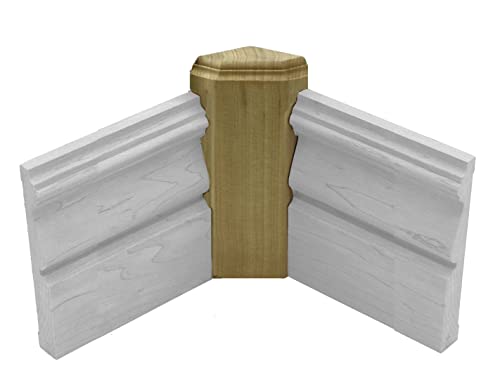
These paint-grade poplar blocks are made for inside corners at the base of a room. Each block measures 1 3/4 inches by 1 3/4 inches by 6 inches. The listing says they fit baseboards up to 5/8 inch thick and 5 1/2 inches tall, and that sets are offered in different quantities.
Best for: Buyers completing a traditional baseboard installation who want a solid wood corner detail rather than adhesive surface trim. A base block can provide a defined meeting point for adjoining baseboards and can be painted to coordinate with the room.
- Made from poplar and identified as paint grade.
- Sized for specified baseboard thicknesses and heights.
- Useful where trim needs a substantial, built-up corner appearance.
Limitation: This is a baseboard block, not a long, flexible strip for wall or ceiling corners. Confirm the baseboard dimensions against the listed fit before selecting it.
Buying Guide: How to Choose Decorative Inside Corner Trim
What kind of corner are you finishing?
Start by identifying the location and shape. A rigid L-shaped aluminum strip is suited to a defined 90-degree inside corner between adjoining surfaces. Flexible TPE or soft molding can be preferable when you need a bendable protector or want to cover edges with a wider strip. A poplar base block is specifically intended for baseboard corners, not long wall joints.
Measure the full length of each corner and add the measurements together before choosing a package. Compare the total coverage with the product’s stated strip length and pack count. For example, the Jiekayi options have 48-inch pieces, while Elvone’s listing specifies 20 feet of flexible molding.
Should you choose aluminum, flexible molding, or wood?
- Aluminum: Choose this for a rigid, clean-edged look. The Jiekayi trim is described as waterproof, rust resistant, and easy to wipe clean.
- Flexible TPE: Consider this for a softer protector that can fold inward, outward, or lie flat. Elvone lists multiple uses and a wider profile.
- Flexible decorative trim: Consider this when appearance and bendability matter, such as the shiny gold XCPP strip. Check whether its color and width suit the room.
- Poplar: Choose this for a paint-grade baseboard corner detail. Verify the listed baseboard size limits before buying.
How important are color and profile?
White trim can blend with light walls, tile, or baseboards, while black aluminum makes the corner line more noticeable. Gold molding provides a decorative accent rather than a subtle finish. Also compare profile width: a narrow 0.8-by-0.8-inch aluminum corner presents a different look from a 1.6-inch-wide flexible strip.
For a low-contrast result, coordinate the trim with the adjacent surfaces. For a defined outline, select a contrasting color. If matching existing finishes is important, compare the listed product color and dimensions with the room before ordering.
What surfaces work with peel-and-stick trim?
Adhesive products are generally listed for clean, smooth surfaces. The Jiekayi features name tile, glass, vinyl, and wood among possible surfaces; the XCPP listing also emphasizes clean, smooth surfaces. Product details do not establish suitability for every textured or damaged wall, so inspect the installation area and follow the product’s directions.
Before applying adhesive trim, measure and mark the route, prepare the surface as directed, and dry-fit the pieces. Cut only after confirming the length and alignment. Press the trim firmly into place according to the manufacturer’s instructions. Avoid using adhesive trim to solve a structural issue or a leak that requires repair.
How much coverage do you need?
Count each corner and measure each run rather than estimating from room size. For multiple areas, compare the total required length with the number and length of pieces in each package. A larger pack can reduce the chance of running short, while a smaller quantity may be more appropriate for one short feature. Keep cuts and any layout adjustments in mind when calculating coverage.
When is a base block a better choice?
Choose a base block when the project is focused on the bottom of a room and you want the baseboards to meet at a distinct wood corner detail. It is not interchangeable with peel-and-stick trim: it has a fixed shape and size and is designed around particular baseboard dimensions. Check whether your boards fall within the listed limits before choosing it.
Frequently Asked Questions
What is decorative inside corner trim used for?
It covers or finishes the joint where two surfaces meet at an inside corner. Depending on the material and profile, it can also protect edges or provide a contrasting design detail.
Is aluminum inside corner trim suitable for bathrooms?
The Jiekayi product information describes its aluminum trim as waterproof and rust resistant and lists bathroom use. Confirm that the installation surface is suitable for its adhesive and follow the product instructions.
Can flexible corner molding fit angles other than 90 degrees?
Flexible products such as Elvone’s TPE molding and the XCPP trim are described as foldable or bendable. Their flexibility may suit different angles, but check the product directions and test the fit before applying the full length.
How do I choose between white and black corner trim?
Choose white when you want the trim to coordinate with light surfaces. Choose black when a darker finish or visible contrast suits the room. Consider the adjacent wall, tile, and panel colors before deciding.
Can peel-and-stick trim hide a gap?
Some listed products are described as helping cover gaps or uneven edges. Measure the gap and check the trim’s dimensions first. Adhesive molding should not be treated as a repair for structural damage or an active water leak.
Will a poplar corner block fit any baseboard?
No. The listed block is specified for baseboards up to 5/8 inch thick and 5 1/2 inches tall. Compare those limits with your actual baseboards before choosing the product.