Looking for an acrylic paint sprayer that delivers smooth, even finishes with minimal cleanup? This guide highlights five top options suited for walls, cabinets, furniture, fences, and outdoor projects. Each pick is described with who it’s best for, why it was selected, and a practical caveat to consider before buying. The goal is to help you compare performance, ease of use, and maintenance at a glance.
| Product | Best For | Notable Benefit |
|---|---|---|
| Amzwolf Paint Sprayer | DIYers and homeowners | High power and large 1300 ml container |
| VONFORN VF803 | Beginner to intermediate projects | Three spray patterns, easy cleanup |
| YUNXITR HVLP | Detailed work and varied surfaces | Five nozzles, three spray patterns |
| HomeRight Super Finish Max | Cabinets and furniture | Three spray tips and adjustable settings |
| PULENDY Sprayer | Versatile DIY projects | Four nozzle sizes, three spray patterns |
Amzwolf 1300W Paint Sprayer For House Painting

Best for: Large-area projects where faster coverage matters. The Amzwolf sprayer features a powerful 1300W motor with a robust copper-aluminum design for stable performance. The upgraded 1300 ml container minimizes refills and supports spray coverage up to about 50 square meters in 15 minutes, making it a strong choice for walls, fences, and outdoor furniture. Five copper nozzles (1.0–3.05 mm) offer flexibility from detail work to wide-area spraying. The flow is adjustable up to 1300 ml per minute, enabling precise control for different materials and surfaces.
Why selected: Its high-output motor and large capacity deliver faster results without frequent pauses for refills. The included brass nozzles enhance durability and consistency across uses, and the broad flow range helps users tailor the finish from fine to bold. Caution: The tool is relatively heavy when fully loaded, which may be tiring for extended handheld use. Consider a scaffold or adjustable stand for tall or high surfaces.
VONFORN VF803 Paint Sprayer

Best for: Projects requiring versatility and easy cleanup. The VONFORN VF803 includes four nozzle sizes and three spray patterns (horizontal, vertical, circular), enabling detailed work on furniture, cabinets, fences, and walls. Its cleaning setup includes a dust-blowing joint for surface prep and a quick-connect system to flush residual paint, promoting faster turnaround between colors or finishes. The included cleaning brush and nozzle needle help maintain consistent spray performance over time.
Why selected: The multiple nozzle options and spray patterns provide broad applicability, from fine trim to broad panel painting. It’s particularly helpful for DIYers who switch between projects or materials. Caution: As with many HVLP sprayers, thicker paints may require thinning and careful flow adjustment to prevent sputtering or clogging.
YUNXITR HVLP Paint Sprayer

Best for: Achieving a flawless, professional look on furniture, cabinets, and outdoor items. The YUNXITR HVLP sprayer emphasizes a fine atomization process and a high-efficiency motor, delivering a smooth, drip-free finish. It comes with five nozzles (1.0–3.0 mm) and three spray patterns to cover a range of project sizes—from detailing to large surfaces. A multi-layer filter helps sustain consistent performance, and tool-free assembly makes it approachable for beginners and seasoned DIYers alike.
Why selected: The blend of lightweight design and multiple nozzle options supports both detail work and large-area spraying without frequent tool changes. Caution: Although designed for easy use, accurate setup and testing on a scrap piece is advised to fine-tune spray behavior before applying to final surfaces.
HomeRight C800971 Super Finish Max
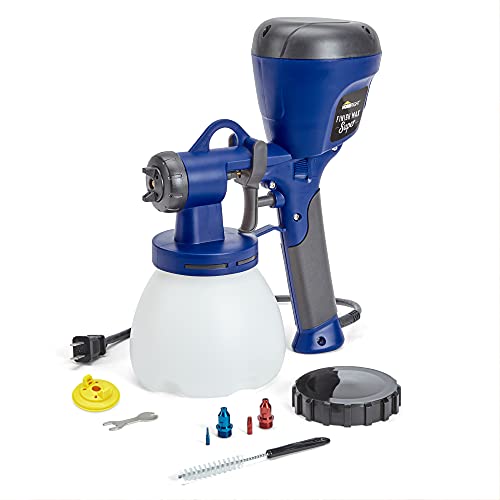
Best for: Cabinets, furniture, and trim where controlled, even coatings are needed. The HomeRight Super Finish Max offers 450 watts of power with adjustable settings for air cap orientation (horizontal, vertical, round) and material flow. It suits a range of paints and finishes, including latex, stains, primers, and sealers. The three included spray tips expand its versatility across different surface areas and project sizes.
Why selected: Its adjustable airflow and material control help achieve consistent finishes on smaller projects or tighter spaces. Caution: The spray pressure may be less ideal for very large outdoor surfaces unless paired with the appropriate nozzle and slower, steady passes.
PULENDY Paint Sprayer

Best for: A broad range of DIY projects with a balance of cost and capability. The PULENDY sprayer includes four nozzle sizes (1.0, 1.5, 2.0, 3.0 mm) and three spray patterns (horizontal, vertical, circular) to handle furniture, fences, walls, doors, and garden furniture. It features a dust blowing joint for surface prep and a quick-clean setup using a faucet connection to flush residue after spraying. Tool-free assembly makes it accessible to beginners who want reliable results.
Why selected: The four-nozzle set and versatile spray patterns provide a flexible toolkit for varied tasks. Caution: As with similar tools, ensure proper thinning of thicker paints and clean thoroughly after use to prevent nozzle clogging over time.
Buying Guide: Key Purchase Considerations
- Project scale and surface type: For large walls and fences, prioritize higher flow, bigger containers, and multiple nozzles. For furniture and cabinetry, choose tools with fine nozzles and precise flow control.
- Spray patterns and nozzle options: A wider range of nozzles (1.0–3.0 mm) and spray patterns (horizontal, vertical, circular) increases versatility and helps tackle both flat surfaces and contours.
- Ease of cleaning: Look for built-in cleaning features, dust blowing joints, quick-connect hoses, and included cleaning tools to reduce downtime between projects.
- Setup and usability: Tool-free assembly and intuitive controls benefit beginners. Lightweight designs help during extended sessions, while a comfortable grip reduces fatigue.
- Maintenance requirements: HVLP systems demand thinning for thicker paints and regular nozzle maintenance to avoid clogging. Check whether the model supports your typical acrylic formulations.
- Portability vs. stability: Consider weight and handle ergonomics if you’ll spray vertical or overhead. A stand or support can improve stability on tall surfaces.
Frequently Asked Questions
- What is the difference between HVLP and standard spray systems for acrylics?
– HVLP systems use high-volume, low-pressure air to minimize overspray and achieve finer atomization, which is ideal for smooth finishes on furniture and cabinets. Standard spray systems may deliver more material more quickly but can increase overspray. - Do I need to thin acrylic paints before spraying?
– In many cases, thinning improves atomization and reduces clogging. Always follow the manufacturer’s guidance for thinning ratios specific to the sprayer and paint type you’re using. - Which spray pattern is best for large flat surfaces?
– Horizontal or vertical patterns are typically most efficient for large, flat surfaces, allowing even coverage with fewer passes. - Can these sprayers handle stains and sealers?
– Many models are designed to spray latex paints, stains, and sealers; verify nozzle size compatibility and thinning requirements for the specific product you plan to use. - Is cleanup faster with a brushless sprayer?
– Yes, many sprayers include cleaning features that speed up post-project cleanup, but thorough nozzle cleaning remains essential to prevent clogs.