Looking for an electric spray paint gun that delivers smooth, even finishes for DIY projects? This guide highlights five top models that suit different needs—from casual furniture refinishing to large outdoor staining. Each option is evaluated for best-use scenarios, giving you clear reasons to pick one over another. The buyer-friendly summaries below help you decide quickly based on project type, power, and capacity.
| Product | Best For | Key Benefit |
|---|---|---|
| HomeRight Super Finish Max HVLP Paint Sprayer | Small to medium projects, furniture and cabinets | Adjustable spray patterns and solid 450W power |
| Tilswall Shark 800HVLP | House interiors, fences, and detailed work | Side-feed design with four nozzles and three spray modes |
| YUNXITR 1200W HVLP Sprayer | Large areas, walls, decks | Top-fill design plus six nozzles for versatility |
| LUDERIGNITE 1000W Sprayer | Furniture and walls, mid-to-large projects | Three spray patterns and high flow control |
| LESONJOY 1000W HVLP Sprayer | Versatile home projects, precision work | Detachable design for easy cleaning and maintenance |
The following sections detail five selected models. Each entry explains who should buy the product, why it was chosen for that use case, a practical limitation, and how it compares to alternatives.
HomeRight Super Finish Max HVLP Paint Sprayer
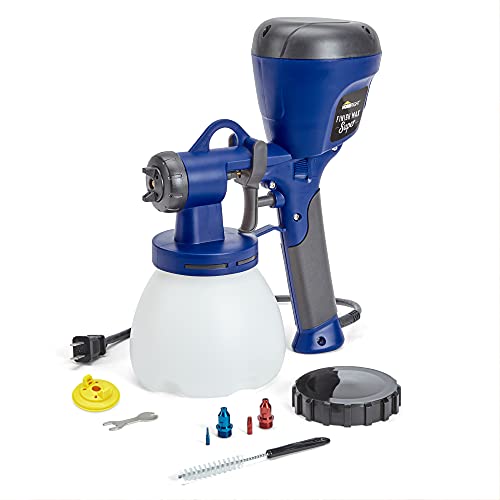
Best For: DIY enthusiasts tackling smaller to medium projects such as furniture refinishing, cabinets, or fences. This model offers adjustable air caps for horizontal, vertical, and round spray patterns, plus a material flow control knob to finely tune output. Its 450-watt power provides reliable coverage without requiring industrial equipment.
Why selected: The combination of spray pattern versatility and straightforward adjustments makes it a practical all-around tool for homeowners who want consistent, smooth finishes on multiple surfaces. It handles chalk paints, latex, enamels, primers, sealers, and varnishes with relative ease.
Limitation: It may require more careful thinning of thicker materials and slower coverage on very large outdoor projects compared to high-capacity models.
Tilswall Shark 800W HVLP Paint Sprayer

Best For: Interior painting and detailed work on furniture and cabinets. The side-feed design helps conserve paint and reduces can-tipping disruptions, while four nozzles and three spray modes enable both large-area coverage and fine detail.
Why selected: Its side-feed capability and multiple nozzles make it efficient for projects where you want to minimize paint waste and adjust for various surface textures. The 800W motor provides robust spraying without requiring electric heavy lifting.
Limitation: Users should thin certain paints to the recommended viscosity and clean promptly to prevent clogging after use.
YUNXITR 1200W HVLP Sprayer

Best For: Large projects such as walls, fences, cabinets, and outdoor surfaces where faster coverage matters. It features a top-fill design with a 1200ml container, six nozzles, and adjustable patterns for precise results.
Why selected: The top-fill approach and larger container reduce frequent refills, making it a strong choice for extended sessions. The motor power and nozzle variety support a wide range of materials and finishes.
Limitation: Higher power and larger capacity can be overkill for small, delicate projects where finer control is preferred.
LUDERIGNITE 1000W Paint Sprayer

Best For: Mid-to-large projects where a balance of power, capacity, and spray control is needed. The 1000W motor, three spray patterns, and a detachable design support flexible cleanup and maintenance.
Why selected: This model provides versatile spray options with predictable flow control, aiding in maintaining consistency across panels, walls, and surfaces of varying sizes.
Limitation: The setup may require more familiarity with nozzle selection to optimize results across different substrates.
LESONJOY 1000W HVLP Spray Gun
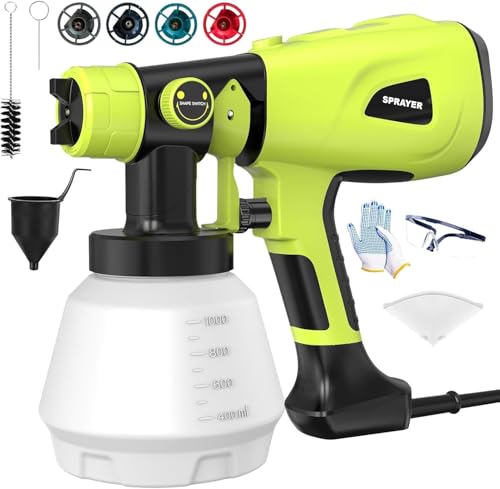
Best For: Multi-surface projects where a cordless option adds maneuverability. The 1000W motor supplies strong atomization, with four nozzle sizes and three spray patterns for precise finishes. Detachable design aids cleaning.
Why selected: The cordless operation offers true freedom for outdoor or hard-to-plug-in spaces, while maintaining consistent performance and adjustable settings for tailored results.
Limitation: Battery runtime is finite, so plan for longer jobs or have charged replacements ready.
Buying Guide
What to consider when choosing an electric spray paint gun:
- Project size and surface type: For large outdoor areas, prioritize higher wattage and larger containers. For furniture and cabinets, portability and nozzle options matter more.
- Power and airflow: Higher wattage generally yields better atomization and faster completion on thick paints; however, it can also increase overspray. Look for adjustable flow and spray patterns.
- Nozzles and spray patterns: More nozzle sizes and adjustable modes (horizontal, vertical, circular) give you control over coverage and finish texture.
- Top-fill vs side-feed: Top-fill designs reduce breaks in painting and are convenient for continuous work; side-feed can minimize can-tipping and simplify color changes.
- Container capacity and refills: Larger containers mean fewer interruptions on big projects but add weight when full. Balance capacity with handling comfort.
- Maintenance and cleaning: Detachable assemblies and clear cleaning guidance help extend tool life. Prompt cleaning reduces clogging and preserves spray quality.
- Compatibility and material handling: Check whether the sprayer works with your preferred paints, stains, or sealers and whether thinning is required for optimal results.
Frequently Asked Questions
- What is an HVLP spray gun?
HVLP stands for high-volume, low-pressure. It uses a high air volume at low pressure to atomize paint, reducing overspray and producing finer finishes.
- Do I need to thin paints for these sprayers?
Many paints benefit from thinning according to manufacturer guidelines to improve flow and reduce clogging. Always test with a viscosity cup or recommended thinning ratio.
- Is cordless better than corded for spray painting?
Cordless models offer true mobility and are ideal for outdoor projects, but they require careful battery management for longer jobs. Corded options provide uninterrupted power for extended sessions.
- How do I choose the right nozzle size?
Smaller nozzles (0.5–1.5 mm) are better for fine detail and thin coatings; larger nozzles (2.0–3.0 mm) are suited for thick coatings and large areas.
- Can I spray polyurethane or latex with these guns?
Many models handle a range of finishes, but always confirm compatibility with the product you plan to spray. Thinning and proper ventilation are important for all coatings.
- What maintenance steps help extend life?
Rinse and clean after each use, remove clogs promptly, and store with minimal material residue in the passages. Regularly check seals and gaskets for wear.