As an Amazon Associate I earn from qualifying purchases. Purchases through Amazon links in this guide may earn a commission at no extra cost to you.
A small drywall repair can need a different blade format from a longer joint-finishing pass. This research comparison pairs a six-inch Hyde joint knife with an eight-inch Marshalltown taping knife so you can choose for the documented repair stage instead of buying the widest blade available.
The recommendations are conditional and based on the inspected product listings, not hands-on testing. Neither tool determines whether a damaged wall is suitable to repair or supplies the complete material system that the repair requires.
Decide which operation needs a tool
Start with the instructions for the repair product and joint system you intend to use. Identify the operation you need to perform before choosing a blade from a photograph.
A shallow local repair, reinforced joint treatment, and replacement of missing board are different projects. A joint knife may be one useful tool within a supported method while leaving other materials and support requirements unresolved.
Do not interpret the blade width as a repair-size limit or a promise that one pass will finish a particular hole. The actual preparation, reinforcement, layers, and finishing requirements belong to the chosen repair system.
Write down what you already own in suitable condition. A new blade is most useful when it fills an identified format need rather than duplicating a serviceable tool because its packaging looks more professional.
Hyde 02850 for a six-inch flexible joint-knife format
 Check Price on AmazonHyde 02850, 6-inch flexible high-carbon joint knife, one tool
The inspected Hyde listing identifies model 02850, also shown as manufacturer part 2850, as a six-inch flexible high-carbon-steel joint knife. Its selected product information gives one tool, rather than the five-tool package shown in a separate search result.
Consider it first when your documented repair calls for a smaller joint-knife format and you want to compare that six-inch working edge with what you already have. The recommendation concerns its stated construction and size, not a claim that it is the only suitable blade for small repairs.
Imagine applying material in an accessible localized area where a wider blade would extend well beyond the working space. Check that the chosen repair instructions and your access support the smaller format instead of assuming the word small automatically makes it correct.
High-carbon steel is a material identification, not a maintenance exemption. Follow the tool's care directions and inspect its condition before it contacts the work or the compound container.
A clean, undamaged working edge matters to how predictable the tool will be, but this article does not prescribe a sharpening or modification method. If the blade is damaged, address that through suitable care or replacement rather than improvising a new edge.
Keep the exact model in your purchase note. Similar Hyde products can use different blade materials, handle constructions, or package counts even when the nominal width remains six inches.
Marshalltown 3508SD for an eight-inch taping-knife format
 Check Price on AmazonMarshalltown 3508SD, 8-inch stainless taping knife, one tool
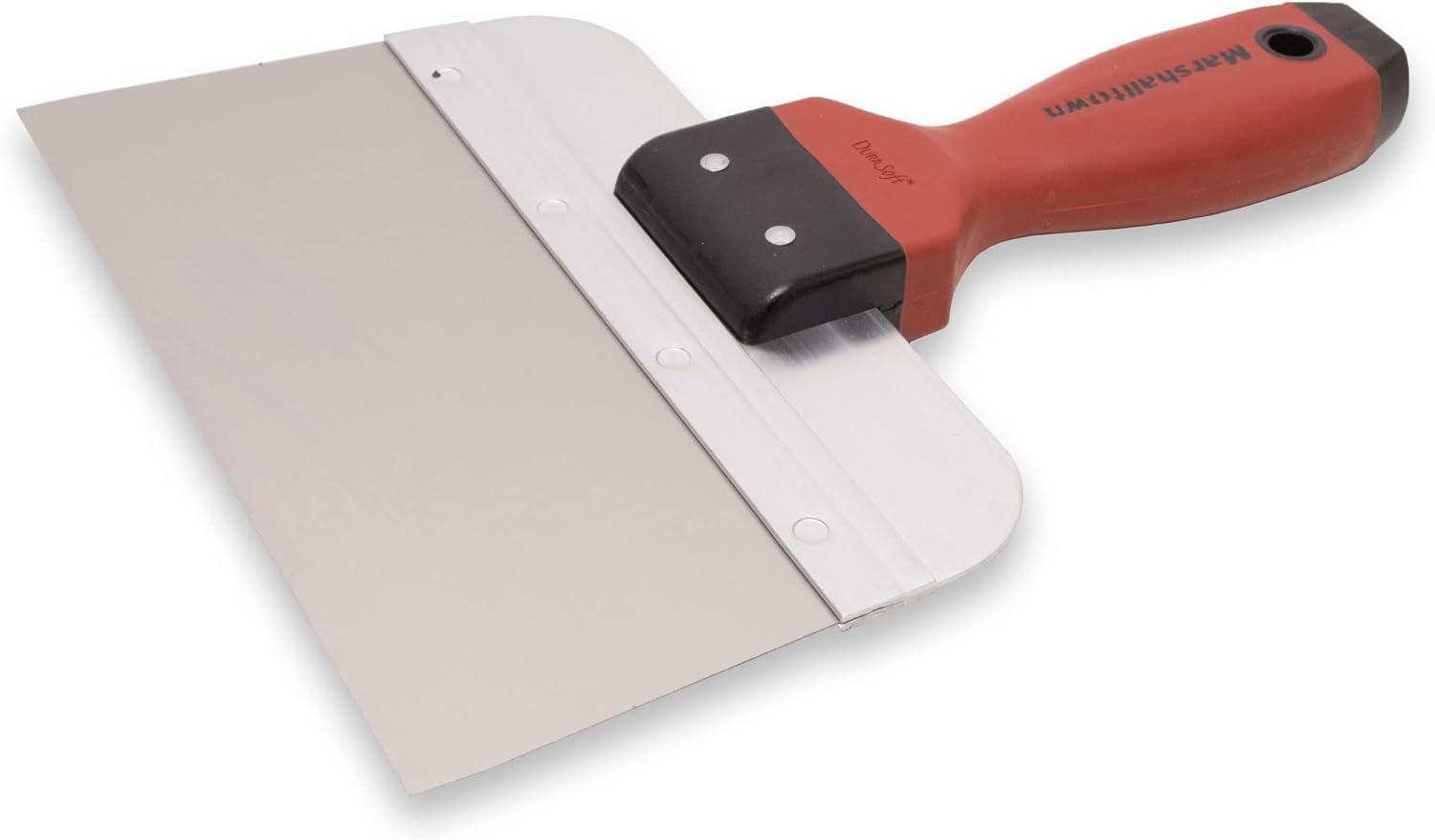
The inspected Marshalltown listing identifies model 3508SD as an eight-inch taping knife with a stainless-steel blade, aluminum backing plate, and DuraSoft handle. It is the one-count stainless model, distinct from similarly named blue-steel and other handle variations in the search results.
Consider this format when the supported finishing operation calls for a broader blade than the smaller joint knife. Compare its complete shape and the available space before treating extra width as an automatic upgrade.
A longer accessible finishing area presents a different handling choice from a tight patch beside trim. You may reasonably prefer a broader format for the former while retaining a smaller tool for material handling or a separate operation specified by the system.
The manufacturer's listing describes the blade's flexibility for feathering, but that is not a guarantee that your first attempt will leave an invisible transition. Surface preparation, material behavior, and the actual finishing method still determine the work you need to do.
Stainless steel also does not mean the tool can be stored dirty or handled carelessly. Follow the care information and keep the working edge protected appropriately between uses.
Check the final model number before ordering. A title that says eight-inch Marshalltown does not by itself distinguish this 3508SD listing from every other eight-inch knife sold by the brand.
| Product | Selected format | Package | Consider when |
|---|---|---|---|
| Hyde 02850 | 6-inch; high-carbon joint knife | 1 tool | Smaller documented joint-knife operation |
| Marshalltown 3508SD | 8-inch; stainless taping knife | 1 tool | Broader documented finishing operation |
Read width and construction as separate decisions
The six-inch versus eight-inch distinction concerns working-edge format. The high-carbon-steel versus stainless-steel distinction concerns material, and neither difference alone provides a complete ranking of the tools.
A comfortable handle and suitable access can matter to your choice without becoming an unsupported durability or fatigue claim. Product descriptions can identify the handle design, while your actual handling preference remains something you need to evaluate honestly.
Do not confuse an eight-inch blade length specification with the complete tool's overall dimensions. Read the actual measurement labels when comparing whether a tool will fit a tray, storage arrangement, or working space.
If your compound pan or other equipment imposes a compatibility requirement, check it before purchase. You want the complete setup to work together rather than a new knife that cannot be used sensibly with the materials you planned to handle.

Keep the wall assessment ahead of the blade choice
A blade cannot determine why a crack returned, whether moisture remains in a wall, or whether loose material should be retained. Resolve those questions before turning a decorative repair into repeated applications of compound.
Likewise, unknown old coatings need the relevant assessment before any disturbance. Choosing a hand tool does not make every proposed scraping, sanding, or removal step appropriate automatically.
If the repair involves reinforcement, use the documented tape-and-compound combination. A useful blade cannot compensate for combining materials outside their intended joint system.
Treat the tool comparison as one part of the project plan. You may also need suitable protection, access, mixing or material-handling equipment, and the finish system that follows the repair.
Inspect what arrives before the work begins
Compare the delivered model and package with the listing you selected. Check the blade format, material identification, and the tool's visible condition while you can still resolve a purchase problem without interrupting an active repair.
Keep packaging and instructions available through that check. If the item differs from what you ordered, do not quietly adapt the repair plan to an unexplained substitute.
You should also confirm what is not included. One knife is not a kit containing compound, tape, a pan, abrasives, and a supported method for the wall in front of you.
Price comparisons should use the same package basis. A low per-tool figure for a contractor multi-pack may be less useful than a one-count purchase when you have one defined home repair and a limited storage plan.
Make the smallest sufficient purchase
Choose the Hyde when the six-inch flexible high-carbon joint-knife format fits your identified operation. Choose the Marshalltown when you need the documented eight-inch stainless taping-knife format and can use it appropriately in the available space.
You may need both formats for different supported stages, or you may already own one suitable tool. The useful decision is the smallest purchase that completes the actual repair setup, with no invented promise that a particular logo makes the joint automatically disappear.
Keep a note after the first project
Record which format you used for each supported operation and whether the access suited it. That practical record can inform a later purchase without becoming a claim that the tool has been tested against every competing knife.
If a result needs improvement, describe the wall transition and material stage before blaming or replacing the blade. You will then ask a more useful question about preparation, method, or format instead of treating every visible ridge as proof that the next wider knife must solve it.
Compare a tight return with a clear span
Imagine that the repair sits beside a door casing with limited room for the ends of a blade. Measure and describe that access before choosing a broader format, while leaving the actual repair method governed by its instructions.
A different repair on an unobstructed wall may give you room to use a larger finishing format where the system calls for it. Keep those two tasks separate in your purchase decision instead of treating one width as a universal answer for every surface that needs compound.
Published technical information supports the specific material statements. Room examples and illustrations are original; they are not product tests or a diagnosis of your wall.