Finding the right hand belt sander depends on power, speed control, dust management, and versatility. This guide highlights five top picks that balance performance with user comfort for American hobbyists and professionals. Each option brings different strengths, from cordless convenience to bench-compatible versatility. Use the buying guide below to compare features like belt speed, size, and dust collection to choose the best sander for your projects.
| Product | Brand | Key Benefit |
|---|---|---|
| WEN 6307 Variable Speed Detailing File Sander | WEN | Variable speed 1080-1800 fpm; 50° tilting belt |
| DEWALT 20V MAX Belt Sander (DCW220B) | DEWALT | Cordless brushless power; high dust collection efficiency |
| SKIL 7510-01 Belt Sander | Skil | Pressure control and micro-filtration for fine dust |
| Jellas BS750 3 × 21-Inch Sander | Jellas | 7A motor with variable speed; 2-in-1 bench and belt |
| WEN 6502T Benchtop Belt & Disc Sander | WEN | 4 x 36 in belt and 6 in disc with tilt and stability |
Note: Product links open in a new tab. The selections emphasize belt sizing, speed control, and dust management to cover typical woodworking tasks from shaping trim to finishing panels.
WEN 6307 Variable Speed Detailing File Sander
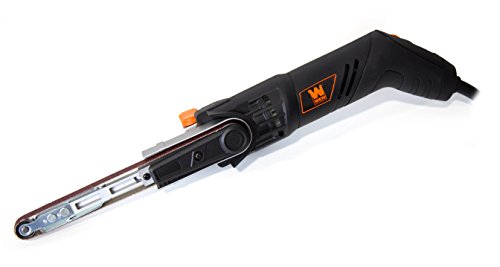
The WEN 6307 delivers precise control for detail work with a variable speed range that helps users tailor belt motion from 1080 to 1800 feet per minute. Its auto-tracking belt system eliminates the need for tensioning or adjustments, promoting smoother operation. A 50-degree range of motion lets the belt tilt to fit corners and curves, enabling more natural handling on curved edges and detailed surfaces. This model excels for fine finishing, small trim work, and tasks requiring careful material removal without burning through the workpiece.
WEN 6321 7-Amp Belt Sander With Dust Bag
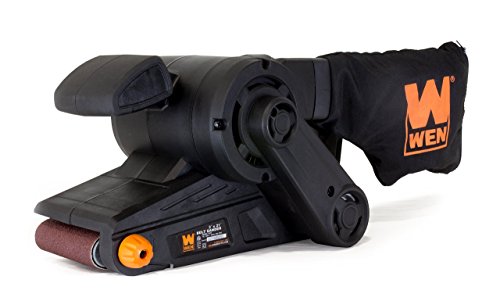
The WEN 6321 combines a 7-amp motor with a compact, lightweight body for fatigue reduction during longer sessions. It runs belts at over 13 feet per second, delivering aggressive material removal when needed, while the detachable dust bag helps keep workspaces cleaner. The sander’s balance and reduced weight make it suitable for edges, medium-sized panels, and flush sanding near joints. While not cordless, its performance is well-suited for shop setups requiring reliable corded operation and consistent results.
WEN 7.5-Amp Belt Sander (HB321V)

The HB321V offers a 7.5-amp variable-speed motor and a belt speed range from 620 to 1200 feet per minute. A lock-on power switch supports continuous sanding for extended tasks, and a quick-release belt tension lever simplifies grit changes. This model is well-suited for moderate to heavy-duty work where consistent belt tension and easy belt changes enhance productivity, such as furniture refinishing or door edging projects.
DEWALT 20V MAX Belt Sander (Cordless, DCW220B)

DEWALT’s 20V MAX belt sander is designed for cordless convenience without sacrificing performance. The brushless motor delivers efficient power and extended runtime for finishing large sanding jobs with less downtime. Efficient dust collection minimizes airborne dust, especially when paired with compatible DEWALT dust collection systems. The 16.7% larger sanding surface compared with some cordless competitors helps speed up bulk tasks on panels and wide surfaces, while still offering control for detail work when needed. This model is ideal for users prioritizing mobility and minimal cord clutter.
Jellas 3 × 21-Inch Belt Sander (BS750-SD)
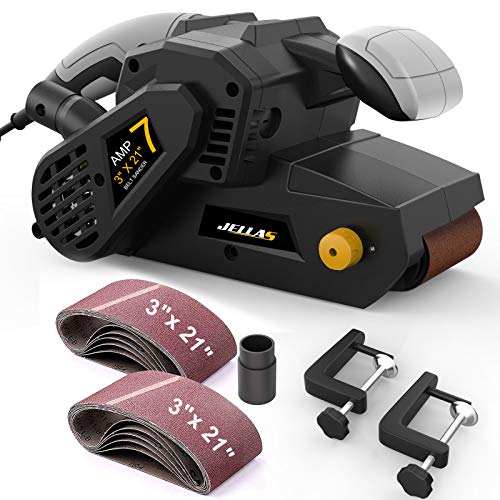
The Jellas BS750-SD combines a 7-amp motor with a 3″ × 21″ belt and a 2-in-1 functionality that enables bench sanding by turning the unit into a table-mounted sander. A lock-on button reduces hand fatigue during prolonged use, and the kit includes a complete set of sanding belts (40–180 grit) to cover initial shaping through fine finishing. The included vacuum adapter and dust bag help manage debris for cleaner workspaces and better visibility of the work surface.
WEN Benchtop Belt and Disc Sander (6502T)
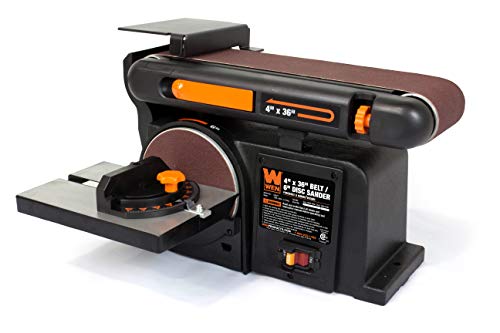
This two-in-one machine combines a 4-by-36 inch belt with a 6-by-6 inch disc, offering versatility for both stock removal and finishing. The belt tilts 0 to 90 degrees for angled feeds, and a sturdy cast iron base reduces vibration to improve control and accuracy on repetitive tasks. This unit suits shop owners who want a single machine capable of handling multiple sanding tasks with stable support.
Buying Guide: Key Purchase Considerations
- Power source: Corded models deliver consistent torque for stubborn material removal, while cordless belts maximize mobility for jobs away from outlets.
- Belt size and speed: Smaller belts (2-3 inches wide) excel at detail work; larger belts cover surface areas faster. Variable speed helps adapt to woods that burn easily or require finer finishes.
- Dust management: Integrated bags, ports, or compatible vacuum systems improve visibility and reduce cleanup. Consider a model with easy-to-clean dust collection.
- Weight and balance: Lighter tools reduce user fatigue during long sessions; a balanced design improves control on edges and corners.
- Versatility: Some units convert to bench sanders, while others combine belt and disc functions. Decide if you need one machine to cover multiple tasks or specialized tools for specific jobs.
- Durability and warranty: Cast iron bases and brushless motors tend to offer longer service life. Review warranty terms for reliability support.
- Accessory availability: Extra belts and accessories affect long-term cost and convenience. Check belt type compatibility before purchase.
Across these selections, users can balance portability, power, dust control, and versatility for a range of woodworking tasks—from trimming and shaping to finishing and refinishing. Review project needs, workspace layout, and comfort priorities to select the best hand belt sander for your shop.


