Answering the question “What salt water resistant paint should I choose?” this guide highlights top options that resist saltwater exposure, UV rays, and humidity. Each product is described for specific buyers—boat owners, dock builders, and DIY enthusiasts—so you can pick based on surface type and application. The following table summarizes the five best choices and who they’re best for, followed by in-depth product sections and a practical buying guide.
| Product | Best For | Surface Type | Notes |
|---|---|---|---|
| Fiberglass, wood, metal above waterline | Above waterline surfaces | ||
| Boats, trailers, dock equipment | Fiberglass, steel, aluminum | Low VOC; saltwater resistant; quick-dry | |
| Hull coatings, docks, marine equipment | Fiberglass, wood, metal | All-in-one enamel; high-gloss; durable | |
| Aluminum boats | Aluminum surfaces | Specialized aluminum formula | |
| Interior faux concrete walls | Interior walls | Textured faux effect; interior use only |
Rust-Oleum Marine Topside Semi-Gloss White Boat Paint

Best for above-waterline surfaces on fiberglass, wood, or metal. The oil-based formula offers flexibility and easy leveling, making it suitable for surfaces exposed to sun and spray. Dries to the touch within 1–2 hours and covers up to 100 sq ft. This option is ideal for owners who want quicker handling and a durable marine finish.
- Best for: Boats or trailers with above-waterline exposure.
- Why selected: Strong resistance to UV and weather, plus good leveling for a smooth topcoat.
- Caution: Oil-based products require proper ventilation and cleanup solvents.
White Marine-Grade Water-Based Rust Preventative Paint

Best for saltwater environments where low odor and low VOC matter. This water-based coating creates a flexible, waterproof barrier against corrosion, suited for hulls, trailers, anchors, and dock hardware. It bonds well to fiberglass, steel, and aluminum, even on damp surfaces. Dries tack-free in about 45 minutes with recoat in 2 hours.
- Best for: Saltwater-sensitive projects where ventilation and low odor are priorities.
- Why selected: Low VOC and durable protection for marine components.
- Caution: Not ideal for continuous submersion on boat bottoms lasting longer than 72 hours.
SENVEN Boat Paint, 35 Oz, Gloss White

Best for hull coatings, topsides, and marine equipment requiring high-gloss durability. This all-in-one enamel adheres well to fiberglass, wood, metal, and previously painted surfaces. It’s a robust option for canoe, pontoon, and boat trailer applications, but not recommended for continuous submersion for more than 72 hours.
- Best for: High-gloss marine finishes on multiple substrates.
- Why selected: Superior abrasion resistance and versatile surface compatibility.
- Caution: Not suitable for long-term constant immersion at the hull bottom.
Aluma Hawk Aluminum Boat Paint by Sea Hawk

Best for aluminum boats requiring a dedicated aluminum surface formula. The product is specifically designed for aluminum hulls, delivering good adhesion and finish on bare or previously painted aluminum. Best for owners seeking a corrosion-resistant finish without complex prep.
- Best for: Aluminum boat surfaces needing a tailored coating.
- Why selected: Specialized formulation for aluminum to enhance adhesion and durability.
- Caution: Verify compatibility with any non-aluminum substrates before use.
Rust-Oleum Concrete Interior Wall Paint, Sidewalk Gray
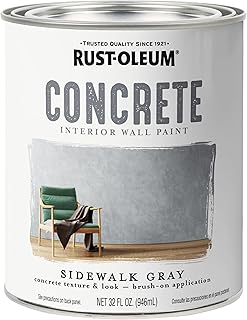
Best for creating a faux concrete look on interior walls, offering a semi-transparent matte finish. While not marine-specific, this option is useful for projects inside docks or workshops where a concrete texture is desired. It’s included here for readers exploring decorative coatings alongside practical marine paints.
- Best for: Interior faux concrete finishes on drywall, wood, and hardboard.
- Why selected: Provides a realistic textured effect with a semi-transparent layer.
- Caution: For interior use only and not a marine coating.
Buying Guide: Salt Water Resistant Paintes and Surface Match
Key questions to guide selection include surface type, exposure level, and application method. Consider oil-based versus water-based options, VOC limits, and cure times. For hulls and docks, choose products with proven saltwater resistance and UV stability. For aluminum boats, prioritize specialty formulations designed for aluminum substrates. Always verify surface preparation requirements, recoat windows, and environmental considerations before purchase.
Practical Purchase Considerations
- Surface compatibility: Fiberglass, wood, metal, or aluminum each has preferred coatings.
- Exposure: Above-waterline vs. submerged or damp areas require different formulations.
- Drying and recoat windows: Plan painting sessions around tack-free times and recoat intervals.
- VOC and odor: Water-based options reduce solvent emissions and odors.
- Durability and finish: Gloss, semi-gloss, and textured finishes suit different aesthetics and wear patterns.
FAQ: Salt Water Resistant Paint
- What is salt water resistant paint best for?
Best for marine surfaces exposed to seawater, UV, and humidity, including hulls, trailers, and dock equipment.
- Should I use oil-based or water-based marine paint?
Oil-based paints offer flexibility and leveling for some surfaces; water-based paints reduce odor and solvents and are eco-friendlier. Choose based on surface and ventilation.
- Can I apply marine paint on damp surfaces?
Some water-based formulations bond to damp surfaces, but best practice is to work on clean, dry surfaces when possible.
- Is there a risk of paint not sticking to aluminum?
Yes. Use products labeled for aluminum or a suitable primer to ensure adhesion on aluminum hulls.
- How long does saltwater paint typically last?
Durability depends on surface, exposure, and maintenance; check product-specific cure and recoat guidance for best results.