When choosing the most powerful orbital sander, look for a robust motor, high orbital speed, effective dust collection, and low vibration for comfort during long sessions. This guide highlights five top options suited for pros and DIYers tackling heavy-duty leveling, smoothing, or finish work. Best for professional contractors needing consistent performance, and best for hobbyists who value dust management and control. The following product table summarizes the choices and their standout strengths.
| Product | Best For | Key Strength |
|---|---|---|
| DEWALT DWE6423 | Professionals seeking reliability | High-load motor with low-vibration design |
| SKIL SR211601 | Budget-conscious users with versatility | Cyclonic dust box and variable speed |
| DEWALT DCW210B | Cordless flexibility | Brushless motor, variable speed, dust collection |
| DEKOPRO 5″ Orbital Sander | Value seekers needing many accessories | Six speeds, comprehensive dust system |
| Festool ETS EC150/3 EQ-Plus | Premium finish work | Constant speed under load and long life |
DEWALT Random Orbit Sander, 5-Inch, DWE6423
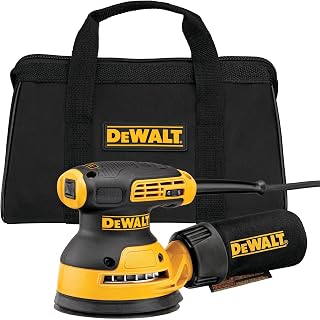
Best for professionals who require higher sustained power and comfort in long sessions. The 3-amp motor spins the pad at 8,000–12,000 OPM, providing strong stock removal when paired with appropriate grit. A separate counterweight reduces vibration, improving control during extended use, and a dust-sealed switch protects the tool in dusty environments. This model is ideal for finish work on furniture or trim where a steady rhythm and reduced fatigue matter. Caution: vibration is still present, so extended sessions benefit from anti-fatigue measures.
SKIL 5” Random Orbital Sander SR211601

Better for builders on a budget who still want smooth performance. It features a 2.8-amp motor and 13,000 orbits per minute for aggressive yet controlled stock removal. The X-flow dust container uses cyclone force to keep dust in a transparent, easy-to-empty container, aiding cleanup between coats. Variable speed control provides the right balance of power and finesse for different materials. Caution: lower power compared to top professional tools may require more passes on tougher woods.
DEWALT 20V MAX Orbital Sander, DCW210B

Best for cordless convenience with strong performance. The brushless motor improves runtime efficiency, and the variable-speed control ranges from 8,000 to 12,000 OPM to match the sanding task. A low-profile height enables close work to the surface for precise sanding, making it a strong choice for finish work on furniture or corner detailing where flexibility matters. Caution: cordless models depend on battery life; plan recharges during longer jobs.
DEKOPRO 5″ Orbital Sander with Dust Box

Choose this if you want a feature-rich value option. The DEKOPRO sander delivers up to 14,000 RPM across six speeds and includes a dust collection system with a detachable bag, plus 16 sanding discs covering diverse needs from rough to fine work. It suits woodworkers who require versatility and accessories at a lower price point. Caution: construction quality varies with cheaper tools—inspect parts before use.
Festool ETS EC150/3 EQ-Plus

Best for premium finish work with industry-leading control. This sander uses stepless speed pre-selection and maintains constant speed under load, ensuring a consistent finish on high-end projects. The 3 mm sanding stroke yields superior surface quality, while EC technology and a sanding pad brake with a carbide tip extend tool life. Best for refinishing furniture or cabinetry where precise, flawless results are essential. Caution: higher price point may be a consideration for casual hobbyists.
Buying Guide: How To Choose The Right Orbital Sander
- Power and speed: Look for a motor that supports 8,000–12,000 OPM or higher to handle tough surfaces without bogging down.
- Dust collection: A cyclone or integrated dust box reduces cleanup and improves visibility during sanding.
- Vibration control: Tools with counterweights or isolation designs reduce fatigue on long jobs.
- Power source: Corded models provide constant power; cordless models offer portability with trade-offs in runtime.
- Pad size and stroke: A 5-inch pad is common for general use; 3 mm strokes (or close) yield finer finishes on wood.
- Durability: Look for weather resistance on switches and long-life motors for frequent use.
Frequently Asked Questions
- What is the most powerful orbital sander for heavy sanding? Answer: Models with 12,000 OPM or higher and reinforced dust management tend to perform best on heavy tasks.
- Is a cordless orbital sander as powerful as a corded one? Answer: Corded sanders typically maintain sustained power; cordless are convenient but depend on battery life.
- Should I prioritize vibration reduction? Answer: Yes, lower vibration improves control and reduces fatigue for longer sessions.
- What size sanding disc should I choose? Answer: 5-inch discs are standard for general projects; larger discs cover more area but may be harder to control on small details.
- Do I need variable speed on an orbital sander? Answer: Variable speed helps match pressure and material type, improving finish quality.
- Which sander is best for fine furniture finishing? Answer: Sanders with stable speed under load and fine stroke control, such as EC technology models, are preferable for premium finishes.