If you’re renovating or updating a heat-exposed fireplace, choosing the right high-heat paint color is essential for both aesthetics and durability. This guide highlights five top options that perform well under intense heat, with clear guidance on who each product is best for. Use these picks to refresh firebox interiors, mantle accents, and surrounding metal surfaces while avoiding common coating failures. The selections favor durable, heat-resistant finishes that resist discoloration and cracking in fireplace environments.
| Product | Best For | Key Benefit |
|---|---|---|
| Rutland 81V Premium 1400°F | Stove, Firebox, Grates | High heat tolerance; flat black finish |
| Rutland 1200°F Brush-On Flat Stove Paint | Old stove restoration | Excellent adhesion to metals |
| Rust-Oleum High Heat Flat Bar-B-Que | Grills, Smokes, Stoves | Up to 1200°F protection, rust resistant |
| Threlaco 2732°F High Temp Sealant | Fireplace joints and seals | Rigid, fire-retardant up to 2700°F |
| Rust-Oleum Automotive High Heat Flat Black | Automotive-style fireplace components | Up to 2000°F, color retention |
Rutland 81V Premium 1400°F Hi-Temp Paint

This high-heat brush-on paint is designed for surfaces exposed to extreme temperatures inside stoves and fireplaces. Best for metal components that see intense heat, such as fireboxes and grates. The flat black finish provides a clean, durable look that resists heat-related discoloration.
Best for: Homeowners updating metal fireplace parts that endure continuous heat. This product is chosen for its high temperature rating and simple application in brush-on form. Limitations include the potential for surface prep requirements to maximize adhesion.
Rutland 1200°F Flat Stove Paint

This brush-on flat stove paint is formulated for high heat and metal surfaces, including steel, cast iron, and aluminum. It’s well-suited for restoring old stoves, grills, and chimney-related components that must withstand temperatures up to 1200°F. The flat black finish helps achieve a seamless look with many hearth installations.
Best for: Projects that require robust adhesion on multiple metals. Choose this for stove and grill refurbishments where a durable, heat-resistant coating is essential. Caution: surface prep and multiple coats may improve longevity on rugged or heavily used parts.
Rust-Oleum High Heat Flat Bar-B-Que Black Enamel Spray

This spray paint is designed for exterior metal surfaces that face high heat, such as grills and stoves. It forms a durable enamel coating up to 1000°F and offers rust and corrosion resistance. It dries to the touch relatively quickly and covers a reasonable area per can, making it a convenient option for larger projects.
Best for: Quick, spray-on updates to metal fireplace components or grills. Better for broad exterior surfaces; avoid using on delicate parts that require brush-on precision. Limitation: may require multiple light coats for uniform color and finish on uneven forms.
4 Pack 2732°F High Temp Fireplace Sealant
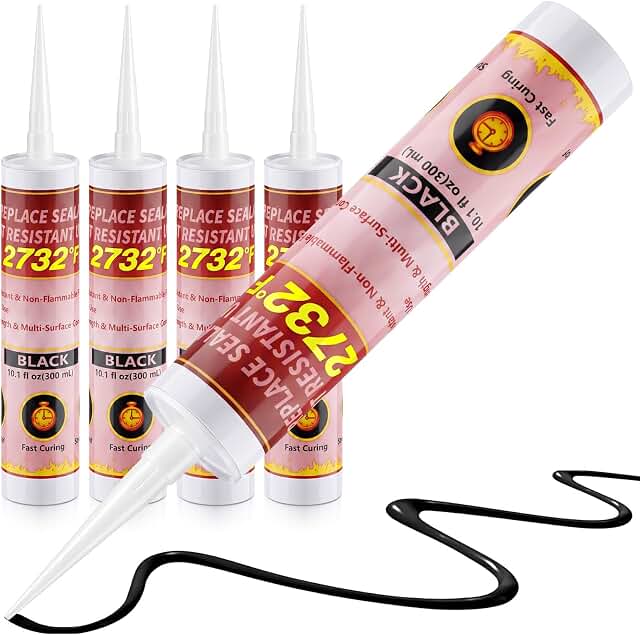
This inorganic, high-temperature sealant is designed for joints and gaps exposed to extreme heat. It cures hard and rigid for stable,othermal bonding. It provides a fire-retardant seal suitable for fireplaces, stoves, ovens, chimneys, and furnaces, making it a strong choice for maintaining heat containment.
Best for: Sealing heat-prone joints where rigidity and fire resistance are critical. Choose this when you need durable, non-flexible bonding. Caution: not a silicone adhesive, so it remains hard after curing and is not intended for flexible joints.
Rust-Oleum Automotive High Heat Flat Black

This automotive-grade spray targets components that experience intermittent high heat and exposure to the elements. It resists heat up to 2000°F and provides color retention with a rust-protection focus. Its adjustable spray pattern helps cover complex shapes found in fireplace accessories or nearby metalwork.
Best for: Fireplace components that double as decor or exterior accents with higher heat exposure. Choose this if you need an aggressive heat barrier and long color retention. Caution: automotive formulations may require careful surface prep for best adhesion on non-automotive substrates.
Buying Guide
What should you consider before buying high-heat fireplace paint?
- Temperature rating: Match the coating’s max temperature to the expected heat exposure of the surface. Most fireplace parts encounter well over 1000°F, so look for a rating appropriate to the job (1200–1400°F commonly adequate).
- Surface compatibility: Metal, brick, and stone may require different products. Some paints brush on metals directly, while others are best suited for concrete or brick surfaces.
- Finish type: Flat finishes can hide imperfections; gloss finishes may reflect heat differently. Consider maintenance and cleaning needs in your space.
- Application method: Brush-on, spray, or sealant formats each have benefits. Sprays cover large areas quickly; brushes give precision on edges and corners; sealants are ideal for joints and gaps.
- Durability in a hearth area: Look for products with good adhesion, rust resistance, and heat stability to avoid peeling or discoloration over time.
- Safety and emissions: Verify that the product is lead-free and appropriate for indoor use where fumes may be present during curing.
Frequently Asked Questions
- What temperature rating do I need for a typical wood-burning fireplace? Answer: A rating of 1200°F or higher is usually suitable for most fireplace components that experience frequent high heat.
- Can I use automotive high-heat paint inside my fireplace? Answer: Yes for certain components, but ensure the product is rated for the specific indoor-use context and follow ventilation guidelines during curing.
- Is spray paint safe on brick or masonry? Answer: Some high-heat sprays are designed for metal; brick and masonry may require brick- or ceramic-safe coatings or sealants designed for high heat.
- Do I need a primer before applying high-heat paint? Answer: In many cases, proper surface preparation is enough, but some products benefit from a compatible primer for adhesion and color uniformity.
- How long does curing take before using the fireplace? Answer: Curing times vary by product; follow the manufacturer’s guidance for safe use after application.
- Can these coatings be layered with sealants? Answer: Some products are compatible with sealants for joints; always verify product compatibility before applying multiple layers.