If you’re battling mold and mildew, you need products that both eliminate existing growth and keep future spores at bay. This guide highlights five top options that are well-suited for homeowners, renters, and families seeking to improve indoor air quality and reduce musty odors. Each product is chosen for clear mold control benefits, ease of use, and practical limitations to help you decide what to buy.
Summary of selected products
Notes
| Product | Best For | Key Benefit | |
|---|---|---|---|
| Concrobium Mold Control, 32 oz Spray | Rooms with visible mold growth | Eliminates mold at the source and creates a barrier against future growth | Bleach-free; odorless; EPA-registered |
| DampRid Fragrance Free Hanging Moisture Absorber, 16 oz (3 Pack) | Closets and small spaces | Removes excess moisture to inhibit mold and mildew odors | Long-lasting; 14% more absorbing power |
| Zinsser Mold Killing Primer, Quart | Preventing mold on surfaces before painting | Kills and blocks mold and odors on interior surfaces | EPA registered; works under coatings |
| ACTIVE Mold Stain Remover Gel Cleaner | Bathroom grout, shower caulk, and front-load washer seals | Fast whitening and stain removal for recurring mold areas | Gel formula minimizes running; deep-cleaning action |
| DampRid Hi-Capacity Fragrance Free Absorber Bucket, 2 lb 15.5 oz | Large damp spaces | Effective moisture control with unscented formula | Includes detection strip; bucket design |
Concrobium Mold Control, 32 oz Spray

Best for: spaces with existing mold that need elimination and prevention. Why selected: It targets mold at the source and leaves an invisible barrier to prevent regrowth. The formula is EPA-registered and bleach-free, helping maintain indoor air quality. Limitations: It may require repeated application in areas with continuous moisture exposure to sustain prevention.
DampRid Fragrance Free Hanging Moisture Absorber, 16 oz (3 Pack)
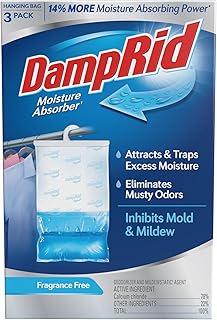
Best for: closets and small, damp spaces where musty odors are a concern. Why selected: Attracts and traps excess moisture to reduce humidity and inhibit mold growth, with 14% more absorbing power in a 3-pack. The fragrance-free formula is suitable for sensitive environments. Limitation: Effectiveness depends on humidity levels; replacement may be needed every 1–2 months in high humidity areas.
Zinsser Mold Killing Primer, Quart

Best for: new paint projects where mold prevention is desired on interior surfaces. Why selected: The antimicrobial primer kills existing mold and blocks new growth, offering an added layer of protection when used with compatible coatings. It is EPA registered and designed to minimize odor-causing bacteria. Limitation: Primers require proper surface preparation and compatible topcoats to maximize effectiveness.
ACTIVE Mold Stain Remover Gel Cleaner

Best for: tough stains in front-loading washers, grout, and caulk. Why selected: The gel cleaner provides a fast-acting whitening effect for mold and mildew stains across multiple surfaces. Limitation: Intended for heavy-duty stain removal; for delicate surfaces test a small area first and follow directions carefully.
DampRid Hi-Capacity Fragrance Free Absorber Bucket
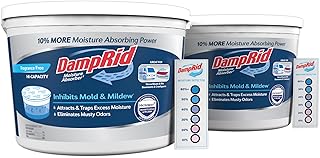
Best for: larger damp spaces and multi-room needs. Why selected: A high-capacity moisture absorber that’s fragrance-free and includes a detection strip for monitoring moisture levels. It’s designed for long-term control in basements, storage areas, and RVs. Limitation: Requires regular replacement in persistently humid environments to maintain effectiveness.
Buying Guide: Mold And Mildew Prevention Essentials
- What to choose for existing mold vs. moisture control: Use products that both kill mold and reduce humidity for longer-term prevention, like Concrobium and DampRid, plus moisture-management strategies in prone areas.
- Surface compatibility: Primers and cleaners may require surface preparation and compatible topcoats. Always follow label directions for paints and coatings when pairing with mold-killing primers.
- Space and humidity considerations: Small spaces benefit from hanging moisture absorbers; larger areas benefit from high-capacity containers. In basements or consistently damp rooms, combine moisture control with active mold removal.
- Safety and air quality: Bleach-free and fragrance-free formulas reduce harsh fumes and odors, supporting healthier indoor air. Always ventilate treated spaces according to product directions.
- Longevity and maintenance: Gel cleaners deliver fast results but may require repeated applications; moisture absorbers need replacement or recharging depending on humidity levels.
Frequently Asked Questions
- What is the most effective mold killer for walls?
- Can dampness alone cause mold growth?
- Should I use bleach to treat mold?
- How long do moisture absorbers last?
- Is primer enough to stop mold on painted surfaces?
- What should I do if mold returns after treatment?
EPA-registered mold killers like Concrobium Mold Control are designed to eliminate mold at the source on non-porous and some porous surfaces. For porous walls, consider a mold-killing primer after cleaning and drying the area.
Yes. High humidity and trapped moisture support mold growth. Using moisture absorbers like DampRid can reduce humidity and inhibit mold development in enclosed spaces.
Bleach can be effective on non-porous surfaces but may not prevent regrowth if moisture remains. Many recommended products are bleach-free to protect indoor air quality.
Capacity and replacement intervals vary. Fragrance-free DampRid products can last up to 60 days in favorable conditions; higher humidity may shorten the interval.
Primer with antimicrobial properties helps, but proper cleaning and moisture control are essential. Mold on painted walls often requires addressing moisture sources and repeated cleaning.
Reassess moisture sources, improve ventilation, and reapply mold-killing products as directed. For persistent issues, consider professional assessment and remediation.