When sealing concrete walls, choose a sealant that sticks firmly, remains flexible, and withstands temperature changes. This guide highlights five top products that balance elasticity, adhesion, and ease of use for different wall conditions. Best for professional-grade repair, residential basements, or outdoor foundations, these selections help you prevent water intrusion and structural cracking.
The buyer most often seeks products that can seal cracks and joints, resist movement, and stay paintable or match existing finishes. The following table offers a quick snapshot of each option, focusing on suitability, best-use scenarios, and notable traits.
| Product | Best For | Key Benefit | Note |
|---|---|---|---|
| Sika Sikaflex Concrete Fix | Cracks and joints in concrete walls | High adhesion and elasticity, ±35% movement | Paintable polyurethane |
| Ames Block & Wall Liquid Rubber | Basements and foundations | Waterproof coating, multipurpose exterior/interior use | Waterproof white coating |
| DCP Donseal PU440 | Joints, walls, sidewalks | Broad substrate compatibility, wide temp range | Polyurethane caulk |
| Sika Sikaflex Self-Leveling Sealant | Expansion joints and level surfaces | Self-leveling, waterproof, easy paint after cure | Best for even surfaces |
| OAIEGSD 1 Gallon Concrete Sealer | Outdoor and indoor concrete surfaces | Penetrating water-based sealer, invisible protection | Low odor, VOC-free |
Use this guide to match a product to your wall type, climate, and repair goals. The sections below break down each option with practical guidance, including who each product is best for and potential limitations.
Sika Pro Concrete Fix For Cracks And Joints

Product overview: A polyurethane sealant designed for cracks and joints in concrete and similar substrates. It demonstrates strong adhesion and elasticity, capable of accommodating approximately 35% joint movement. It attaches to most construction materials, making it suitable for weatherproofing cracks around windows and doors and accommodating seasonal shifts. The cartridge is moisture-proof and compatible with standard applicator guns, which helps ensure consistent seals in varying working conditions.
Best for: Professionals and DIYers sealing movement-prone concrete joints in interior and exterior walls. The product excels where joint movement is a concern and a paintable finish is desired after cure. Best avoid if you require a low-VOC formula or have strict odor constraints, as specifications do not emphasize VOC content.
Ames Block & Wall Liquid Rubber Coating
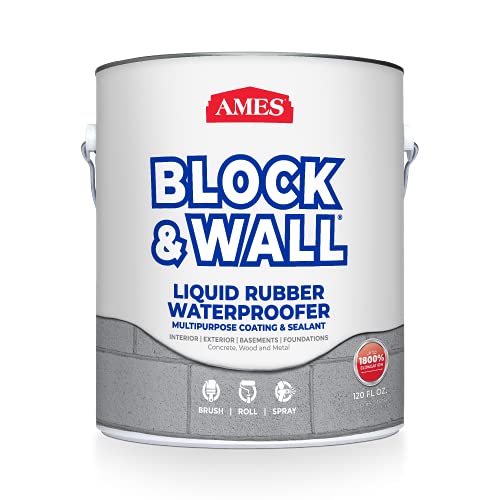
Product overview: A white, multi-purpose liquid rubber coating designed for waterproofing concrete surfaces, including basements and foundations. It’s positioned as a practical option for creating a continuous waterproof membrane rather than just a surface seal. The product weight and origin suggest a user-friendly option for DIY projects that require robust moisture protection over larger wall areas.
Best for: Homeowners and contractors focusing on basement or foundation waterproofing, where a flexible, continuous membrane is preferred. Limitation: color is white, which may require repainting to match surrounding surfaces in some applications.
DCP Donseal PU440 Polyurethane Sealant

Product overview: A 10.1 fl. oz. polyurethane concrete sealant designed for joints, walls, sidewalks, and foundations. It boasts broad temperature resilience, curing through moisture to form an elastic seal. It is compatible with a wide range of substrates, including concrete, wood, metal, and ceramics, and accepts paints after curing. It’s adaptable for both dry and damp conditions, which is useful for exterior walls with moisture exposure.
Best for: DIYers tackling outdoor and indoor wall joints where temperature variation is common. Choose this if you need a versatile sealant that bonds well to multiple materials. Caution: ensure adequate surface prep to maximize adhesion on less porous substrates.
SIKA Sikaflex Self-Leveling Sealant

Product overview: A gray polyurethane sealant designed for concrete expansion joints. It is self-leveling for smooth application on even surfaces like driveways and garages. The sealant cures to a waterproof, elastic state and can be painted after curing. It’s particularly effective where joints are prone to movement and surface irregularities make leveling difficult.
Best for: Projects requiring expansion joint sealing on consistently flat surfaces. Better for new construction or smooth concrete where a level finish is essential. Limitation: self-leveling performance on highly irregular surfaces may be less predictable.
OAIEGSD 1 Gallon Concrete Sealer

Product overview: A water-based silane-siloxane penetrating sealer designed to form an invisible barrier on concrete surfaces. It protects against water absorption, stains, and chemical spills while preserving surface aesthetics. The formula is touted as VOC-free and pet/plant-friendly, suitable for indoor and outdoor use on driveways, patios, and masonry surfaces.
Best for: Sealing projects where appearance matters and a low-odor, penetrating sealer is preferred. Choose this for long-term protection against water ingress without altering the surface appearance. Limitation: penetrating sealers may require reapplication over time depending on wear and climate conditions.
Buying Guide: Key Considerations For Concrete Wall Sealants
What wall type are you sealing? For structural joints with movement, select elastic polyurethane sealants that can stretch. If you need a waterproof coating for basements, a liquid rubber membrane might be better than a surface sealant. For large outdoor walls, consider penetrating sealers that protect without changing the surface texture or color.
How important is cure time? Quick-tack and fast-curing formulas help minimize downtime on busy projects. If you need to paint or finish after sealing, verify that the product allows painting after cure and note any prep steps required.
Surface compatibility matters. Some products bond across concrete, brick, stucco, wood, and metal; others are specialized for concrete only. Always prep the surface by cleaning and, if needed, priming to maximize adhesion.
Environmental and safety considerations. Look for low-VOC formulas when indoor use is a concern. Odor, ease of cleanup, and user safety should guide selection, especially for DIY projects in living spaces.
Durability and movement tolerance. For walls with seasonal shifts or thermal cycling, prioritize products that specify movement ranges or elastic properties to prevent future cracking and water intrusion.
Frequently Asked Questions
- What kind of sealant is best for concrete walls with cracks? In most cases, a polyurethane sealant with elasticity (such as Sikaflex products) is preferred for its ability to handle joint movement.
- Can I paint over concrete sealants? Many polyurethane sealants cure to paintable surfaces, but always confirm on the product label for your specific brand.
- Do penetrating sealers affect surface appearance? Penetrating sealers are designed to be invisible; they protect without altering color or texture.
- Are there sealants suitable for both indoor and outdoor use? Yes, several options listed are designed for mixed environments, with appropriate surface compatibility and cure properties.
- What should I prep before sealing? Clean the area, remove loose material, and ensure the surface is dry or within the product’s specified moisture tolerance for best adhesion.
- How do I choose between a liquid rubber membrane and a surface sealant? If you need comprehensive waterproofing for basements or foundations, a liquid rubber membrane offers a continuous barrier; for cracks and joints with movement, a flexible concrete sealant is often better.