Choosing the right primer for fresh drywall is essential to seal the porous surface, improve paint adhesion, and block potential stains. This guide highlights five effective options from trusted brands, describing who each product is best for and why. Whether you’re tackling a new drywall project in a living room or a high-traffic space, these primers help you achieve a uniform finish with fewer coats. Use the table below to compare key details at a glance.
- Product highlights, surface compatibility, and dry times summarized for quick decisions.
- Best for interior and exterior use, stain blocking, and mold protection where applicable.
| Product | Best For | Key Benefit | Notes |
|---|---|---|---|
| Zinsser Bulls Eye 1-2-3 Water-Base Primer & Sealer | General interior walls and glossy surfaces | Sticks to glossy surfaces without scuff sanding | Low application temp 35°F |
| Glidden Interior Drywall Primer Flat | New drywall needing sealing and prepping for paint | Seals drywall patches, preps for painting | Interior latex based |
| Zinsser Bulls Eye 1-2-3 Plus Spray Primer | Quick coverage on multiple surfaces | High-hide stain blocking spray primer | Dries in 30 minutes; up to 12 sq ft coverage |
| Zinsser 1-2-3 All Surface Primer (Gray) | All-surface priming on various subsurfaces | Sticks without sanding; fast dry | Water-based; covers up to 100 sq ft |
| Zinsser Mold Killing Primer | Areas with mold or mildew risk | Kills and blocks mold and odor bacteria | EPA registered fungicidal primer |
Zinsser Bulls Eye 1-2-3 Water-Base Primer & Sealer
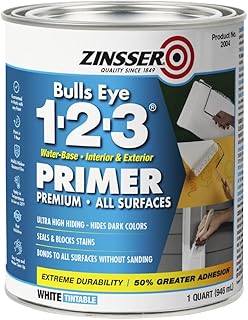
This water-based primer-sealer is designed for interior and exterior surfaces, including drywall, and adheres to glossy finishes without heavy sanding. Best for walls that require a reliable seal before painting, particularly in rooms with varying temperatures. The product accepts multiple topcoats well after curing. A practical choice for general priming on fresh drywall where a quick, uniform base is needed.
- Best for: interior walls, glossy surfaces, and projects needing good adhesion without sanding.
- Why selected: strong adhesion, versatile indoor/outdoor use.
- Caution: may require multiple coats on highly porous drywall in very dry environments.
Glidden Interior Drywall Primer Flat

Designed to seal drywall patches and prepare new drywall for interior latex painting, this flat primer provides an even base for color canvases. It’s well-suited for mudded joints and areas with minor imperfections. This product is particularly advantageous for drywall projects that require a matte finish before color.
- Best for: new drywall prepping, patches, and flat finish looks.
- Why selected: purpose-built for drywall patch sealing and interior latex compatibility.
- Caution: not ideal for high-sheen finishes or areas needing bright sheen after painting.
Zinsser Bulls Eye 1-2-3 Plus Spray Primer

This spray primer offers interior and exterior use on new or previously painted drywall, concrete, wood, masonry, metal, and other surfaces. The oil-based formula seals uniformly and sticks without sanding. It dries quickly and provides rapid coverage, making it a good choice for large or difficult-to-reach areas where spray application is advantageous.
- Best for: fast, even coverage on multiple substrates; preferred when spraying is practical.
- Why selected: strong adhesion, less prep work required on smooth or glossy areas.
- Caution: oil-based formula may require ventilation and longer cleanup; check surface compatibility before use.
Zinsser Bulls Eye 1-2-3 All Surface Primer (Gray)

This all-surface, water-based primer is designed for interior and exterior use on drywall, concrete, wood, masonry, metal, and other materials. It seals uniformly and adheres without sanding, then dries to touch in about 30 minutes. It covers up to 100 sq ft, helping speed up medium to large projects.
- Best for: diverse substrates and quick turnaround projects.
- Why selected: versatile, easy to recoat after short drying time.
- Caution: may show less stain-blocking performance on heavy stains compared to specialty primers.
Zinsser Mold Killing Primer

This quart-sized primer is formulated to kill existing mold, mildew, and odor-causing bacteria on interior surfaces. The antimicrobial action helps create a cleaner base before painting in damp or humid environments. It is compatible with many topcoats and is particularly relevant in bathrooms, basements, or kitchens where moisture intrusion may occur.
- Best for: areas prone to mold growth or lingering odors.
- Why selected: EPA-registered fungicidal primer with mold-killing capabilities.
- Caution: should be used as part of a broader moisture-control strategy; ensure adequate ventilation during application.
Buying Guide: Key Considerations For Fresh Drywall Primers
What to know before choosing a drywall primer
Before selecting a primer, assess the room conditions, moisture levels, and the next paint step. For bare drywall, a stain-blocking, high-adhesion primer helps prevent tannin bleed and ensures a uniform finish. If the space has moisture risks, consider a mold-killing option. For large wall areas, a spray primer can save time; for small patches, a traditional gallon or quart may be more economical.
Water-based vs. oil-based primers
Water-based primers typically dry faster, have lower odor, and clean with water. They are ideal for interiors and most drywall priming tasks. Oil-based primers offer stronger stain blocking and better adhesion on challenging surfaces but require solvents for cleanup and longer dry times. For fresh drywall, water-based versions are often sufficient unless heavy stain blocks are needed.
Dry time and recoat windows
Dry times vary by product, with some drying to touch within 30 minutes for recoat. Always check the label for recoat windows and environmental conditions. Faster-drying primers allow quicker progression to topcoat, while longer cure times may delay project completion in humid spaces.
Compatibility and surface coverage
Consider the substrate variety—drywall, concrete, wood, metal—and the promised coverage. All-surface primers provide flexibility but may be less specialized for stubborn stains. Ensure the primer is compatible with your intended topcoat and that coverage estimates align with room size to avoid mid-project shortages.
Stain and mold considerations
For new drywall with possible surface imperfections, stain-blocking primers reduce discoloration from joint compounds. In humid or damp zones, mold-killing primers can help inhibit growth. In most residential finishes, pairing a stain-blocking primer with a quality topcoat yields durable results.
FAQ
- What primer is best for fresh drywall?
- Should I use a mold-killing primer on new drywall?
- Do I need to sand between coats?
- How long does primer dry before painting?
- Can I use exterior primers indoors?
- Is spray primer worth it for drywall?
Water-based primers with strong adhesion and stain-blocking properties are generally best for fresh drywall. Choose based on room conditions and topcoat compatibility.
Use a mold-killing primer if the area has moisture risk or existing mold concerns. It is part of a broader moisture-control strategy.
Most water-based primers do not require sanding between coats, though light sanding can improve adhesion in some cases. Follow product guidance for best results.
Dry times vary by product; typical ranges are 30 minutes to a few hours. Always follow label instructions and allow full cure before applying the topcoat.
Some exterior primers are suitable for interior use due to their strong adhesion and sealing properties. Verify packaging for interior compatibility.
Spray primers are efficient for large surfaces or hard-to-reach areas but require ventilation and careful application for even coverage. They are a practical option when time savings matter.