Answering the demand for safer exterior coatings, these options blend fire resistance with exterior durability. Best for homeowners seeking a protective layer that helps slow fire spread while preserving curb appeal and longevity. Suitable for houses, garages, sheds, and nurseries that require low-to-no VOCs alongside effective flame retardance.
| Product | Brand | Notes |
|---|---|---|
| Contego Original Formula Intumescent Coating | Contego | No VOCs, expands on heat to block oxygen; best adhesion |
| INSL-X FR110099-01 INS-LX Fire Retardant Paint | INSL-X | Low VOC, slows fire and smoke spread |
| Rust-Oleum High Heat Enamel Spray (Bar-B-Que Black) | Rust-Oleum | Heat up to 1000°F, exterior metal applications |
| Rust-Oleum High Heat Brush Protective Enamel | Rust-Oleum | Up to 1200°F, brush-on for larger surfaces |
| Rutland 81V Premium Hi-Temp Paint | Rutland | Hi-temp, flat black, lead-free |
Contego Original Intumescent Coating

Contego Original Formula provides zero flame spread and smoke production, with best adhesion among intumescent coatings. It is a water-based, latex single-component coating that can be applied like regular paint. Best for interior-exposed framing and exterior walls in homes, nurseries, kitchens, bedrooms, bathrooms, and garages where VOC reduction is a priority.
Best for: homeowners who want a low-VOC, fire-slowing coating that forms a protective swelling layer when heated. Choose this if you need strong adhesion and minimal odor during application. Caution: ensure proper ventilation during application and curing as with most water-based coatings.
INSL-X FR110099-01 INS-LX Fire Retardant Paint

INSL-X FR110099-01 INS-LX offers a high-performance, low VOC formula that slows fire and smoke spread. It is suitable for use on various exterior and interior surfaces where minimal environmental impact is desired. Best for: applications requiring reliable fire retardance with lower volatile emissions.
Limitation: as with many specialty paints, performance depends on surface preparation and film build; follow manufacturer guidance for curing and recoating intervals.
Rust-Oleum High Heat Enamel Spray

Rust-Oleum Bar-B-Que Black High Heat Enamel is designed for exterior metal items and grills, with protection up to 1000°F. It’s ideal for updating outdoor metal surfaces that endure high temperatures and exposure to the elements. Best for: metal components near heat sources like grills or stoves in outdoor spaces. Caution: spray application is most even in moderate weather; follow ventilation and spray distance guidelines to avoid drips.
Rust-Oleum High Heat Brush Protective Enamel

Rust-Oleum High Heat Brush Protective Enamel is a brush-on option for larger exterior metal surfaces that endure up to 1200°F. It covers 20-40 sq ft per half pint and dries within 2-4 hours. Best for: projects requiring precise coating control with sustained heat exposure. Caution: oil-based formulas may require solvents for cleanup and proper disposal.
Rust-Oleum 248903 Automotive High Heat Spray
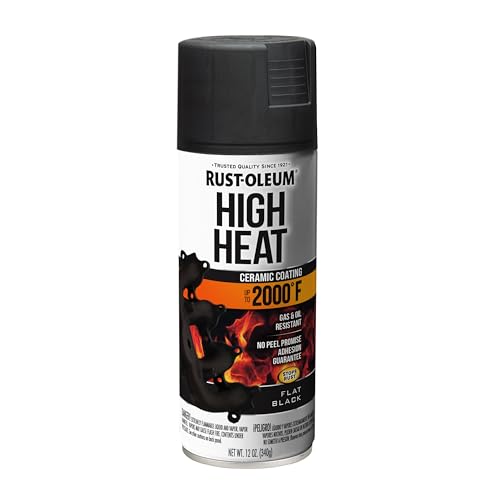
Rust-Oleum 248903 Automotive High Heat Spray protects automotive parts and surfaces exposed to intermittent heat up to 2000°F. It features a Stops Rust formula for corrosion resistance and dries to touch in 30 minutes, covering up to 10 sq ft per can. Best for: exterior automotive components or metal items near heat sources. Limitation: spray applications on broad exterior walls may require multiple cans for full coverage.
Rust-Oleum High Heat Brush Enamel, Quart

Rust-Oleum High Heat Brush Protective Enamel, in a quart, provides up to 1200°F resistance with a brush-on approach. It covers 65-130 sq ft per quart and dries in 2-4 hours. Best for: larger exterior metal surfaces such as grills, radiators, or stoves. Limitation: oil-based formula may require solvent cleanup and adequate ventilation during application.
Rutland Hi-Temp Paint Hi-Temp Brush-On

Rutland 81V Premium Hi-Temp Paint is a 16 oz brush-on coating rated for up to 1400°F, with lead-free formulation. Best for: hot surfaces and stove-related exterior builds where a matte black finish is preferred. Caution: ensure compatibility with the substrate and follow heat-rise guidelines for optimal performance.
Buying Guide: Key Considerations For Fire Resistant Exterior Paint
- Fire retardant mechanism: Some coatings form a protective intumescent layer, others slow flame spread through chemical barriers. Choose based on whether you need a swelling fire shield or a surface that slows ignition.
- VOC content and environmental impact: If indoor air quality or outdoor air quality is a priority, look for low-VOC or zero-VOC formulations.
- Substrate compatibility: Exterior walls, metal surfaces, and wood require different formulations. Verify compatibility with siding, stucco, or metal components.
- Cure time and recoat window: Shorter cure times can accelerate project timelines, but ensure proper film build for fire performance.
- Application method: Sprays, rollers, and brushes each have pros for coverage efficiency and surface contours. Plan whether you’ll coat tight corners or broad sheets.
- Heat exposure range: Exterior items near grills, stoves, or heat vents may benefit from higher temperature resistance coatings.
- Maintenance and durability: Consider UV resistance, weatherproofing, and cleaning requirements for long-term protection.
Frequently Asked Questions
- What makes fire resistant exterior paint different from regular paint?
It contains additives that slow or block flame spread and can reduce smoke production, often with lower VOCs. - Can I apply fire resistant coatings over existing paint?
Yes, many products can be applied over existing finishes, but surface preparation is important for adhesion and performance. - How do I choose between intumescent and barrier-type coatings?
Intumescent coatings swell to form a protective layer in high heat, while barrier-type coatings slow flame spread as a film. - Are these products suitable for indoor use?
Some are formulated for interior and exterior use; always check the label for indoor suitability and ventilation guidance. - Do these coatings require special cleanup?
Oil-based products may require mineral spirits or solvents, while water-based products typically clean with water and soap. - How long do fire resistant coatings take to cure?
Cure times vary by product and environmental conditions; follow manufacturer directions for recoat intervals.